 St. Petersburg Siding
 Coquina Key Is a Different Kind of Exposure
Coquina Key sits on a peninsula on the southeast side of St. Petersburg, laced with canals that put a large share of its homes within a few dozen feet of open water. That's a wonderful place to live, and it's also one of the more demanding environments for a home's exterior anywhere in Pinellas County. Salt-laden air moves across the canals and settles on siding, trim, roofing, and window hardware every day, not just during storms. Add in Florida's year-round UV load and the wind-driven rain that comes with our summer storm season and hurricane threat, and you have a combination that ages cheap or poorly-installed exterior materials faster than almost anywhere inland.
We work on homes across St. Petersburg, but canal and waterfront neighborhoods like Coquina Key get a specific kind of attention from us because the failure patterns are different. Fastener corrosion shows up sooner. Caulk and sealant joints break down faster under UV and salt cycling. Wood trim and untreated fascia rot faster when they're constantly damp from humidity and occasional storm surge or heavy rain intrusion. None of this means a home here is doomed to constant repair — it means the materials and installation details matter more than they would fifteen miles inland.
What Coquina Key Homes Tend to Face
- Salt air corrosion on fasteners, flashing, and metal trim, accelerated by proximity to canal water
- Intense, near-constant UV exposure that fades paint and breaks down lesser sidings and sealants over years, not decades
- Wind-driven rain during summer storms that finds gaps in poorly flashed siding, window openings, and roof penetrations
- Higher humidity and moisture cycling that stresses any exterior material prone to swelling, delaminating, or rotting
- Direct hurricane exposure risk, which puts a premium on wind-rated products and installation that meets Pinellas County's wind load requirements
Why We Install Only James Hardie Fiber Cement Siding
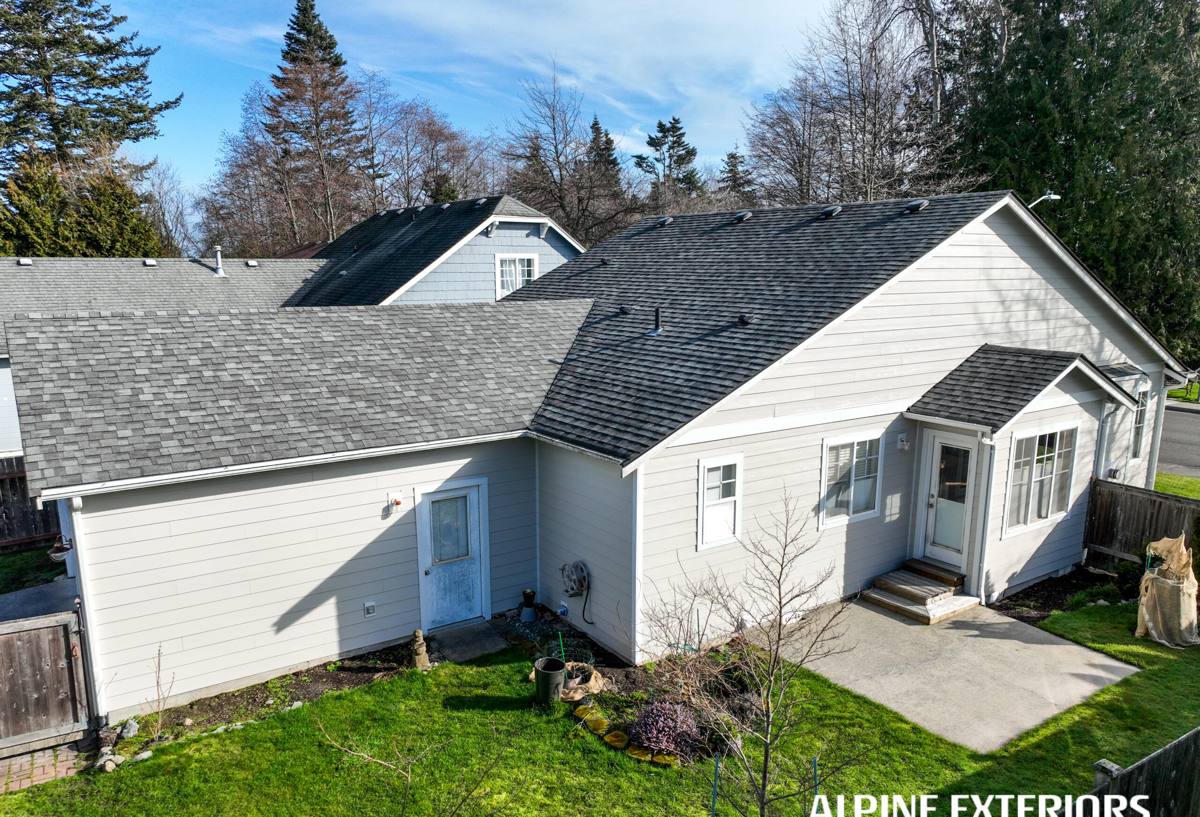
We made a deliberate decision to install James Hardie fiber cement siding exclusively — no vinyl, no LP SmartSide, no Cemplank, no Allura, no primed spruce or cedar. That's not a marketing position, it's a standard we hold ourselves to because of what we've seen play out on homes over time, especially in coastal Florida conditions like Coquina Key's.
James Hardie siding is fiber cement: a blend of cement, sand, and cellulose fiber engineered to resist moisture, hold paint, and stay dimensionally stable through heat and humidity swings. For our climate specifically, Hardie makes an HZ5 product line engineered for high-humidity, high-moisture regions like ours, which is what we specify on homes in St. Petersburg. It's non-combustible, which matters to insurers and to homeowners who want one less thing to worry about, and it doesn't provide the food source that draws termites and other wood-boring pests, a real consideration in Florida.
The factory-applied ColorPlus finish is a big part of why we favor Hardie over field-painted alternatives. The color is baked on in a controlled factory environment with a finish designed to resist UV fade, which matters enormously under Gulf Coast sun. Instead of a paint job that starts breaking down in a few years under our UV load, you get a finish backed by its own warranty and formulated specifically to hold color longer in direct sun exposure.
What Correct Hardie Installation Actually Involves
Fiber cement siding performs the way it's supposed to only when it's installed to Hardie's published specifications, and this is where a lot of the difference between a good siding job and a problem siding job actually lives — not in the product itself. Correct installation on a home like the ones on Coquina Key includes:
- Proper water-resistive barrier and flashing details at every window, door, and penetration, since wind-driven rain will find any shortcut
- Correct fastener type, spacing, and penetration depth — under-driven or corrosion-prone fasteners are a common source of early siding problems near salt air
- Manufacturer-specified clearances from roof lines, decks, and grade to keep the bottom edge of the siding out of standing water and splash-back
- Properly caulked and sealed joints using compatible sealants, not generic caulk that will fail under UV and salt exposure years before the siding does
- Field-cut edges primed or sealed before installation so raw cement edges aren't left exposed to moisture
We stand behind the labor, and Hardie's product warranty is transferable, which matters if you ever sell the home — a real selling point in a neighborhood where waterfront and near-waterfront properties tend to hold strong resale interest.
What We Won't Install, and Why That Matters Here
Vinyl siding is inexpensive and easy to source, but it's a petroleum-based product that softens, warps, and can distort under sustained high heat and direct sun — a real issue on south- and west-facing walls in St. Petersburg. It also isn't rated to stand up to the higher wind speeds this area can see in a serious storm the way heavier fiber cement is.
LP SmartSide and similar engineered wood products use a wood-strand core with a resin coating. They perform reasonably well when installation and maintenance are kept up perfectly, but any breach in that coating — a nail pop, a scratch, a poorly sealed cut edge — gives moisture a path into a wood-based core, and wood-based cores don't recover well from repeated moisture exposure in a climate as humid as ours.
Cedar and primed spruce are real wood. They can look excellent, but real wood in a canal-adjacent, high-humidity, high-UV environment requires a maintenance commitment — recoating, caulking, monitoring for rot and insect activity — that most homeowners don't want to sign up for indefinitely. We'd rather be honest about that upfront than sell a product that turns into a recurring maintenance bill.
None of this means these products are junk everywhere. It means that for the specific combination of salt air, UV, humidity, and storm exposure that Coquina Key homes deal with, we've concluded fiber cement gives homeowners the best long-term balance of appearance, durability, and low maintenance, so it's the only siding we put our name behind.
Roofing on a Salt-Air Peninsula
Roofing takes the most direct hit from sun and storms of any part of the exterior. On Coquina Key, we pay particular attention to fastener and flashing corrosion resistance, since metal components exposed to salt air degrade faster than the same components would inland. Proper underlayment and flashing at valleys, penetrations, and roof-to-wall transitions is what actually keeps wind-driven rain out during a summer storm — shingle brand matters less than installation detail at these transition points. We also look at ventilation, since a poorly ventilated attic traps heat and humidity that shortens the life of both the roof deck and the shingles above it.
Windows: Impact Resistance and Sealing
Window replacement in a wind-exposed, storm-prone area like St. Petersburg is as much about the installation as the glass. Impact-rated windows are worth strong consideration here, both for storm protection and because Pinellas County's building code in wind-borne debris regions reflects that risk. Just as important as the window itself is how it's flashed and sealed into the wall opening — a beautiful impact-rated window installed with poor flashing will still let wind-driven rain in around the frame during a hard summer storm.
Decks Near Canal Water
Decks on or near Coquina Key's canals face constant humidity, salt exposure, and sun, plus the practical reality of proximity to water and boat traffic. Material choice matters: some composite decking products handle moisture and UV far better than untreated wood, but not all composites are engineered the same way, and fastening and ledger-board attachment details matter enormously for long-term stability near water. We walk homeowners through the real trade-offs between wood and composite decking for their specific site rather than pushing one material by default.
Cost Factors to Understand Before You Budget
| Factor | Why It Moves the Price |
|---|---|
| Home size and wall complexity | More corners, gables, and trim details mean more labor and material waste |
| Existing siding removal | Tear-off and disposal of old siding adds labor beyond a straightforward install |
| Substrate condition | Rotted sheathing or water damage found during removal requires repair before new siding goes on |
| Siding profile and trim selection | Lap width, shake accents, and trim boards vary in material and labor cost |
| Window and door count | Each opening adds flashing and trim work |
| Roof and window scope, if bundled | Combining siding with roofing, windows, or deck work can improve overall efficiency and scheduling |
What a Site Evaluation on Coquina Key Looks Like
Before we quote anything, we walk the exterior and look at the specific conditions on your property: proximity to the canal, sun exposure on each wall, drainage around the foundation, current siding or roofing condition, and any signs of past moisture intrusion. On a peninsula neighborhood like this, we also look closely at fastener corrosion on existing trim and fixtures, since it's often the earliest visible sign of how salt air has been affecting the home.
Questions Worth Asking Any Contractor Before You Sign
- Are you licensed and insured to work in Pinellas County, and can you provide proof?
- Who will actually be on the crew doing the work — your employees or subcontractors?
- What specific fastener and flashing details will you use given the salt air exposure here?
- What does the manufacturer's warranty cover, and what does your workmanship warranty cover separately?
- Will you provide a written scope of work, not just a price?
Why a Local Crew Matters on a Neighborhood Like This
A crew that works St. Petersburg regularly understands how differently a canal-front peninsula home ages compared to a home a few miles inland, and adjusts fastener choices, flashing details, and maintenance advice accordingly. That local knowledge is hard to replace with a generic install checklist, and it's the difference between an exterior that looks good on installation day and one that still looks and performs well after a few Gulf Coast summers and a storm season or two.
If you're weighing siding, roofing, window, or deck work on a Coquina Key home, we're happy to walk the property with you and give you a straightforward, no-pressure estimate — just fill out the form below to get started.