 St. Petersburg Siding
 Building on a Canal Lot in Coquina Key
Coquina Key is one of the more distinct pockets of St. Petersburg — a waterfront community built around canals and open water, which means a lot of the homes here have direct sun and wind exposure on multiple sides, salt-laden air blowing off the water most of the year, and a flood history that shapes how rebuilds and new construction get designed. When we install windows on a new build, a full rebuild, or a major addition in this neighborhood, we're not treating it like a standard inland retrofit. The lot, the elevation, and the exposure all change what "correct" looks like.
This page is specifically about new-construction window installation — windows going into framed openings on a new home, a torn-down-and-rebuilt home, or an addition — not swapping windows into an existing wall. That distinction matters more here than in most neighborhoods, and it's worth understanding before you get quotes.
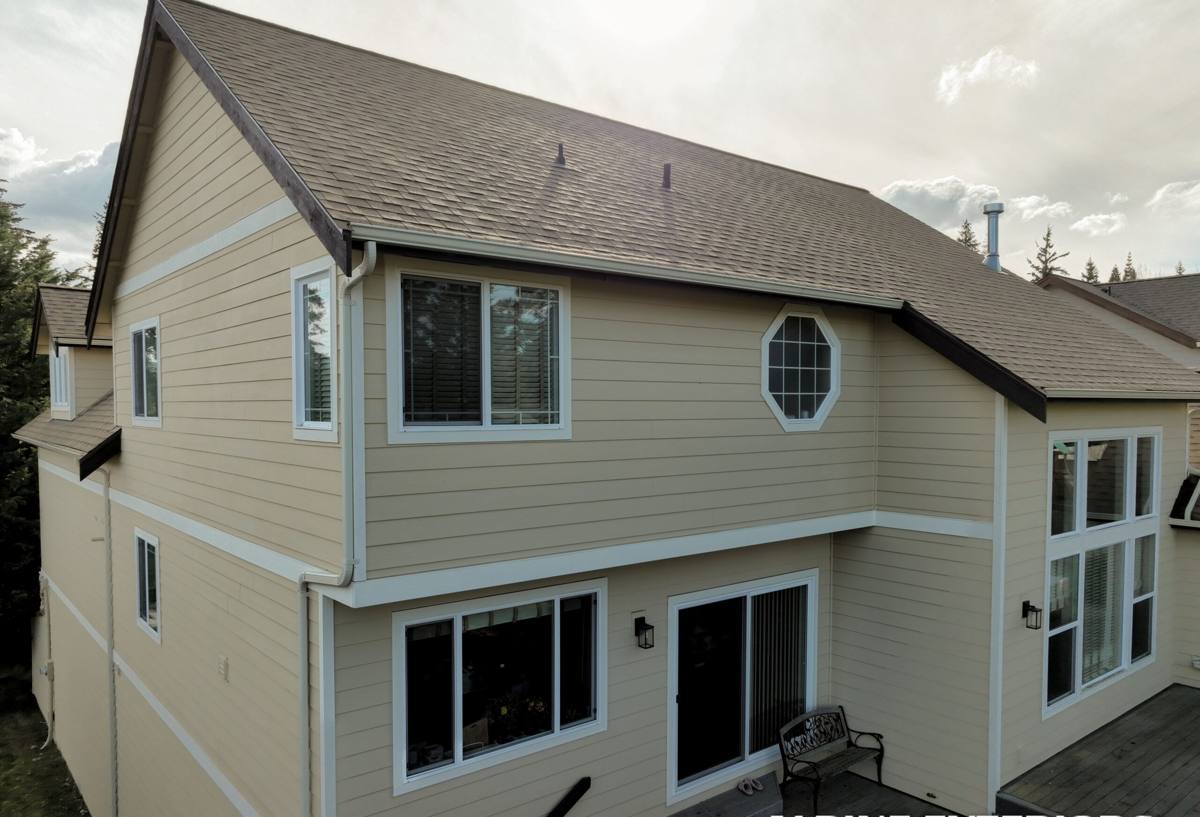
New-Construction vs. Replacement Windows: Why It's a Different Job
A replacement window is built to slide into an existing, already-flashed opening — it's an insert product designed to work with a wall that's already weathertight. A new-construction window is a different animal. It has a nailing fin (also called a flange) around the perimeter that gets integrated directly into the wall's weather-resistive barrier during framing, before siding or stucco ever goes on.
The Nailing Fin and the Weather-Resistive Barrier
On a Coquina Key job, this is the step that determines whether a window leaks in ten years or never does. The sequence matters: sill pan flashing goes in first, then the window, then the fin gets sealed and integrated with the house wrap or building paper in the correct shingle-lap order — bottom, sides, top — so water sheds down and out instead of behind the window. Skip a step or reverse the order, and you've built a hidden leak path into a wall that's already fighting salt air and wind-driven rain from day one. On a rebuild after storm damage, this is exactly the kind of detail that gets rushed when a crew is trying to move fast — and exactly the kind we won't rush.
What Pinellas County's Coastal Climate Demands From Every Opening
St. Petersburg sits in a part of Pinellas County that deals with the full range of Florida coastal exposure: hurricane-force wind loads, intense UV nearly year-round, wind-driven rain that gets pushed sideways during storms, and salt air that never really lets up on a waterfront lot like the ones in Coquina Key. Every one of those shows up in the window spec.
Wind and the Wind-Borne Debris Region
Pinellas County falls within Florida's wind-borne debris region under the Florida Building Code, which means most new construction and substantial rebuilds here are required to use impact-rated windows or approved protective coverings — shutters aren't a workaround, they're a code-recognized alternative, but on new construction most homeowners and builders spec impact glass so there's nothing to install or store before a storm. The exact design pressure (DP) rating required for each opening depends on the home's height, its exposure category, and its position on the lot — that gets calculated by the engineer of record and locked into your permit set, not guessed at on-site.
Wind-Driven Rain
Wind-driven rain testing is part of what separates a window that's rated for this market from one that isn't. A window can be structurally strong and still leak under sideways-driven rain if the frame design or the installation detailing is wrong. This is a case where the product's testing data and the installer's flashing work both have to be right — one doesn't substitute for the other.
Salt Air and UV
Salt air accelerates corrosion on hardware, fasteners, and lesser-grade frame components, and constant UV exposure breaks down cheap vinyl compounds and gasket materials faster than it would a few miles inland. None of this means every product fails — it means the frame material, hardware finish, and glazing seal need to be chosen with a waterfront lot in mind, not a generic spec sheet.
Choosing a Frame Material for a Waterfront Lot
There's no single "right" frame material for new construction — it's a trade-off between upfront cost, maintenance, and how the material holds up to salt air over time. Here's how the common options compare for a lot like the ones in Coquina Key:
| Frame Material | Salt Air / UV Behavior | Maintenance | Best Fit |
|---|---|---|---|
| Vinyl (impact-rated) | Good if UV-stabilized; lower-grade vinyl can chalk or warp faster near open water | Low | Budget-conscious new builds set back from direct water exposure |
| Aluminum | Strong and dimensionally stable; needs a quality baked-on or anodized finish to resist salt corrosion long-term | Low to moderate | Larger openings, contemporary builds, direct waterfront exposure |
| Fiberglass | Very stable in heat and salt air; doesn't expand/contract like vinyl or conduct like aluminum | Low | Homeowners prioritizing longevity over lowest upfront cost |
We don't push one material as universally "best" — we size the recommendation to the lot, the budget, and how exposed the elevation is to open water and prevailing wind.
Flood Zone and Elevation Considerations
A meaningful share of Coquina Key sits low and close to canal or open water, and many parcels here fall within FEMA-mapped flood zones. That matters for new construction window work in a couple of practical ways: if a home is being rebuilt or substantially improved after storm damage, the finished floor elevation may be required to change, which shifts where every window sill lands relative to grade and relative to the base flood elevation on your permit. It also affects sequencing — window openings sometimes can't be finalized until the elevation and framing plan are locked with the city. We coordinate directly with your builder or elevation contractor on this rather than showing up with a fixed set of dimensions and hoping they still match.
Cost Factors on a Coquina Key New-Construction Job
Pricing for new-construction windows is driven by more than the number of openings. The factors that move the number most on jobs like these:
| Factor | Why It Matters Here |
|---|---|
| Impact rating / DP requirement | Higher wind-load and large-missile-impact glass costs more than standard glazing, and the requirement is set by your engineer, not by preference |
| Frame material | Vinyl, aluminum, and fiberglass carry different material and labor costs, as shown above |
| Opening size and count | Larger openings and full window walls (common on waterfront builds to capture canal views) need heavier framing and often custom sizing |
| Flashing and WRB integration complexity | Elevated construction, unusual wall assemblies, or non-standard framing add labor time to do the flashing correctly |
| Brand and warranty structure | Manufacturer warranties vary in what they cover and for how long — worth reading before comparing quotes on price alone |
Our Process on a New-Construction or Rebuild Job
The sequence we follow doesn't change from job to job, but the coordination points do, especially on a rebuild where we're working alongside a general contractor or an elevation crew.
- Review the architectural and engineering plans to confirm rough opening sizes, DP ratings, and impact requirements before ordering anything.
- Verify product selection carries current Florida Product Approval for the specified wind loads.
- Coordinate timing with the framer so windows go in at the correct point in the weather-resistive barrier sequence — not before the WRB is ready, not so late that the house sits open to wind-driven rain longer than it needs to.
- Install sill pan flashing, set the window plumb and square, and integrate the nailing fin with proper shingle-lap sequencing.
- Seal and inspect every opening before siding, stucco, or exterior finish goes on, since that's the last point it's easy to fix anything.
- Walk the finished openings with you and the builder before final inspection is called in.
Permitting and Inspections in St. Petersburg
New-construction windows are tied to your building permit, not a standalone permit of their own in most cases, but the products still have to carry valid Florida Product Approval (or in some cases a Miami-Dade County Notice of Acceptance, which some manufacturers hold as an additional testing benchmark even though it isn't required outside the high-velocity hurricane zone). The city or county inspector will check that installed products match what's on the approved plan set and that flashing and fastening meet the manufacturer's installation instructions, since that's the standard the code defers to. We keep documentation — product approval numbers, installation instructions, fastening schedules — organized and ready for inspection rather than scrambling for it after the fact.
Why Hiring a Crew That Already Works in Coquina Key Matters
A neighborhood like this has its own practical logistics: narrow lots backing up to seawalls, limited staging space, canal-side access that changes how materials get moved in, and an inspection and permitting rhythm at the city that a crew who's worked here before already understands. That familiarity doesn't replace good workmanship, but it does mean fewer surprises mid-project — on scheduling, on access, and on how your specific lot's exposure should shape the window spec.
Before hiring anyone for a new-construction window package, it's worth checking a few things:
- Active Florida contractor license and current liability and workers' comp insurance
- Experience specifically with new-construction (nailing-fin) installation, not just replacement/insert windows
- Familiarity with Florida Product Approval documentation and how it's presented to inspectors
- A clear answer on who is responsible for sill pan flashing and WRB integration — this should never be assumed or skipped
- Manufacturer warranty terms in writing, including what voids coverage
- Willingness to coordinate directly with your general contractor or elevation contractor on sequencing
If you're building new, rebuilding after storm damage, or adding on in Coquina Key, we're glad to walk your plans, talk through what your specific lot and elevation call for, and put together a straightforward, no-pressure estimate — just fill out the form below to get started.