 St. Petersburg Siding
 Vinyl siding is on a lot of homes around St. Petersburg, and it's not hard to see why — it's cheap to buy, quick to install, and available at every big-box store in Pinellas County. We get asked about it constantly, usually by homeowners comparing bids and wondering why our number doesn't include it as an option. So here's the honest answer: we don't install vinyl siding, and this page explains why, without pretending the product is worthless or that everyone who has it made a mistake.
What Vinyl Siding Actually Gets Right
Fair is fair. Vinyl siding is inexpensive relative to almost every other cladding option, it never needs to be painted, and a competent crew can hang it quickly. For a homeowner working with a tight budget, or for a rental property where long-term performance matters less than upfront cost, vinyl is a rational choice and plenty of licensed contractors in this area install it well. It's also widely available, which means repairs and matching panels are usually easy to source, at least while a color run is still in production.
None of that is in dispute. The issue isn't whether vinyl siding can be installed correctly — it's whether it holds up the way homeowners expect it to once it's living on a house in this specific part of Florida.
Where Florida's Sun Breaks Vinyl Down
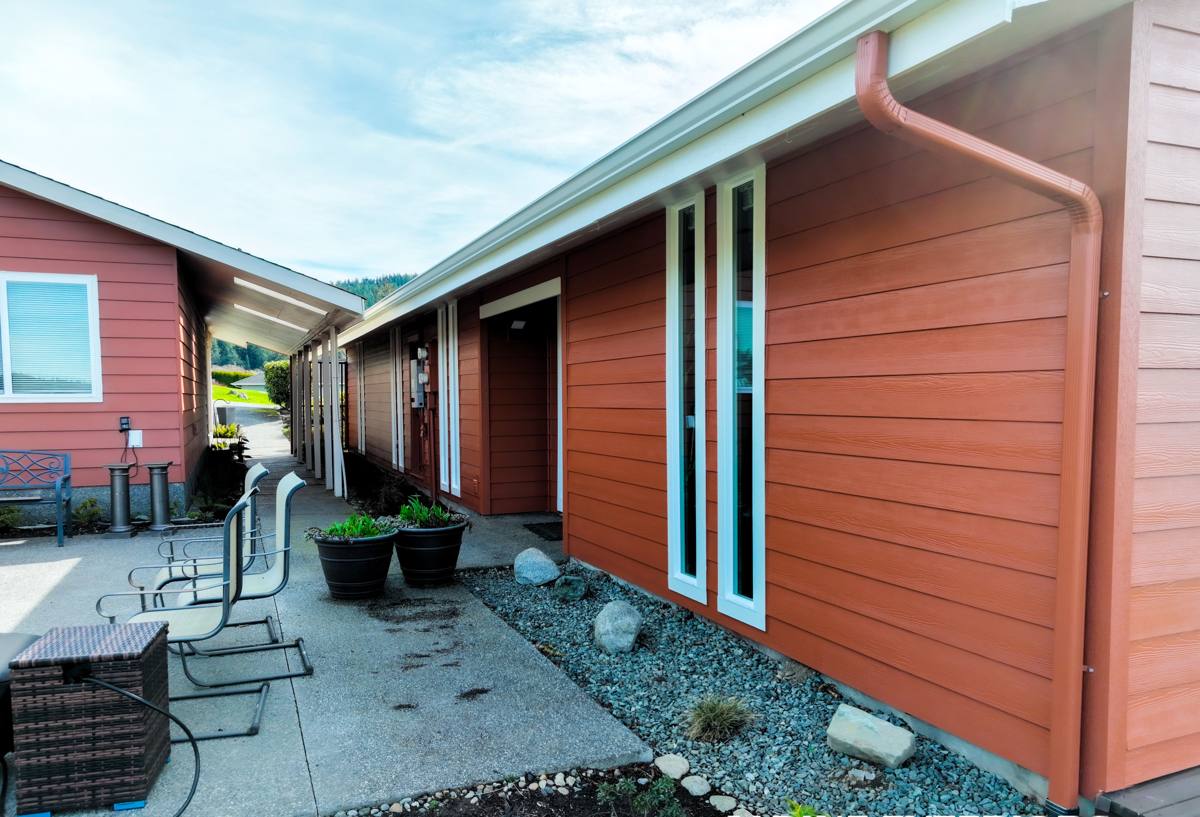
St. Petersburg gets some of the most intense, sustained UV exposure of any city in the country. Vinyl is a PVC plastic product, and UV radiation attacks that plastic at a molecular level over time. The result is a predictable pattern: colors fade unevenly, especially on south- and west-facing walls that take the brunt of the afternoon sun, and the material itself becomes more brittle as the plasticizers that keep it flexible break down. A panel that was fine in a cool, shaded install five years ago can crack from a stray baseball or a ladder bump in a way it wouldn't have when it was new.
Heat compounds the problem. Vinyl panels are engineered to expand and contract with temperature, which is why they're hung loosely on nailing flanges rather than fastened rigidly. In a Pinellas County summer, wall surface temperatures behind dark-colored vinyl can climb well past the material's comfortable working range, accelerating warping, buckling, and the kind of rippled, wavy look that's common on older vinyl-clad homes here. Once a panel warps, there's no fixing it — the section has to be replaced, and if the color has faded from the rest of the wall, that replacement panel won't match.
Hurricane-Force Wind Is a Real Engineering Problem
Pinellas County sits in a wind-borne debris region, and every exterior product installed here has to be rated and detailed with that in mind. Vinyl siding manufacturers do publish wind ratings, and higher-end vinyl products can be engineered for coastal wind zones. But in practice, vinyl's performance in a hurricane or a strong squall line comes down entirely to installation quality — how tightly it's nailed, how well the starter strips and J-channels are seated, and whether the crew followed the manufacturer's fastening pattern to the letter. Because vinyl panels aren't rigidly fastened, they rely on interlocking edges to stay put, and once wind gets up under a lifted edge, it can peel a whole section off the wall in one gust rather than losing a single piece.
We've been called out after storms to look at siding failures, and vinyl is disproportionately represented in those calls — not because every vinyl installation fails, but because the margin for installation error is much smaller than homeowners assume, and a single skipped fastener or misaligned panel can be the difference between siding that survives a named storm and siding that ends up in the neighbor's yard.
What Happens Behind the Panels
Vinyl siding is not a waterproof barrier. It was never designed to be one. The panels themselves are a rain-screen — they shed the bulk of the water, but wind-driven rain, which St. Petersburg gets regularly during summer thunderstorm season and any time a tropical system tracks nearby, pushes moisture behind the panels as a matter of course. That's by design; the actual waterproofing is supposed to happen at the weather-resistant barrier and flashing underneath.
The problem is that vinyl gives you no way to check on that barrier without removing the siding. If flashing around windows, doors, or penetrations wasn't detailed correctly — and on cost-driven installations, corners get cut there more often than homeowners realize — water tracks behind the panels for years without any visible sign on the surface. In a humid Gulf Coast climate, trapped moisture behind an exterior wall doesn't just sit there; it feeds mold and wood rot in the sheathing and framing, and by the time it shows up as a soft spot or a discoloration inside, the damage is usually well past a simple repair.
Salt Air and Coastal Wear
St. Petersburg is surrounded by water on three sides, and salt-laden air off Tampa Bay and the Gulf reaches homes well inland from the immediate waterfront. Salt accelerates the same UV-driven brittleness that already affects vinyl, and it leaves a film that holds onto dirt, pollen, and mildew more readily than a factory-cured finish does. Homeowners closer to the water end up power-washing or hand-cleaning their siding more often just to keep it looking presentable, and aggressive cleaning on already-brittle vinyl runs its own risk of cracking panels or driving water behind seams.
The "Maintenance-Free" Claim, in Practice
Vinyl is marketed as maintenance-free because it never needs paint. That's technically true, but it's not the same as worry-free in this climate:
- Faded or chalky vinyl can't be refreshed with a coat of paint the way fiber cement can — once the color's gone, replacement panels or a full re-side are the only real options
- Warped or buckled sections from heat exposure don't self-correct and typically require full-panel replacement
- Storm-damaged sections need color-matched replacement panels, which become harder to source the longer a color has been out of production
- Salt film and mildew on shaded or low-airflow walls need periodic cleaning to avoid staining and gradual surface degradation
Vinyl vs. James Hardie Fiber Cement: A Side-by-Side Look
| Factor | Vinyl Siding | James Hardie Fiber Cement |
|---|---|---|
| UV / fading resistance | Fades and chalks over time, uneven by wall exposure | ColorPlus factory finish warrantied against fading and chalking |
| Heat stability | Can warp or buckle under sustained direct sun | Dimensionally stable, engineered for Florida heat exposure |
| Wind performance | Rated products exist, but performance hinges heavily on install precision | Rigidly fastened system engineered and tested for high-wind regions |
| Combustibility | Combustible plastic material | Non-combustible fiber cement |
| Moisture behavior | Relies entirely on the barrier behind it; no way to inspect without removal | Engineered HZ product line for moisture and humidity exposure |
| Salt air durability | Susceptible to brittleness and surface film buildup | Holds finish and structure well in coastal exposure |
| Repair and color match | Old color runs are often discontinued, matching gets harder over time | Consistent factory-finish batches; better long-term match odds |
| Warranty structure | Varies by tier, often prorated | Strong, transferable warranty on material and finish |
| Upfront cost | Lower | Higher |
Why We Standardized on James Hardie
We made the decision to install only James Hardie fiber cement siding, and we hold to it because it matches the specific demands of a St. Petersburg exterior: sustained UV, hurricane-force wind events, wind-driven rain, and salt air, sometimes all in the same season. Hardie fiber cement is non-combustible, which matters in a state where wildfire and lightning-driven structure fires are both real risks. It's dimensionally stable under heat in a way vinyl simply isn't, and the ColorPlus factory finish is baked on and backed by its own warranty against fading and chalking — a direct answer to the UV problem that drives most of the complaints we hear about faded, chalky siding on older homes here.
Hardie also engineers climate-specific HZ product lines rather than selling one generic product everywhere, and installed to manufacturer spec — correct fastening pattern, flashing, and clearance from grade and roof lines — it's a rigid, fastened system that performs very differently in a wind event than a loosely hung panel product. The warranty is strong and transferable, which matters to homeowners who may sell before they've fully amortized the cost of a new exterior.
We're not going to tell you every vinyl-sided home in Pinellas County is doomed to fail — plenty get by fine for years, especially on well-protected walls away from direct sun and salt exposure. What we will tell you is that after years of doing exterior work in this specific climate, we made a professional call to install one product we're confident performing here, and that's the standard we hold our own workmanship to.
What to Ask Before You Choose a Siding Material
- Is the product's warranty full-value or prorated, and does it transfer if you sell the home?
- What wind rating does this specific product carry, and how is that rating affected by installation method?
- Is the finish factory-applied or field-applied, and what does that finish's warranty cover on its own?
- How will the crew detail flashing around windows, doors, and penetrations, specifically?
- What does this material actually look like after ten to fifteen years of direct Florida sun?
- Does the contractor carry manufacturer certification for the specific product they're proposing?
If you're weighing vinyl against fiber cement for a home in St. Petersburg or elsewhere in Pinellas County, we're glad to walk the exterior with you, point out the specific sun and wind exposure your walls deal with, and put together a straightforward, no-pressure estimate for a correctly installed Hardie system.