 St. Petersburg Siding
 Living on the Water Changes What Your Windows Need to Do
Coquina Key is a waterfront neighborhood, and that changes the math on windows compared to a house a few miles inland. Homes here sit close to canals and open water, which means more direct salt air, more reflected UV off the water's surface, and a straighter shot for wind-driven rain during storms. Add in the hurricane-force wind gusts that come with any serious tropical system tracking through Pinellas County, and you've got an environment that's genuinely harder on a window than most manufacturers' standard warranty testing accounts for.
None of this means Coquina Key homeowners need to overspend or overbuild. It means the choices that matter — frame material, glass package, and how the unit is actually set into the opening — are worth getting right the first time, because a mediocre install shows its weaknesses fast in a canal-front microclimate like this one.
What Makes a Window Project "Custom" Here
"Custom" isn't a marketing word — it describes real differences in how these projects get scoped and built.
Sizing and Openings That Don't Match a Catalog
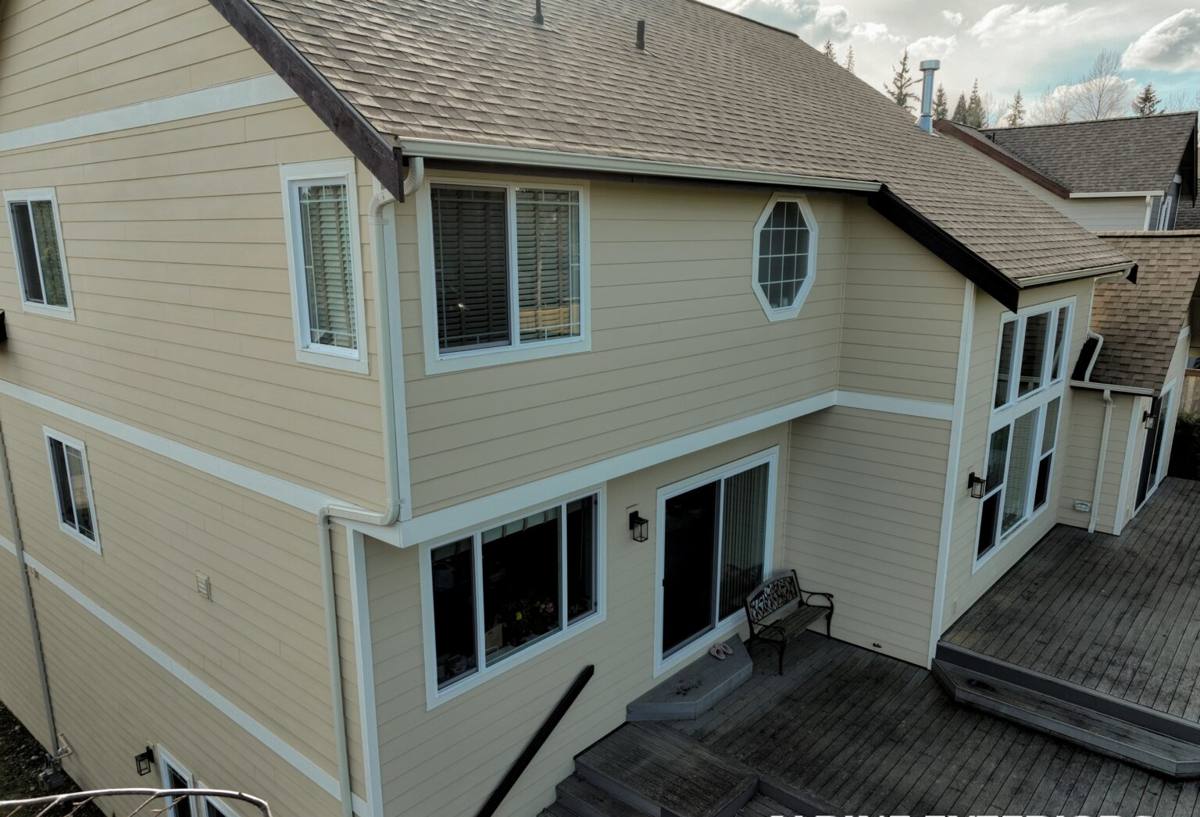
Many homes on the water were built with larger openings facing the canal to take advantage of the view — picture windows, wide sliders, sometimes irregular or oversized openings that don't match a big-box store's stock sizes. Custom work means we measure the actual opening, account for any settling or slight out-of-square conditions that show up in older Florida construction, and build (or order) glass to fit that opening exactly, rather than forcing a standard size and packing the gaps with trim.
Matching the House
Custom also covers appearance — matching existing trim profiles, stucco returns, and sightlines so a replacement window on the canal side doesn't look like an obvious retrofit next to the original construction on the street side.
Impact Glass vs. Shutters: Making the Right Call for a Waterfront Lot
Florida Building Code requires that openings in our wind-borne debris region either use impact-rated glazing or have code-approved protection — typically shutters — installed and ready before a storm. Both routes are legitimate, but they solve the problem differently.
Impact-rated windows are protection built into the window itself: laminated glass that stays intact even when struck, with no separate step required when a storm is approaching. Shutter systems can be less expensive up front but require you (or someone) to actually deploy them every time a storm threatens — not always practical if you travel, if the home is a rental, or if you want the glass doing the work without a pre-storm checklist. On a canal lot with a clear, unobstructed line for wind, we generally steer waterfront homeowners toward impact glass for the openings that see the most exposure, and reserve shutters or protective film for secondary openings where the budget needs to stretch further.
Frame and Glass Options We Install
There's no single "best" window — there's a best fit for your exposure, your budget, and how long you plan to own the home. Here's how the common options actually compare in this climate.
| Option | How It Holds Up Near Salt Air | Maintenance | Best For |
|---|---|---|---|
| Vinyl frame, impact glass | Won't corrode or pit; UV-stable formulations resist chalking | Low — occasional cleaning | Most canal-front replacements |
| Aluminum frame, impact glass | Strong, but raw aluminum can corrode near salt air over years without proper coating | Moderate — watch for pitting at fasteners | Larger spans, modern/contemporary looks |
| Fiberglass frame | Very stable dimensionally, holds paint well in UV and salt exposure | Low | Homeowners planning to stay long-term |
| Non-impact glass + shutters | Glass itself has no added protection; relies on shutter deployment | Higher — shutters need upkeep and manual use | Budget-limited secondary openings |
Within any of these, the glass package matters as much as the frame. A low-E coating cuts down on solar heat gain from that intense year-round Florida sun without darkening the view of the water, and laminated impact glass adds a layer of PVB or similar interlayer between two panes of glass so it holds together under impact instead of shattering out of the frame.
Our Process, Start to Finish
- On-site measure and assessment. We look at every opening individually — actual dimensions, condition of the surrounding framing and stucco, and any signs of past water intrusion.
- Product selection. We walk through frame and glass options against your budget and how exposed a given opening is to wind and water.
- Permitting. Window replacement in Pinellas County typically requires a permit and inspection — we handle that paperwork rather than leaving it on you.
- Removal and prep. Old units come out carefully to protect the surrounding stucco or siding, and we inspect the framing underneath before anything new goes in.
- Flashing and sealing. This step gets skipped or rushed more than any other on lower-quality jobs. Proper flashing and sealant around the opening is what actually keeps wind-driven rain out — the window itself is only half the system.
- Installation and fastening. Units are set plumb, level, and square, and fastened to the manufacturer's specified schedule so the impact rating holds up in practice, not just on paper.
- Final inspection and walkthrough. County inspection sign-off, plus a walkthrough with you so you know how the new windows operate and what to watch for.
Warning Signs Your Current Windows Are Losing the Battle
Salt air and UV don't announce themselves — they show up as small problems that get worse. Worth checking for:
- Frames that feel chalky or have visible pitting, especially aluminum
- Fogging or a hazy film between panes of double-pane glass — a sign the seal has failed
- Windows that are harder to open, close, or lock than they used to be
- Visible daylight or a draft around the frame when the window is closed
- Water staining on interior sills or drywall after heavy wind-driven rain
- Caulk or sealant around the frame that's cracked, shrunk, or pulling away
- Noticeably louder storm and traffic noise than a properly sealed window should allow
Any one of these is worth a look. Several together usually means the window system — not just the glass — has reached the end of its useful service life.
What Local Installation Experience Actually Buys You
A window crew that already works Coquina Key regularly isn't just closer geographically — it means fewer surprises during the job. That includes knowing how Pinellas County's permitting and inspection process actually runs in practice, recognizing the older construction methods common in this part of St. Petersburg, and understanding how canal-front exposure differs opening to opening on the same house — a canal-facing wall of glass and a street-facing bedroom window rarely need identical specs, even on the same job.
It also means showing up prepared for the practical realities of a waterfront lot: tighter access in some cases, protecting landscaping and outdoor living space near the water during removal and install, and sequencing work around weather windows sensibly rather than rushing openings in ahead of a system that's still offshore.
Cost Factors to Expect
Every project is different, but the line items that actually move the price are consistent. We'll always give you a specific number in writing before any work starts — this is just what tends to drive that number up or down.
| Factor | Effect on Cost |
|---|---|
| Impact-rated vs. non-impact glass | Impact glass costs more per opening but removes the need for separate shutters |
| Frame material (vinyl vs. aluminum vs. fiberglass) | Fiberglass typically runs highest, vinyl is often the most economical impact-rated option |
| Custom vs. standard sizing | Non-standard or oversized openings add fabrication time and cost |
| Number of openings replaced at once | Bundling openings in one project usually lowers the per-window cost |
| Condition of existing framing | Hidden water damage found during removal adds repair work before install |
As a rough starting point, mid-range impact-rated windows installed in this area commonly run from several hundred to well over a thousand dollars per opening depending on size and glass package — large canal-facing units and sliding glass configurations run higher. Treat any number you see online as a ballpark until someone has actually measured your openings.
Maintenance That Actually Matters in a Salt-Air Neighborhood
New windows still need upkeep near the water — it's just less than what older, non-rated windows required. A rinse with fresh water every few weeks (more often if you're getting regular salt spray) keeps salt residue from sitting on frames and hardware. Check weep holes on the exterior periodically to make sure they're clear and draining properly, since blocked weep holes trap water against the frame. Inspect exterior caulking once a year, since UV breaks down sealant faster here than in most climates, and a small gap caught early is a five-minute fix instead of a water intrusion problem later.
If you're weighing custom windows for a home on Coquina Key, we're glad to come take a look, measure the actual openings, and put together a straightforward, no-pressure estimate — just fill out the form below.