 St. Petersburg Siding
 Euclid-St. Paul Homes Face the Full Range of Pinellas County Weather
Euclid-St. Paul is one of the established residential communities inside St. Petersburg, with a housing stock that spans decades of construction styles and siding choices. Like the rest of the city, homes here sit under a climate that doesn't give exterior materials much of a break: hurricane-force winds during storm season, intense year-round UV that doesn't ease off the way it does in most of the country, wind-driven rain that gets pushed sideways into places a calm rain would never reach, and salt air drifting in off Tampa Bay and the Gulf that works on every exposed surface, day after day, whether a storm is in the forecast or not.
We work across St. Petersburg and Pinellas County, and neighborhoods like Euclid-St. Paul come up regularly because the combination of older housing stock and sustained coastal exposure means a lot of homes are carrying siding that was never built for what Florida actually throws at it. This page covers what that climate does to a home's exterior, how we approach siding, roofing, window, and deck work in this part of the city, and why our crews install exclusively James Hardie fiber cement rather than vinyl, engineered wood, or other fiber cement brands.
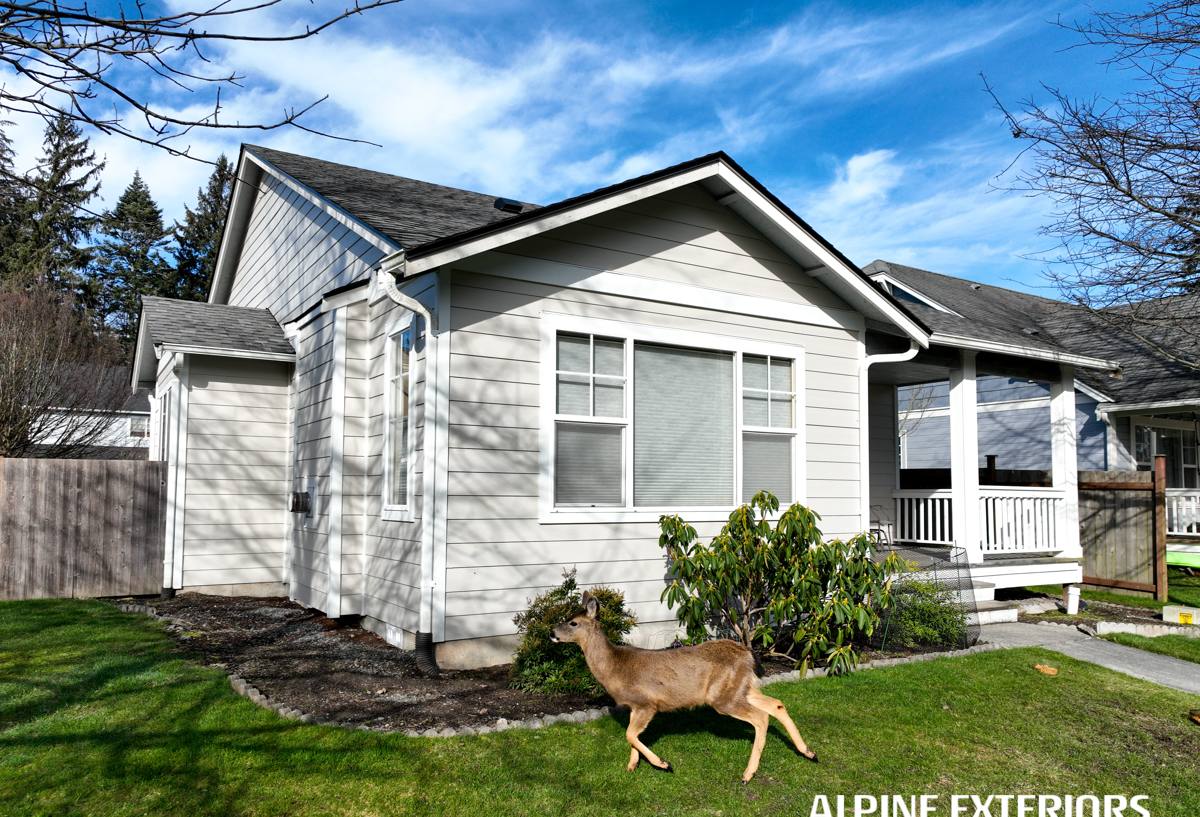
What St. Petersburg's Climate Actually Does to Siding
UV Load
Florida's sun angle and long day length add up to far more cumulative UV exposure per year than most siding products were designed to handle. On lower-grade paints and coatings, that UV load breaks down the pigment binders over time, which is why so many homes across St. Petersburg show chalky, faded siding on their south- and west-facing walls years before the shaded side of the same house shows any wear at all. It isn't a defect in any one product — it's just the arithmetic of Florida sun on a coating that wasn't engineered for it.
Wind-Driven Rain
Ordinary rain is easy for almost any siding to shed. Rain driven sideways by 40, 50, or 60-plus mph wind is a different problem entirely — it finds its way into butt joints, fastener penetrations, and trim intersections that would stay bone-dry in a calm storm. After a season or two of that kind of exposure, homes with aging caulk lines or marginal flashing start showing water intrusion at exactly those weak points, sometimes long before anyone notices from the outside.
Salt Air
St. Petersburg sits on a peninsula between Tampa Bay and the Gulf of Mexico, and airborne salt settles on exterior surfaces throughout the city, Euclid-St. Paul included. Salt accelerates corrosion on exposed metal fasteners and trim, and over years it can interact with certain coatings and adhesives in ways that shorten their useful life. It's a slow, cumulative process rather than a dramatic one, but it's a real part of why fastener choice and finish quality matter more here than they would inland.
Humidity and Heat Cycling
Pinellas County's combination of high humidity, hot afternoons, and warm, wet nights keeps exterior materials in a near-constant cycle of expansion, contraction, and prolonged dampness. Materials that absorb moisture rarely get a full chance to dry out before the next rain or overnight dew settles in, which is a significant factor when comparing wood-based siding products to fiber cement, covered in more detail below.
Why We Install Only James Hardie Fiber Cement
Homeowners in Euclid-St. Paul regularly ask why we don't offer vinyl, LP SmartSide, or other fiber cement brands like Cemplank or Allura. The honest answer is that we made a standardization decision based on what actually holds up under the conditions described above, and we'd rather do one product exceptionally well than spread our crews across several products we can only do adequately.
Vinyl Siding
Vinyl is inexpensive and low-maintenance in mild climates, and it has a real place in the market. But it's designed to hang loosely on the wall to allow for thermal expansion, and that same looseness makes it more vulnerable to being torn off in sustained hurricane-force gusts compared to a rigid, mechanically fastened product. It also tends to soften under sustained high heat, which is a routine condition rather than an exception in a St. Petersburg summer.
Engineered Wood (LP SmartSide and Similar)
Engineered wood siding has a genuine track record and plenty of satisfied homeowners elsewhere. But it's still a wood-fiber product at its core, and in a climate where humidity rarely lets exterior surfaces fully dry out, any compromise in the factory edge seal — an unsealed field cut, a cracked fastener point, a joint that opens over time — creates an entry point where the wood core can wick moisture and swell. That's a product with a real maintenance sensitivity in a climate that doesn't forgive maintenance gaps.
Other Fiber Cement Brands
Not all fiber cement is engineered the same way. We standardized on James Hardie specifically for its climate-engineered HZ product lines built for higher-humidity, higher-moisture regions like ours, its factory-applied ColorPlus finish that resists the fading and chalking plain field-painted siding shows under Florida UV, and the depth of its installation documentation and warranty backing. Non-combustibility comes up often in conversations too — fiber cement doesn't add fuel to a fire the way wood-based siding products can.
Comparing Siding Options for a Euclid-St. Paul Home
| Factor | Vinyl | Engineered Wood | James Hardie Fiber Cement |
|---|---|---|---|
| Wind performance in hurricane-force gusts | Can be torn loose in sustained high winds | Solid when properly fastened and sealed | Rigid, mechanically fastened, engineered for wind zones |
| Behavior under constant UV | Can fade and become brittle over years | Factory finish varies by product | ColorPlus finish resists fading and chalking |
| Moisture/humidity tolerance | Doesn't rot but traps humid air behind it | Wood-fiber core can swell if edge seal is compromised | Non-organic, doesn't swell or support rot |
| Salt air exposure | Generally stable, fasteners can corrode | Generally stable, fasteners can corrode | Generally stable, quality fastener specs matter |
| Combustibility | Can melt/deform in extreme heat | Combustible (wood-based) | Non-combustible |
How the Work Happens in Euclid-St. Paul
Every project starts with a real look at what's happening underneath the current siding, not just what's visible from the street. On older homes, that usually means checking for soft spots near window and door trim, examining flashing at roof-to-wall transitions, and looking at how water has historically moved around the foundation. Euclid-St. Paul's mix of housing ages means we see everything from original siding that's decades old to homes that have already been through one or two prior re-siding jobs with other products.
Once we understand what we're working with, installation follows James Hardie's published fastening, clearance, and joint-treatment specifications closely. That isn't optional detail work — it's the difference between fiber cement that performs for decades and fiber cement that develops the same problems as a poorly installed product. That means correct clearance from grade, decks, and roof lines, the right fastener type and spacing for our wind zone, and properly lapped, sealed joints and flashing at every penetration.
What a Typical Project Includes
- Exterior inspection and moisture check before any tear-off begins
- Removal of existing siding and inspection of the sheathing underneath
- Repair or replacement of any damaged sheathing or framing found during tear-off
- Installation of a proper water-resistive barrier and correctly integrated flashing
- James Hardie plank, panel, or shingle siding installed to manufacturer spec and local wind code
- Trim, corner boards, and fascia work to match the chosen Hardie product line
- Final walkthrough covering caulking, paint touch-up needs, and care instructions
Why a Local Crew Matters for This Work
Siding quality mostly comes down to details a photo will never show you — how flashing is lapped, how much clearance is left at the bottom course, whether cut ends are sealed, whether fasteners are driven to the correct depth. A crew that works St. Petersburg and Pinellas County routinely has already seen how those details play out on this specific building stock, in this specific climate, under these specific storm conditions. That matters more here than in most markets, because the margin for error is smaller — wind-driven rain and salt air find weaknesses that a milder climate would let slide for years without consequence.
It also matters for permitting and code compliance. Pinellas County's wind zone requirements affect fastening schedules and product specifications, and a contractor who pulls permits here regularly knows what local inspectors actually look for, rather than applying a generic standard built for somewhere else.
Roofing, Windows, and Decks Alongside Siding
Siding rarely fails on its own, separate from the rest of the building envelope. We handle roofing, windows, and decks in addition to siding, because a lot of the moisture and wind problems we see trace back to how these systems interact with each other — a roof-to-wall flashing detail is really a roofing and siding issue at the same time, and window flashing integration determines whether new siding actually stays dry around every opening. When we quote a siding project in Euclid-St. Paul, we're looking at the whole exterior, not just the wall surface, and we'll tell you honestly if something else needs attention first.
Signs Euclid-St. Paul Homeowners Should Watch For
- Paint that's chalking, fading unevenly, or peeling faster on sun-facing walls
- Soft or spongy spots when pressing on siding near windows, doors, or the bottom courses
- Visible gaps, warping, or buckling in siding panels, especially after storm season
- Rust streaks or corrosion around fasteners and trim
- Musty odors or visible staining on interior walls that back up to exterior siding
- Siding that's noticeably older than 20-25 years with no documented replacement history
None of these signs mean a home needs full replacement right away, but they're worth a professional look before the next storm season rather than after water has already worked its way into the sheathing and framing.
What to Expect From an Estimate
An honest estimate starts with an inspection, not a sales pitch. We'll look at your current siding's condition, check for hidden moisture or structural issues, talk through which James Hardie product line fits your home and budget, and give you a straightforward number — not a lowball figure that grows once work starts. Cost depends on home size, existing condition, number of stories, and how much trim and detail work is involved, and we'll walk you through those factors specifically rather than leaving you guessing.
If you're in Euclid-St. Paul and thinking about siding, roofing, windows, or decks — whether you're dealing with a specific problem or just planning ahead of the next storm season — we're happy to come take a look and give you a straightforward, no-pressure estimate using the form below.