 St. Petersburg Siding
 Exterior Work in Historic Old Southeast
Historic Old Southeast sits close enough to Tampa Bay that salt air, wind-driven rain, and storm season aren't abstractions — they're part of owning a home here. Many of the houses in this part of St. Petersburg have some age on them, which means original siding, trim, and roofing have already absorbed decades of Pinellas County weather. When it's time to replace siding, repair a roof, swap out windows, or rebuild a deck, the work has to hold up to the same conditions that wore out what's there now, not just look good on install day.
We work across St. Petersburg and Pinellas County, and Historic Old Southeast comes with its own set of considerations: older wood-frame construction, mature tree canopy that keeps some homes shaded and others exposed to wind funneling between structures, and a neighborhood character that homeowners generally want to preserve rather than modernize away. Good exterior work here respects both the house and the climate it has to survive.
What the Climate Does to Homes in This Area
Florida's Gulf Coast climate is hard on exteriors in a few specific ways, and Historic Old Southeast gets all of them.
Hurricane-Force Wind
Even homes that never take a direct hurricane hit still see tropical-storm-force gusts most seasons. Wind doesn't just push against siding — it gets up under loose or aging panels, works fasteners loose, and turns small gaps into entry points for wind-driven rain during the next storm.
Year-Round UV Exposure
St. Petersburg's sun exposure is intense and constant, not seasonal. UV breaks down paint film, dries out caulking, and causes wood and lower-grade composite products to warp, crack, or fade unevenly depending on which side of the house catches the most sun.
Wind-Driven Rain
Rain that comes in sideways during a storm tests every seam, joint, and piece of flashing on a house. Siding and trim that look fine in dry weather can still be letting moisture behind them during a heavy blow if the installation wasn't done with wind-driven rain specifically in mind.
Salt Air
Proximity to Tampa Bay means a steady low-level exposure to salt in the air, even without living directly on the water. Salt accelerates corrosion on fasteners and metal components and speeds up the breakdown of finishes that aren't built to resist it.
Why We Install Only James Hardie Fiber Cement Siding
We made a decision to stop installing several common siding products and put James Hardie fiber cement on every home we side, including in Historic Old Southeast. That's not a marketing position — it's what we concluded after years of seeing which products actually hold up to Gulf Coast conditions and which ones create ongoing problems for homeowners.
James Hardie fiber cement is non-combustible, which matters in a state where wildfire risk gets less attention than hurricanes but still exists. It's engineered specifically for humid, high-UV, storm-prone climates through Hardie's HZ10 product line, which is built for exactly the weather Florida delivers. The factory-applied ColorPlus finish is baked on under controlled conditions, which gives it far more consistent UV and fade resistance than a field-applied paint job, and it comes with a strong transferable warranty that follows the house if it's sold.
None of that means fiber cement is maintenance-free or that installation quality doesn't matter — it very much does, which we cover below. But as a base material, it's the one we're willing to put our name behind here.
What We Don't Install, and Why
We don't install vinyl siding, LP SmartSide, Cemplank, Allura, or primed spruce or cedar. Each of these has legitimate strengths, and we're not going to pretend otherwise:
- Vinyl siding is inexpensive and easy to install, but it softens and can deform in extreme heat, and in strong wind events it's more prone to cracking or blowing off than fiber cement.
- LP SmartSide is a wood-strand product that performs reasonably in drier climates, but wood-based composites are more sensitive to sustained humidity and moisture intrusion than cement-based siding — a real concern this close to the water.
- Cemplank and Allura are also fiber cement products and share some of the same core benefits as Hardie, but we've standardized on one manufacturer so we can guarantee consistent specs, matching trim systems, and a warranty structure we know and stand behind.
- Primed spruce or cedar is the traditional choice and can look beautiful, but real wood siding demands a maintenance schedule — recaulking, repainting, checking for rot — that most homeowners underestimate, especially under Florida's UV load and humidity.
Our standard isn't that these products are junk. It's that after weighing installation sensitivity, moisture behavior, and long-term maintenance burden against what fiber cement delivers, Hardie is what we're comfortable warranting our work on.
Keeping an Older Home's Character Intact
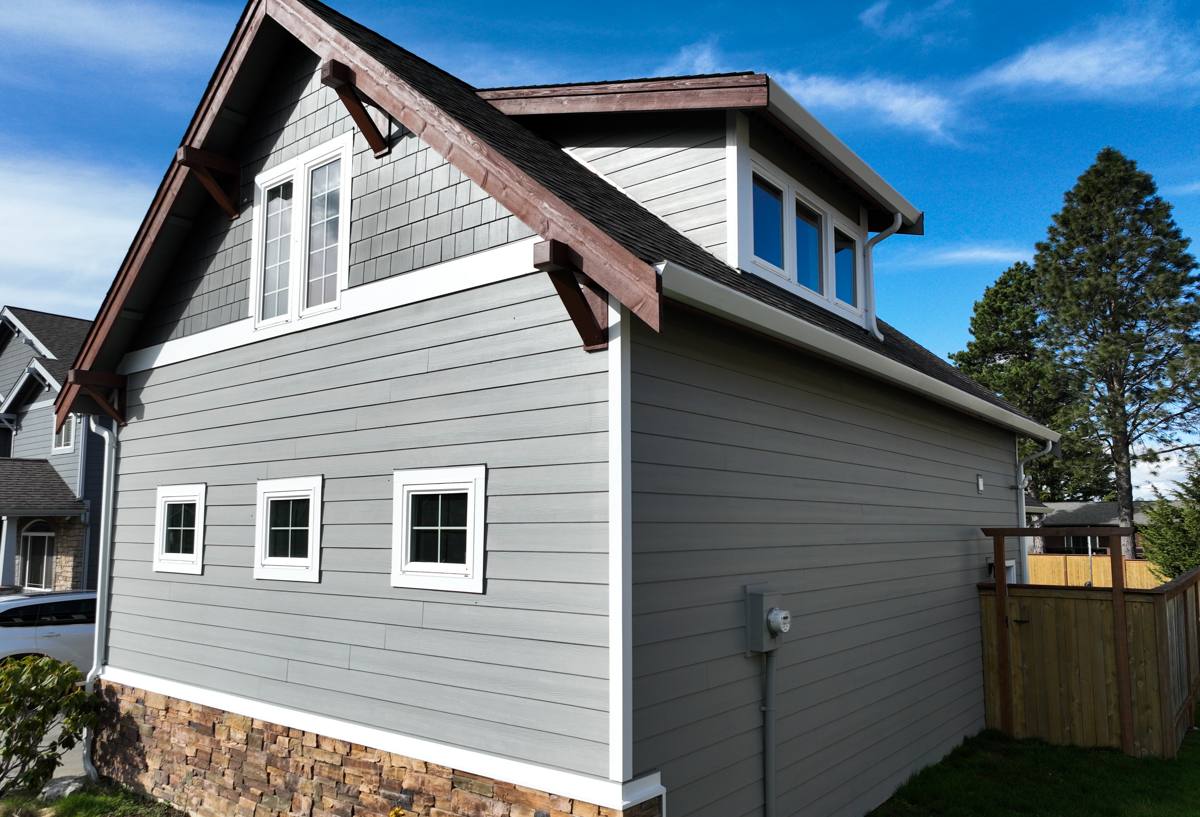
A lot of homeowners in Historic Old Southeast worry that switching to fiber cement means losing the look of their house. It doesn't have to. James Hardie's lap and shingle siding profiles are made to mimic traditional wood siding reveals and shadow lines, and the ColorPlus palette includes options that read as classic, period-appropriate tones rather than a modern reset. Matching trim boards, fascia, and soffit components let a crew carry that same look around the whole exterior instead of just the field of the wall, which is where mismatched materials tend to stand out.
Beyond Siding: The Rest of the Exterior
Siding rarely fails in isolation — roofing, windows, and decks all face the same wind, UV, and moisture exposure, and problems in one area often show up as damage in another.
Roofing
A roof that's lost shingles or granule coverage lets water track down behind siding and trim during wind-driven rain. Roof condition is one of the first things worth checking when siding starts showing moisture damage.
Windows
Older windows with failing seals or worn caulking are a common source of the moisture intrusion that gets blamed on siding. Impact-rated or well-sealed replacement windows also reduce the pressure differential that can make wind-driven rain worse during storms.
Decks
Outdoor decks in this climate take direct UV and rain exposure with no siding or roof overhang to shield them, so they typically need attention on a shorter cycle than the rest of the exterior.
Because we handle all four — siding, roofing, windows, and decks — we can look at a home's exterior as one system instead of patching one component while a related issue keeps causing damage.
What Correct Installation Actually Involves
Fiber cement performs the way it's rated to only when it's installed correctly. In a wind- and rain-exposed area like Historic Old Southeast, that means proper flashing around every window, door, and penetration; a correctly lapped moisture barrier behind the siding; manufacturer-specified fastener spacing and type (not just whatever's on hand); and the right clearances at grade and roof lines so water sheds instead of collecting. Skipping any of these steps is how a good product still ends up with a moisture or wind problem down the road.
| Factor | James Hardie Fiber Cement | Vinyl | Wood / LP SmartSide |
|---|---|---|---|
| Wind resistance | Rated for high-wind installation when installed to spec | Can crack or detach in strong gusts | Moderate; fastener pull-through possible over time |
| Moisture behavior | Cement-based, does not absorb and swell like wood | Doesn't absorb moisture, but seams can trap it | More sensitive to sustained humidity and rot |
| UV / fade resistance | Factory-baked ColorPlus finish | Can chalk or discolor with prolonged sun | Field-applied paint needs recoating on a regular cycle |
| Maintenance | Periodic caulk and paint touch-up over a long cycle | Low, but limited to repainting since it can't be painted easily | Regular repainting, sealing, and rot inspection |
| Fire classification | Non-combustible | Combustible | Combustible |
Signs Your Siding Needs a Closer Look
Homeowners in this area are often better served catching problems early than waiting for visible failure. Watch for:
- Soft or spongy spots when you press on siding near the bottom of walls or under windows
- Visible warping, buckling, or gaps between panels
- Peeling or bubbling paint, especially on sun-exposed sides of the house
- Discoloration or dark streaking that keeps returning after cleaning
- Cracked or missing caulking around windows, doors, and trim joints
- A musty smell or visible staining on interior walls that back up to exterior siding
Any one of these on its own might be minor. Several at once, or anything paired with interior staining, is worth having looked at before the next storm season.
Why a Local Crew Matters
Exterior work in Pinellas County isn't generic — permitting, wind-load requirements, and what actually holds up here differ from inland Florida or other states entirely. A crew that works this area regularly knows how Historic Old Southeast's older homes are typically built, what local code enforcement expects, and which installation details actually matter once storm season arrives. That local knowledge is part of what separates an installation that survives its first serious wind event from one that doesn't.
If you're weighing a siding replacement, a roof repair, new windows, or deck work on a home in Historic Old Southeast, we're happy to take a look and talk through what your house actually needs — no pressure, no obligation. Request a free estimate using the form below.