 St. Petersburg Siding
 Old Southeast is one of St. Petersburg's older, established neighborhoods, and that history is written into its rooflines. Many homes here were built long before modern Florida wind codes existed, which means the roof covering carries more responsibility than it did the day it went on. Asphalt shingles remain the most practical, cost-effective roofing choice for the vast majority of these houses — but only when the system is specified and installed correctly for a home that sits close to Tampa Bay and takes a direct hit from Gulf humidity, salt air, and tropical weather every single year.
What Makes Old Southeast Roofs Different
This is a walkable, tree-canopied part of St. Petersburg with a mix of older bungalow-era homes and later infill construction. That combination creates a few recurring conditions we plan around every time we quote a shingle job here:
- Older roof decks — sometimes original wood plank sheathing rather than modern plywood or OSB, which changes how fasteners hold and how the deck needs to be inspected and prepped.
- Mature tree cover, which means more organic debris, more shade-driven moisture retention, and a higher chance of limb strikes during storms.
- Smaller, closer-set lots where proper ventilation, drainage, and staging during a re-roof take more planning than a wide-open subdivision job.
- Homes with historic character where curb appeal and a shingle profile that fits the house matter as much as the underlying performance.
None of this makes asphalt shingles a poor fit for Old Southeast — it just means the job has to be done with the neighborhood's actual housing stock in mind, not treated like a generic tract-home re-roof.
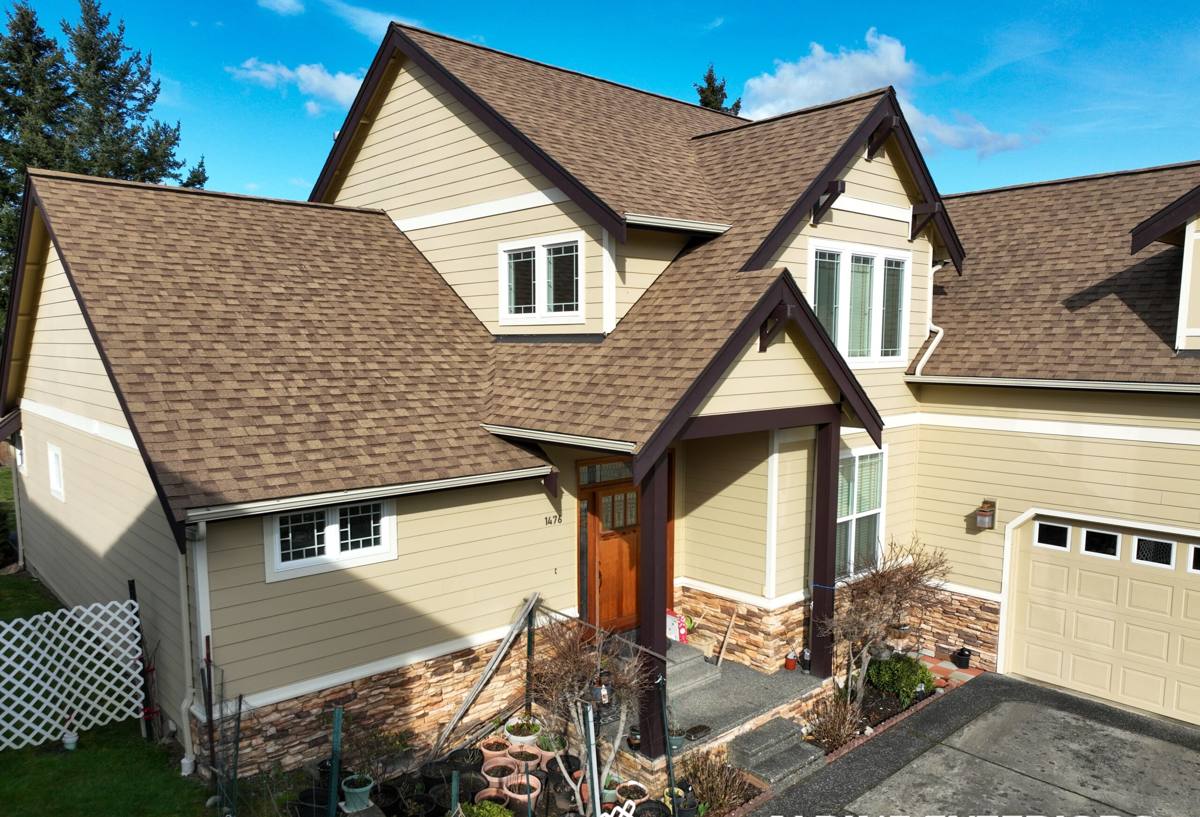
What Pinellas County Weather Does to a Shingle Roof
St. Petersburg roofs deal with a tougher combination of stresses than most inland markets, and it shows up as accelerated wear if a roof was built to a minimum standard instead of a Florida-appropriate one.
UV and Heat
Year-round sun exposure dries out and oxidizes the asphalt in shingles faster than in cooler climates. Over time this shows up as granule loss, brittleness, and shingles that curl or crack instead of flexing. Lighter, reflective shingle colors and a properly ventilated attic both slow this process down.
Wind-Driven Rain and Hurricane Gusts
Pinellas County sits in an active hurricane corridor, and wind speed requirements in the Florida Building Code reflect that. A roof here isn't just shedding rain — it has to resist wind uplift at the shingle edges, ridge, and any place water can be driven sideways under a tab. Sealant strips, nailing pattern, and starter-course installation matter far more here than they would in a low-wind region.
Salt Air and Humidity
Being close to Tampa Bay means metal roofing components — flashing, drip edge, nail heads, vent hoods — are exposed to salt-laden air that accelerates corrosion if the wrong materials are used. High ambient humidity also means any trapped moisture in the roof assembly stays wet longer, which is what eventually causes deck rot and shingle failure from underneath rather than from the surface.
Choosing the Right Shingle for This Neighborhood
Not every asphalt shingle product is built for coastal Florida conditions, and not every shingle style suits an older Old Southeast home. We walk homeowners through the real trade-offs rather than defaulting to whatever is cheapest to install.
| Shingle Type | Typical Wind Rating | Expected Lifespan Here | Best Fit |
|---|---|---|---|
| 3-tab (economy) | Lower — often 60-70 mph rated | 10-15 years in this climate | Budget-driven jobs on secondary structures; not our recommendation for primary homes |
| Architectural / laminate | Commonly 110-130 mph rated | 18-25 years with proper install | Most Old Southeast homes — good balance of cost, appearance, and storm performance |
| Impact-rated / high-wind laminate | Often 130-150+ mph rated | 20-30 years, best long-term value | Homes wanting maximum wind and hail resistance, or insurance premium credits |
For most homes in this neighborhood, we steer people toward a laminate architectural shingle with a documented high-wind rating. It gives a fuller, more dimensional look that suits older home styles better than a flat 3-tab profile, and it's rated to actually perform in the wind speeds Pinellas County sees.
What a Correct Installation Actually Involves
The shingle brand printed on the wrapper matters far less than what happens underneath it. Most of the roof failures we get called out to inspect trace back to shortcuts in these steps, not a bad product.
Tear-Off and Deck Inspection
We remove the existing roofing down to the deck rather than layering over old shingles. That lets us actually see the sheathing — critical on older Old Southeast homes where original wood plank decking may need sistering, replacement, or re-fastening before anything new goes down. Skipping this step is the single most common cause of early roof failure on older homes.
Underlayment as the Real Water Barrier
Shingles shed the majority of water, but the underlayment is the actual waterproofing layer underneath. In this climate we use synthetic or self-adhering underlayment products rated for high heat and moisture exposure, with self-adhering membrane at vulnerable areas like eaves, valleys, and roof penetrations where wind-driven rain is most likely to find a way in.
Flashing at Every Transition
Chimneys, walls, skylights, and roof-to-wall transitions are where leaks actually start on most homes — not the open field of shingles. Correct step flashing, counter-flashing, and valley metal, all in materials that hold up to salt air rather than corroding within a few years, are non-negotiable on every job we do here.
Ventilation
A hot, poorly ventilated attic bakes shingles from underneath and shortens their life regardless of how good the product is. We check intake at the soffits and exhaust at the ridge or roof vents to make sure air actually moves through the attic space, not just in one end and out the same side.
Fastening and Wind Compliance
Nail pattern, nail placement, and nail type are specified by both the shingle manufacturer and Florida Building Code wind requirements — and they're the difference between a roof that holds through a tropical storm and one that loses shingles in a stiff afternoon squall. We fasten to the manufacturer's high-wind pattern as standard practice on every Old Southeast roof, not as an upgrade.
Permitting and Local Code Requirements
Re-roofing in St. Petersburg requires a permit, and Pinellas County enforces the Florida Building Code's wind and re-roofing provisions, including inspection at key stages of the work. On a historic-adjacent neighborhood like Old Southeast, that can also mean paying attention to exterior appearance requirements depending on the specific property. We pull the required permits, schedule inspections, and handle that paperwork as part of the job — it shouldn't be something a homeowner has to chase down themselves.
Our Process on an Old Southeast Roofing Job
- On-site inspection. We walk the roof and attic, check the deck condition, note any pre-existing damage, and take real measurements rather than estimating from the street.
- Written estimate. A clear scope of work and price, including what shingle and underlayment system we recommend and why, with options at different price points.
- Material staging. Given the tighter lots common in this neighborhood, we plan delivery and dumpster placement to minimize disruption to the property and neighbors.
- Tear-off and deck repair. Full removal of the old roofing, deck inspection, and any necessary sheathing repair before anything new goes on.
- Underlayment, flashing, and shingle installation. Installed to manufacturer high-wind specifications and Florida Building Code requirements, not the minimum allowed.
- Cleanup and magnetic sweep. Full site cleanup, including a nail sweep of the yard and driveway.
- Final walkthrough. We review the finished roof with the homeowner before calling the job complete.
Homeowner Maintenance Checklist
A correctly installed shingle roof still needs basic upkeep, especially under Old Southeast's tree canopy. This helps homeowners catch small issues before they become deck damage:
- Clear leaves and debris from valleys and gutters at least twice a year, more often under heavy tree cover.
- Trim overhanging limbs that touch or drag across the roof surface.
- After any named storm, do a visual check from the ground for missing, lifted, or granule-bare shingles.
- Watch for granules collecting in gutters or at downspout outlets — a sign of accelerating shingle wear.
- Check attic insulation and ventilation periodically; a hot attic ages a roof faster from underneath.
- Address any interior ceiling stains immediately rather than waiting for visible roof damage.
Why Local Experience in This Neighborhood Matters
A crew that only occasionally works in older St. Petersburg neighborhoods has to relearn things a crew that works Old Southeast regularly already knows — how these older decks are typically framed, what the tight lot lines mean for staging equipment and dumpsters, and how to keep a job moving without disrupting a dense residential street. That familiarity translates into fewer surprises mid-project, more accurate estimates up front, and a finished roof that actually fits the character of the home rather than looking like it was dropped in from a subdivision three counties away.
If you're weighing a repair against a full replacement, or just want an honest read on how much life is left in your current roof, we're happy to take a look. Reach out for a free, no-pressure estimate — someone will walk the roof, answer your questions plainly, and give you a real number, not a sales pitch.