 St. Petersburg Siding
 Why Pinellas Park Siding Has to Work Harder Than Siding Almost Anywhere Else
Pinellas Park sits inland enough to avoid direct beachfront exposure, but it's still surrounded by Tampa Bay and the Gulf on nearly every side, which means the same punishing mix hits homes here as it does closer to the water: hurricane-force wind gusts during tropical systems, intense UV exposure nearly every day of the year, wind-driven rain that gets forced sideways into wall assemblies, and a steady drift of salt air that corrodes fasteners and degrades weaker materials over time. Siding here isn't a cosmetic decision. It's the first line of defense for the wall assembly behind it, and it has to hold up to all four of those stresses at once, every year, for decades.
That's the lens we use for every Pinellas Park project: not "what siding looks good," but "what siding, installed correctly, will still be doing its job in year twenty." For fiber cement specifically, that means paying close attention to the product line, the fastening pattern, the flashing details, and the finish — because in this climate, the difference between a correct install and an almost-correct one shows up fast.
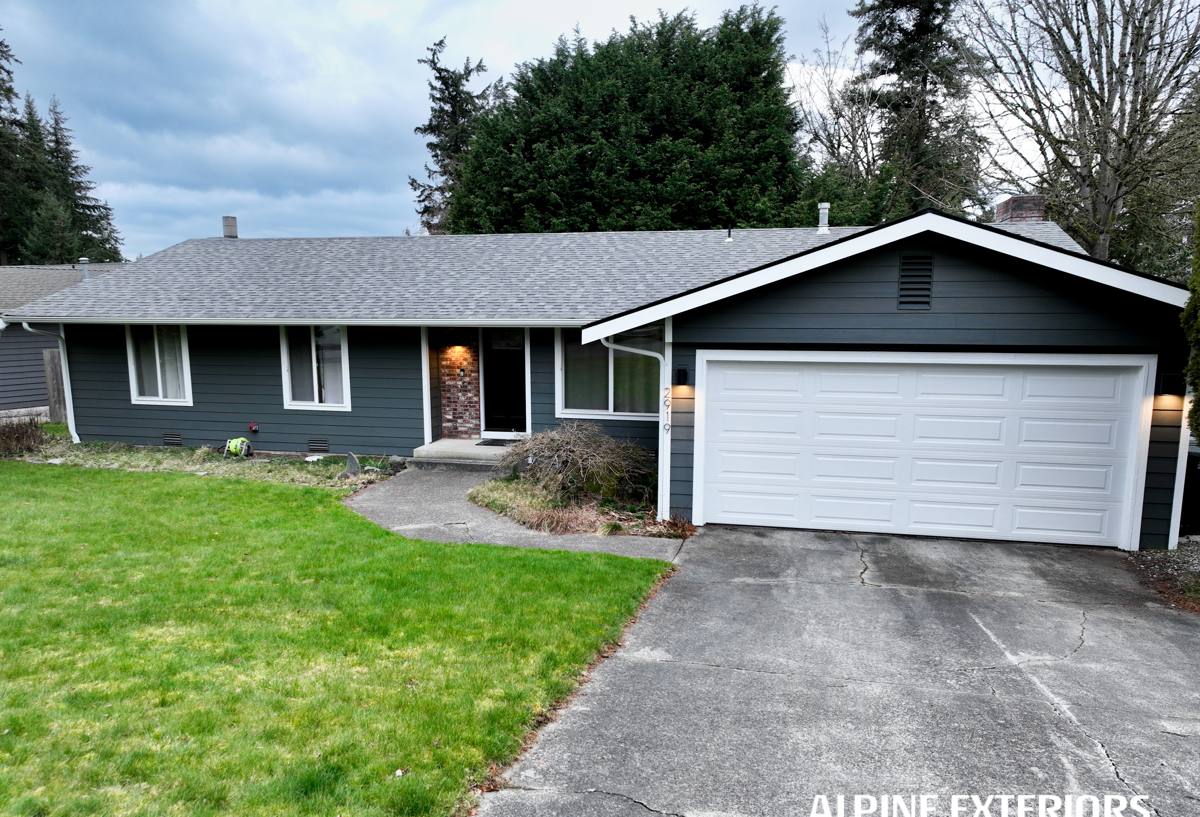
What Fiber Cement Siding Actually Is
Fiber cement is a composite of Portland cement, sand, and cellulose fiber, formed under pressure and cured into rigid boards, panels, or shingle-style pieces. It's non-combustible, dimensionally stable across temperature swings, and resistant to the kind of moisture-driven rot, insect damage, and warping that plague wood and wood-composite siding products. We install exclusively James Hardie fiber cement — we don't install LP SmartSide, vinyl, or other fiber cement brands — because Hardie's product engineering and factory-applied finish are built specifically for climates like ours, and their installation specifications and warranty structure give us a system we can stand behind without hedging.
Product Lines That Make Sense for This Area
- HardiePlank lap siding (HZ5 formulation): engineered for humid, high-moisture Southeast climates — the standard choice for most Pinellas Park homes.
- HardiePanel vertical siding: used for accent walls, gable ends, and modern architectural styles.
- HardieShingle siding: a staggered or straight-edge shingle look for homes going for a coastal or craftsman profile without the maintenance of real wood shingles.
- HardieTrim boards: for corners, fascia, and window/door casing, matched to the field siding so the whole envelope moves and weathers together.
The HZ5 formulation matters more than most homeowners realize. Hardie makes climate-specific versions of its products, and the HZ5 line is formulated for the moisture and humidity load of Gulf Coast and Southeast markets specifically — it's not the same board you'd get installed in a dry climate.
What a Correct Installation Actually Involves
Fiber cement is only as good as its installation. The board itself resists rot and pests, but if it's installed wrong, water gets behind it, and once water is behind siding in a humid climate like Pinellas Park's, mold and sheathing damage follow — regardless of what the siding itself is made of.
The Details That Separate a Correct Install From a Problem Waiting to Happen
- A weather-resistant barrier (house wrap or building paper) installed correctly behind the siding, with proper overlaps and no punctures left unsealed.
- Correct fastener type, length, and spacing — Hardie specifies corrosion-resistant fasteners, which matters even more here given the salt air content in coastal air masses.
- Proper clearance between the bottom of the siding and grade, roof lines, decks, and patios, so water has somewhere to go and siding doesn't sit in standing moisture.
- Correct nailing pattern and blind-nailing where specified, avoiding over-driven or under-driven fasteners that compromise the board or leave gaps.
- Flashing at every penetration — windows, doors, hose bibs, light fixtures, vents — installed so water sheds outward, not into the wall.
- Proper caulking at butt joints and trim intersections using a sealant compatible with ColorPlus finishes, not just whatever's on the truck.
- Correct overlap and gapping at panel and plank joints to allow for the board's natural expansion and contraction.
Most of the fiber cement failures we get called out to inspect aren't material failures — they're installation shortcuts. Nail patterns too sparse for wind zone requirements, missing or reused flashing, siding installed tight to grade or roof lines with no clearance, or field-painted boards where the paint failed years before the board itself would have. Every one of those is preventable with a correct install to spec.
Our Process for Pinellas Park Projects
- On-site inspection and moisture check: we look at the existing siding, sheathing condition, and any signs of past water intrusion before quoting anything.
- Product and color selection: matched to the home's style and any HOA or neighborhood guidelines that apply.
- Tear-off and sheathing assessment: old siding comes off, and any damaged sheathing underneath gets addressed before new material goes up — we don't cover over a problem.
- Weather barrier and flashing installation: the part nobody sees but that determines whether the job lasts.
- Fiber cement installation to Hardie spec: correct fasteners, spacing, clearances, and joint treatment throughout.
- Trim, caulking, and final detailing: including inspection of all penetrations and transitions.
- Final walkthrough and cleanup: job site cleared, work reviewed with the homeowner before we call it done.
Cost Factors for a Pinellas Park Fiber Cement Project
Every home is different, so we won't publish a number that doesn't apply to your specific project — but these are the factors that actually move the price, and it helps to understand them before you start comparing quotes.
| Factor | Why It Matters Here |
|---|---|
| Home size and wall complexity | More corners, dormers, and roof transitions mean more cutting, flashing, and trim work |
| Current siding removal | Tear-off of old vinyl, wood, or damaged siding adds labor and disposal cost |
| Sheathing repair | Wind-driven rain and past leaks sometimes mean rotten sheathing has to be replaced before new siding goes on |
| Product line and profile | HardiePlank, HardiePanel, and HardieShingle carry different material and labor costs |
| Trim and accent work | Matching trim, corner boards, and any custom detailing adds to the scope |
| Finish choice | Factory-applied ColorPlus finish costs more upfront than primed board but eliminates a repaint cycle |
Why Hiring a Crew That Already Works in Pinellas Park Matters
Fiber cement installed to spec in a dry, mild climate can tolerate more slack than fiber cement installed in Pinellas County. A crew that's used to working here already accounts for wind zone fastening requirements, knows how the local building department handles permitting and inspections for siding replacement, and has seen firsthand what happens to a shortcut installation after a couple of Gulf Coast summers and a storm season or two. That's not something you can fully substitute with a national installer working from a generic checklist — it's built from repetition in this specific climate.
Maintaining Fiber Cement Siding in a Coastal Climate
One of the real advantages of correctly installed fiber cement is how little maintenance it needs compared to wood or vinyl — but "little" isn't "none," especially with salt air and intense UV in the mix.
- Rinse siding periodically with a garden hose to clear salt residue and airborne grit, especially on sides of the home facing prevailing wind.
- Inspect caulking at joints and trim annually — sealant is the first thing to age out, well before the board itself.
- Watch for chalking, fading, or peeling — with ColorPlus factory finish this should be rare, but it's worth checking, especially after storm seasons.
- Keep landscaping and irrigation heads from spraying directly onto siding, which accelerates staining and moisture exposure at the base.
- After any major windstorm, walk the exterior and check for cracked boards, loose panels, or displaced trim.
Signs Your Pinellas Park Home May Need New Siding
Homeowners often wait longer than they should because siding damage isn't always obvious from the ground. Warning signs worth a closer look include soft or bubbling spots on wood or composite siding, visible cracking or warping, paint that's failing faster than it used to, gaps opening up at trim and corner boards, or a musty smell near exterior walls that can indicate moisture getting into the wall cavity. None of these are things to wait out through another hurricane season.
If you're weighing a siding replacement or just want a second opinion on the condition of what's on your home now, we're glad to come take a look. The estimate is free, there's no pressure attached to it, and you'll get a straight answer about what your home actually needs — just fill out the form below to get started.