 St. Petersburg Siding
 Why Pinellas Point Roofs Take a Different Kind of Beating
Pinellas Point sits on the southern tip of St. Petersburg, surrounded on three sides by open water. That location is part of what makes the neighborhood desirable, and it's also exactly why roofs here wear differently than roofs ten miles inland. Homes on this peninsula catch wind off Tampa Bay and Boca Ciega Bay with almost nothing to slow it down first. When a storm rolls through Pinellas County, the wind speed and the wind-driven rain that hits a Pinellas Point roof is often worse than what a house in central St. Pete experiences, even though they're only a short drive apart.
Add in Florida's UV load, which runs hard almost every month of the year, plus the constant low-level presence of salt in the air, and you've got three separate aging mechanisms working on the same roof at once: wind stress on fasteners and flashing, sun breakdown of shingle and membrane surfaces, and corrosion on anything metal. Storm damage rarely shows up as one clean problem — it's usually a combination of a fresh event (wind, hail, a fallen limb) landing on top of a roof that was already fatigued by sun and salt exposure. That's the lens we bring to every storm damage call in this neighborhood.
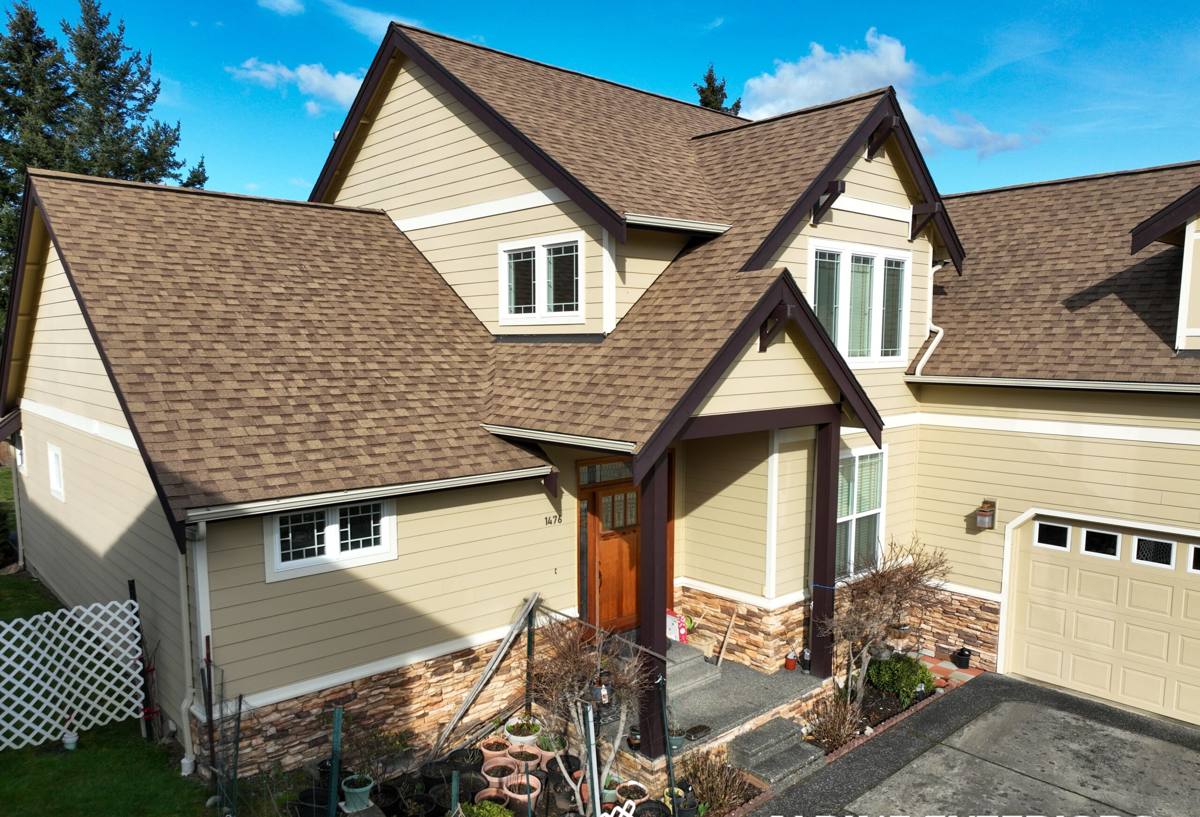
What Storm Damage Actually Looks Like Here
"Storm damage" covers a wider range of problems than most homeowners expect. On Pinellas Point roofs, we most commonly find:
- Lifted or missing shingles along ridge lines and roof edges, where uplift pressure concentrates first
- Compromised flashing around chimneys, vents, and roof-to-wall transitions, often loosened by repeated wind flex rather than a single storm
- Bruised or fractured shingles from hail or wind-driven debris that don't leak immediately but fail within a season or two
- Wind-driven rain intrusion at valleys, penetrations, and any spot where the underlayment or flashing seal has weakened
- Granule loss that accelerates after a storm strips a shingle's protective surface, leaving it exposed to UV
- Corroded or displaced metal flashing and drip edge, a slower-moving but very real issue this close to saltwater
The tricky part is that several of these problems don't cause a visible leak right away. A roof can take real storm damage and still keep water out for months before a homeowner notices a stain on the ceiling — by which point the underlayment and decking underneath may already be compromised. That's why a proper post-storm inspection looks past "is it leaking" and checks the roof's actual condition.
Wind-Driven Rain vs. a Simple Leak
A normal leak usually comes from one failure point and shows up in roughly the same spot every time it rains. Wind-driven rain is different — it can push moisture sideways and upward under shingles, through vent flashing, and into gaps that would never leak in calm weather. On an exposed Pinellas Point roof, this matters a lot: storm damage repair here has to account for water intrusion patterns that a standard leak repair on an inland roof wouldn't need to consider.
Our Storm Damage Repair Process
1. Inspection and Documentation
We start with a full roof inspection, not just a look at the spot the homeowner is worried about. That includes the field of the roof, all flashing points, valleys, vents, and the roof edge. We document what we find with photos, which matters both for your own records and if you decide to file an insurance claim.
2. Honest Scope
We tell you what actually needs repair versus what's cosmetic. Not every dent or scuff after a storm requires a shingle replacement, and we're not going to sell a full re-roof when a targeted repair will hold. At the same time, if we find underlying decking or underlayment damage that a quick patch would hide rather than fix, we'll tell you that too.
3. Repair, Matched to Material
We repair using materials and methods matched to your existing roof system — matching shingle profile and color where possible, using flashing details built for wind resistance rather than the minimum code requirement, and sealing penetrations with materials rated for sustained UV and salt exposure.
4. Follow-Through
After the repair, we walk you through what was done and what to watch for. If your roof is older and this repair is more of a stopgap than a long-term fix, we'll say so plainly rather than let you assume it's good for another decade.
Repair vs. Replacement After a Storm
This is the question every homeowner actually wants answered, and it depends on more than just the storm damage itself. Here's how we think through it:
| Factor | Leans Toward Repair | Leans Toward Replacement |
|---|---|---|
| Roof age | Under 12–15 years, otherwise in good shape | Nearing or past expected lifespan for the material |
| Extent of damage | Isolated to one section or a handful of points | Spread across multiple roof planes |
| Decking condition | Solid, no rot or soft spots found | Soft decking or signs of long-term moisture |
| Prior repairs | Roof has been well maintained | History of patch-on-patch repairs |
| Insurance scope | Claim covers targeted repair adequately | Adjuster scope already supports full replacement |
Salt air and constant UV shorten the useful life of most roofing materials compared to the same product installed further inland, so age matters more on Pinellas Point than the shingle manufacturer's stated lifespan suggests. A 15-year-old roof here has usually seen more real-world wear than a 15-year-old roof in a shaded, inland neighborhood.
Working With Insurance
Storm damage repairs on Pinellas Point often involve an insurance claim, and we work alongside that process rather than around it. That means thorough photo documentation at the time of inspection, a written scope of the damage we find, and a willingness to meet an adjuster on-site if that's useful to your claim. We don't inflate damage to pad a claim, and we don't downplay it to get a job done faster — our documentation reflects what's actually there. What we submit is the same whether you're paying out of pocket or through insurance.
Materials That Hold Up in This Environment
Not every roofing product performs the same way three blocks from open water as it does inland. When we repair or replace sections of a Pinellas Point roof, we favor:
- Fasteners and flashing rated for coastal/high-corrosion environments, not standard-grade hardware
- Shingles with wind ratings that match or exceed what this exposure actually sees, not just code minimums
- Sealants and underlayment products built to hold up under sustained UV rather than the cheapest compliant option
We're upfront when a lower-cost material would technically pass inspection but wouldn't hold up well to Pinellas Point's specific mix of wind, sun, and salt. That's a maintenance and longevity trade-off worth understanding before you decide, not after the next storm season.
What to Do Right After a Storm
If you suspect storm damage, a few simple steps protect both your home and any insurance claim:
- Photograph visible damage from the ground — don't get on the roof yourself
- Check attic spaces and ceilings for early signs of moisture, even without an obvious leak
- Cover any confirmed active leak with a tarp if it's safe to do so, to limit interior damage
- Call for an inspection promptly — delayed damage tends to compound, especially with wind-driven rain intrusion
- Keep any documentation, receipts, or correspondence together for your insurance file
Why a Crew That Already Works Pinellas Point Matters
A roofer who works this specific stretch of St. Petersburg knows what a Pinellas Point roof is actually up against — the wind exposure of a peninsula setting, the pace of salt-driven metal corrosion, and the year-round UV load that doesn't let up in winter the way it does in other parts of the country. That familiarity shows up in small but real ways: knowing which flashing details tend to fail first on exposed roofs in this area, not underestimating wind rating needs because a roof "looked fine" on the last mild season, and being available locally when storm season brings a wave of calls at once. It's the difference between a repair that's technically correct and one that's actually built for where it sits.
Get a Straight Answer on Your Roof
If you're dealing with storm damage on a Pinellas Point roof — or you just want a professional set of eyes on it after a rough weather stretch — we're glad to take a look. We offer a free, no-pressure estimate: we'll inspect the roof, tell you honestly what we find, and lay out your options without any obligation. Fill out the form below to get started.