 St. Petersburg Siding
 Why St. Pete Beach Puts Decks Through More Than Most Florida Backyards
St. Pete Beach sits on a barrier island, which means every deck we build there is closer to salt spray, higher humidity, and stronger sustained winds than a deck a few miles inland in Pinellas County. That combination is hard on wood, hard on metal, and hard on finishes. Salt-laden air accelerates corrosion on fasteners and hardware. Intense, near-constant UV breaks down wood fibers and fades or chalks lower-grade composite boards. Wind-driven rain during Gulf storms finds every gap in flashing and framing that wasn't detailed correctly the first time. None of this means a deck can't last on St. Pete Beach — it means the materials, fasteners, and construction details have to be chosen for this specific environment, not just pulled off a generic plan.
We've built and repaired decks throughout this part of Pinellas County long enough to know which shortcuts show up as callbacks two summers later. This page covers what a deck actually needs to hold up here, and how we build to that standard.
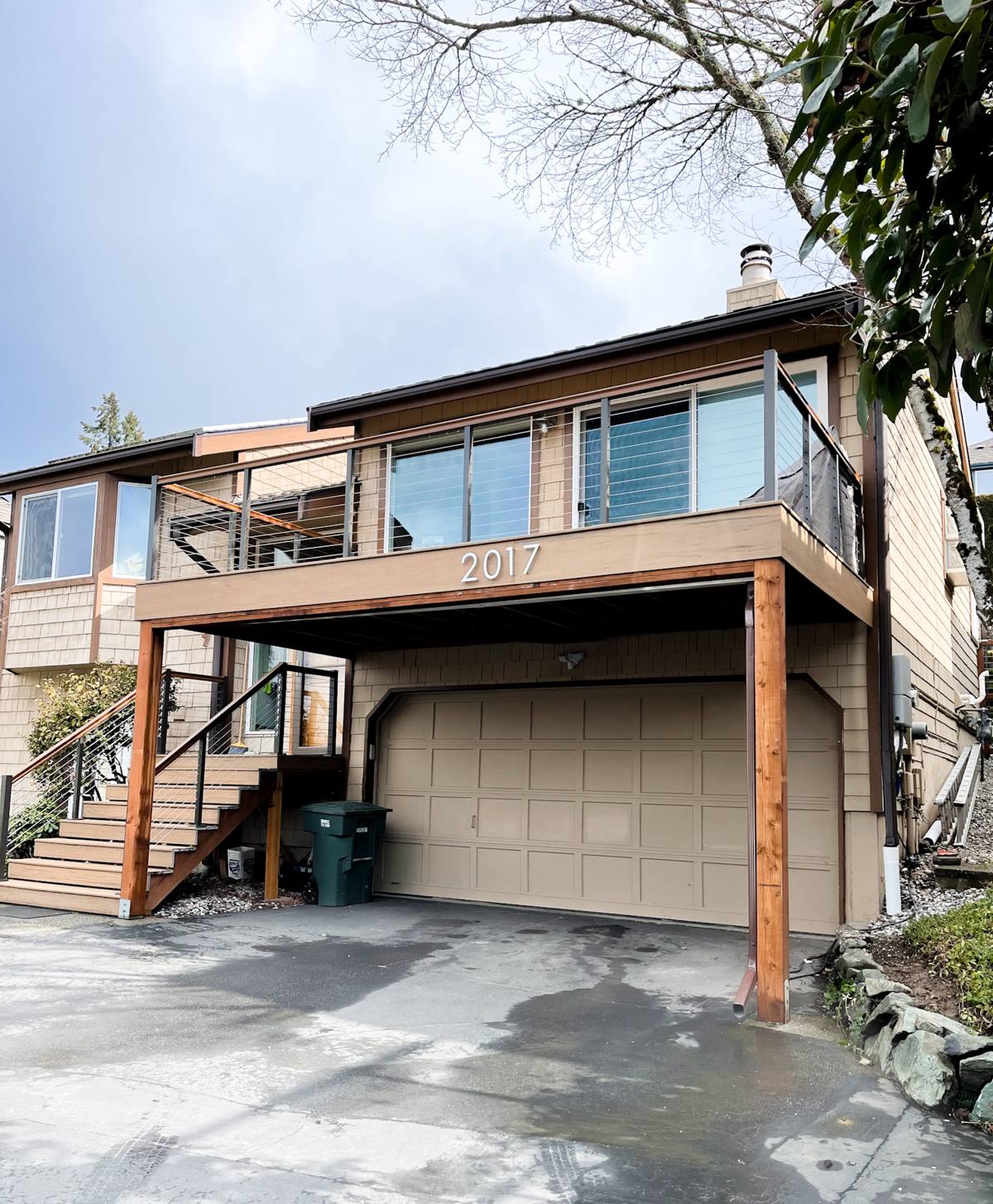
What a Coastal Deck Actually Needs to Survive Here
A deck that looks right on installation day and a deck that's still tight, flat, and structurally sound in five years are not automatically the same project. In a barrier island climate, the difference usually comes down to a handful of decisions made before the first board goes down:
- Fasteners and structural hardware rated for coastal or marine-grade corrosion resistance, not standard galvanized
- Decking material matched to actual sun and salt exposure, not just the lowest bid
- Framing spaced and sized to handle Florida Building Code wind loads for this zone
- Proper flashing and ledger attachment where the deck meets the house, to stop wind-driven rain intrusion
- Airflow underneath the deck so moisture doesn't sit and cause rot or corrosion where you can't see it
- Drainage that moves water off the deck surface instead of pooling it against fasteners and framing
Skip any one of these and the deck may still look fine for a year or two. The failures in this climate are almost always slow — corroding hardware, softening framing, or a finish that chalks and fades faster than it should — which is exactly why they're worth getting right at the build stage rather than fixing later.
Choosing the Right Decking Material for Salt Air and Sun
There's no single "best" decking material for every St. Pete Beach home — it depends on how close the deck is to open water, how much direct sun it gets, and how much upkeep you want to do. Here's how the common options actually compare in this environment:
| Material | Salt Air / Humidity Behavior | UV / Sun Behavior | Maintenance | Relative Cost |
|---|---|---|---|---|
| Pressure-treated wood | Prone to swelling, splitting, and fastener corrosion over time without diligent sealing | Grays and roughens without regular finish maintenance | Annual cleaning and resealing recommended | $ |
| Tropical hardwoods (e.g., ipe-type species) | Naturally dense and rot-resistant, holds up well near salt air | Fades to gray over time unless oiled regularly | Periodic oiling to maintain color; low rot risk | $$$ |
| Capped composite decking | Doesn't absorb moisture or salt like wood; resists rot | Cap layer resists fading and staining better than uncapped composite | Occasional washing; no sealing or staining | $$ |
| PVC / cellular decking | Fully synthetic; excellent resistance to salt, humidity, and moisture | Strong UV and fade resistance | Low — occasional washing | $$$ |
We install a range of these depending on the homeowner's budget and priorities, and we'll walk through the honest trade-offs for your specific deck — sun exposure, proximity to the water, and how the deck will actually be used — rather than steering everyone toward one product.
A Note on Uncapped Composite
Not all composite decking is built the same. Older or uncapped composite products can absorb moisture at the core, which becomes a real liability in a humid, salt-air environment — it can lead to swelling, staining, or mold growth over time. Our standard is to specify capped composite or PVC products for decks with significant water or sun exposure, specifically because the added protective layer is what makes the material perform the way homeowners expect it to in this climate.
Framing, Fasteners, and the Parts You Don't See
The decking surface gets all the attention, but the framing underneath is what determines whether a deck is actually safe and durable. On St. Pete Beach, we treat a few details as non-negotiable:
- Fasteners: stainless steel or coated fasteners rated for coastal exposure, not standard exterior-grade screws that corrode faster near salt air
- Joist hangers and structural connectors: corrosion-resistant hardware compatible with the treated lumber or composite substructure being used
- Ledger attachment: properly flashed and bolted connections where the deck ties into the house, sealed against wind-driven rain
- Footings: sized and set to the depth required for local soil conditions and Florida Building Code wind and structural requirements
- Ventilation: enough clearance and airflow beneath the deck to keep framing dry, especially on lower decks close to grade
These details rarely show up in a quote comparison, but they're the difference between a deck that needs hardware replaced in a few years and one that doesn't.
Permits, Flood Zones, and Building to Pinellas County Code
Barrier island construction in Pinellas County comes with its own set of code requirements — wind load standards for coastal exposure categories, and, depending on the property, flood zone considerations that affect how a deck can be attached to the home or how close to grade it can sit. Many St. Pete Beach homes are built on pilings or elevated foundations, and a deck attached to or built around one of these homes has to account for that structure correctly, not be treated like a standard slab-level backyard deck.
We pull the required permits and build to current Florida Building Code and local Pinellas County requirements as a matter of course. If your property has flood zone restrictions or an elevated foundation, we'll go over what that means for your deck design before we finalize plans — not after a permit gets flagged.
Design Considerations Specific to St. Pete Beach Homes
Elevated and Piling-Built Homes
Decks attached to elevated coastal homes need framing and attachment details specific to that structure type — stair runs, guardrails, and ledger connections all have to be engineered for the height and wind exposure involved.
Pool Decks and Wet Areas
For decks around pools or spas, slip resistance and drainage matter as much as material choice. We factor board spacing, surface texture, and slope into the design so water moves off the deck instead of sitting on it.
Screened and Covered Structures
A lot of homeowners here pair a new deck with a screen enclosure or roof cover to cut down on direct sun and blowing rain. If that's part of your plan, we coordinate the deck framing and layout to support that addition from the start rather than retrofitting it later.
Our Custom Deck Process
- On-site assessment: we walk the property, evaluate sun and wind exposure, grade, drainage, and how the deck connects to the home
- Design and material selection: we go over layout options and material trade-offs based on your budget and how you'll use the space
- Permitting: we handle the permit application and any engineering documentation Pinellas County requires
- Construction: framing, flashing, fastening, and decking installed to the standards outlined above
- Final walkthrough: we inspect the finished deck with you and go over maintenance specific to the material you chose
We don't upsell add-ons you don't need, and we're straightforward about what a given material or design will realistically cost to maintain over time — that's part of doing an honest job in a climate that punishes shortcuts.
Maintenance in a Salt-Air Environment
Even the right materials need some upkeep near the Gulf. A general guide:
- Rinse the deck periodically to clear salt residue, especially after storms or high-wind days
- Check fastener heads and hardware annually for early signs of corrosion
- For wood decks, plan on resealing or oiling on a regular schedule to prevent UV and moisture damage
- Keep gutters and drainage paths near the deck clear so water isn't funneled onto or under it
- Trim back vegetation that traps moisture against the deck surface or framing
We'll give you a maintenance rundown specific to the material installed on your deck, so you know exactly what upkeep is worth doing and what isn't.
Why Hiring a Crew That Already Works St. Pete Beach Matters
A deck contractor who mostly works inland projects can still build a structurally sound deck — but they may not default to coastal-grade fasteners, may not be as familiar with Pinellas County's flood zone and wind requirements for barrier island properties, and may not have seen firsthand how quickly the wrong material choice fails a few blocks from the Gulf. We work in St. Pete Beach and the surrounding coastal communities regularly, so these aren't special considerations we have to research on your project — they're the baseline we build to every time.
Before you hire anyone for deck work in this area, it's worth asking a few direct questions:
- Are you licensed and insured to build decks in Pinellas County?
- What fastener and hardware grade do you use for coastal exposure?
- Will you handle the permit process, including any flood zone or elevation requirements?
- What decking materials do you recommend for this specific property, and why?
- Can you explain the trade-offs between materials honestly, including maintenance?
If a contractor can't answer those clearly, that's worth knowing before work starts, not after.
If you're planning a new deck or need to talk through material and design options for your St. Pete Beach property, we're happy to take a look and put together a straightforward, no-pressure estimate — just fill out the form below.