 St. Petersburg Siding
 Kenneth City Sits in One of Florida's Toughest Climates for Siding
Kenneth City is a small, established community tucked inside Pinellas County, surrounded on all sides by St. Petersburg. It's a peninsula town in every sense that matters to a siding contractor: close enough to Tampa Bay and the Gulf to catch salt-laden air on a regular breeze, exposed to the same tropical sun load as the rest of the county, and squarely in the path of the wind-driven rain and hurricane-force gusts that roll through every storm season. None of that is unique to Kenneth City by itself, but the combination is relentless, and it's exactly the combination that determines whether a siding job holds up for twenty-five years or starts failing in five.
A lot of Kenneth City's housing stock dates back to the postwar building boom that shaped much of Pinellas County, so many homes are now due for their second or third exterior in the home's lifetime. Whatever went up decades ago wasn't engineered for today's wind load requirements or today's UV intensity. When we talk to Kenneth City homeowners about siding, the conversation always starts with the climate, because the climate is what decides which materials are even worth considering.
What Kenneth City Homes Actually Need From Their Siding
Wind Resistance That Matches Real Storm Exposure
Pinellas County sees tropical storm and hurricane conditions on a near-annual basis, and siding is one of the first things a house loses in a wind event if it isn't rated and installed correctly. Fastener spacing, panel engineering, and the product's own wind-load rating all matter here — not as marketing numbers, but as the actual difference between siding that stays on the wall and siding that ends up in the yard.
UV Stability Without Chalking or Fading
Florida's sun is intense and constant, twelve months a year, not just a summer problem. Cheaper coatings and unfinished substrates chalk, fade, and break down under that kind of exposure far faster than they would in a milder climate. Siding here needs a finish system engineered for UV, not a standard paint job that happens to be rated for exterior use.
Moisture Management in a Wind-Driven-Rain Environment
Rain in this part of Florida rarely falls straight down — it comes in sideways during storms, which means siding has to shed water at every seam, joint, and penetration, not just on the flat face of the wall. Products and installation details that work fine in drier climates can trap moisture here, and trapped moisture behind siding leads to rot, mold, and sheathing damage that's expensive to fix.
Corrosion and Material Resistance to Salt Air
Being close to the bay means airborne salt settles on every exterior surface over time. Salt air accelerates corrosion of fasteners and trim, and it degrades materials that aren't formulated to resist it. This is one of the biggest reasons material choice matters more here than it does inland.
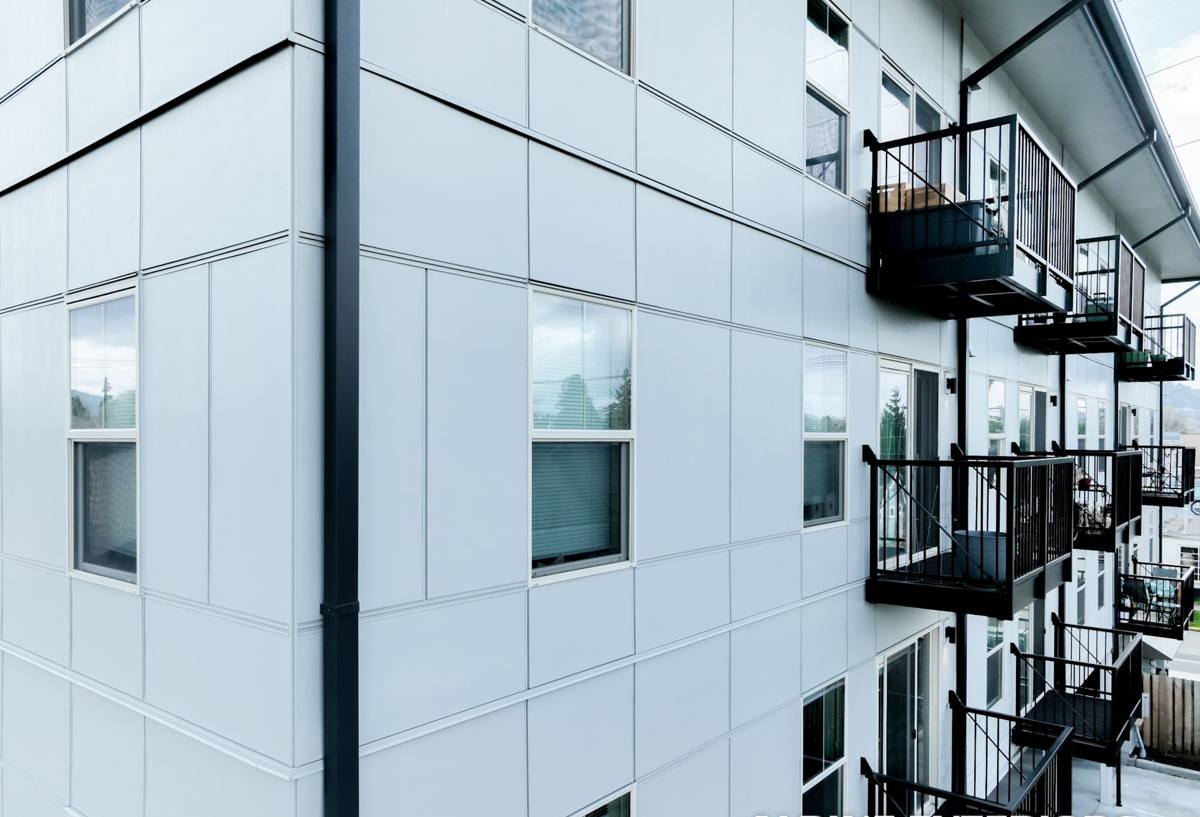
Why We Install Only James Hardie Fiber Cement Siding
We don't install vinyl, LP SmartSide, primed wood, cedar, or other fiber cement brands like Allura or Cemplank. That's a deliberate standard, not a sales pitch, and it's worth explaining honestly. Vinyl softens, warps, and can crack in high heat and high wind, and it offers essentially no impact resistance against wind-borne debris. Wood and wood-based products need consistent maintenance to keep moisture out, and in a climate this humid and storm-prone, that maintenance window closes fast if it's neglected even one season. Other fiber cement brands aren't necessarily bad products, but we've standardized on one system so our crews install it correctly every time, and so our warranty coverage is consistent and backed by one manufacturer, not a patchwork of different products with different rules.
James Hardie makes fiber cement — a mix of cement, sand, and cellulose fibers — that is non-combustible, dimensionally stable, and engineered specifically for high-humidity, high-UV, storm-prone climates through its HZ10 product line built for exactly this kind of exposure. The factory-applied ColorPlus finish is baked on and warrantied against fading and chipping, which matters enormously under Florida sun. It carries a strong transferable limited warranty, which protects a homeowner's investment even if the home changes hands.
What a Correct Fiber Cement Siding Job Involves
Substrate and Moisture Barrier Prep
Before a single plank goes up, the wall needs a properly lapped weather-resistant barrier, and any damaged sheathing found during tear-off needs to be replaced, not covered up. Skipping this step is the single most common cause of hidden rot behind new siding.
Fastening Pattern and Clearances
Hardie siding has manufacturer-specified fastener types, spacing, and penetration depth, and those specs change based on wind zone. Ground clearance, minimum gaps at trim and roofing, and proper flashing at every horizontal joint all have to be followed to the letter — these details are exactly what separates a code-compliant install from one that fails in the next storm.
Joint Treatment and Caulking
Butt joints, corners, and penetrations (vents, hose bibs, light fixtures) need to be treated with the correct sealant and sequencing so water is directed out, not trapped in. In a wind-driven-rain climate, sloppy caulking is a slow leak waiting to happen.
Trim, Flashing, and Transitions
Where siding meets windows, doors, roofline, and foundation, flashing details have to shed water correctly in every direction wind can push rain. These transition points are where most siding failures actually start.
Our Process for a Kenneth City Project
- On-site inspection: we walk the exterior, check for existing moisture damage, and assess wind exposure specific to the lot and home orientation.
- Material and profile selection: lap width, texture, and color are chosen based on the home's style and the homeowner's preference, all from Hardie's ColorPlus lineup.
- Tear-off and substrate check: old siding comes off, sheathing is inspected, and any rot or damage is repaired before anything new goes on.
- Weather barrier and flashing installation: the moisture management layer goes in first, correctly lapped and sealed.
- Hardie installation to manufacturer spec: proper fastening, clearances, and joint treatment throughout.
- Final walkthrough: we go over the finished exterior with the homeowner and address anything before we consider the job done.
Cost Factors for Kenneth City Homeowners
Every home is different, but these are the factors that most often move the number up or down on a fiber cement siding project in this area:
| Factor | Why It Matters in Kenneth City | Typical Cost Impact |
|---|---|---|
| Extent of substrate repair | Older homes with hidden moisture damage often need sheathing replaced before siding goes on | Moderate to significant |
| Home size and wall complexity | More corners, gables, and penetrations mean more cutting, flashing, and labor time | Moderate |
| Siding profile and texture | Lap width and texture options are priced differently within the Hardie lineup | Low to moderate |
| Trim and accessory scope | Fascia, soffit, and trim work bundled into the project add material and labor | Moderate |
| Tear-off and disposal | Removing and hauling away old siding (especially multiple layers) adds time | Low to moderate |
Signs Your Kenneth City Home May Need New Siding
Because storm exposure and salt air accelerate wear here, it's worth checking your exterior more often than the national average advice suggests. Watch for:
- Visible warping, buckling, or gaps between siding panels
- Soft spots or discoloration near the bottom of walls or below windows
- Paint that's chalking heavily or siding color that's faded unevenly
- Cracked or crumbling caulk at joints, corners, and trim
- Bubbling paint or a musty smell inside near exterior walls
- Visible rust streaking from fasteners or trim
- Siding that flexes or feels hollow when pressed
Why It Matters That Your Crew Already Works Kenneth City
Local Code and Wind-Zone Familiarity
Pinellas County's permitting and wind-load requirements aren't the same everywhere in Florida, and a crew that regularly pulls permits and installs in this county already knows what inspectors expect and what fastening schedule the wind zone actually calls for. That familiarity avoids costly rework and failed inspections.
Realistic Scheduling Around Storm Season
A crew based in the area understands how to sequence a job around Florida's wet season and storm watches, so a home isn't left with exposed sheathing when a system is approaching.
Consistency Across the Neighborhood
Working regularly in and around Kenneth City means we've seen the common construction patterns in this area's housing stock — what's typically hiding behind the old siding, where moisture problems tend to show up first, and how to plan around it before it becomes a surprise mid-project.
Maintaining Fiber Cement Siding in This Climate
Correctly installed Hardie siding is low-maintenance, not no-maintenance. A rinse with a garden hose once or twice a year removes salt residue and airborne grime before it builds up. Caulking at joints and trim should be inspected annually, especially after a rough storm season, and any gaps should be resealed promptly. Because the ColorPlus finish is factory-baked, homeowners don't need to repaint on a routine cycle the way they would with field-painted siding — but it's still worth a visual check after any major storm for cracked panels, loose fasteners, or displaced trim.
If your Kenneth City home's siding is showing its age or you're planning ahead of the next storm season, we're happy to take a look and walk you through exactly what your home needs. Reach out for a free, no-pressure estimate — there's a form right below to get started.