 St. Petersburg Siding
 Gulfport's Waterfront Setting Is Hard on Siding
Gulfport sits on Boca Ciega Bay in Pinellas County, which means most homes here are within a few miles of open water. That proximity is part of what makes the neighborhood so livable, but it's also exactly the environment that wears out the wrong exterior materials fastest. Between hurricane-season wind events, intense year-round Florida sun, wind-driven rain that finds every gap in a wall system, and the slow corrosive drip of salt air, Gulfport homes take a harder beating than siding manufacturers assume in their national warranty language. We install siding for houses in this climate every week, and the pattern is consistent: whatever goes on the wall needs to handle all four stresses at once, not just one or two of them.
This page is about one product, on one type of home, in one place — James Hardie fiber cement siding installed correctly on Gulfport houses. We're not going to give you a generic rundown of siding options. We're going to explain what this specific climate does to a wall system, what a correct fiber cement installation actually involves, and why the crew doing the work matters as much as the material itself.
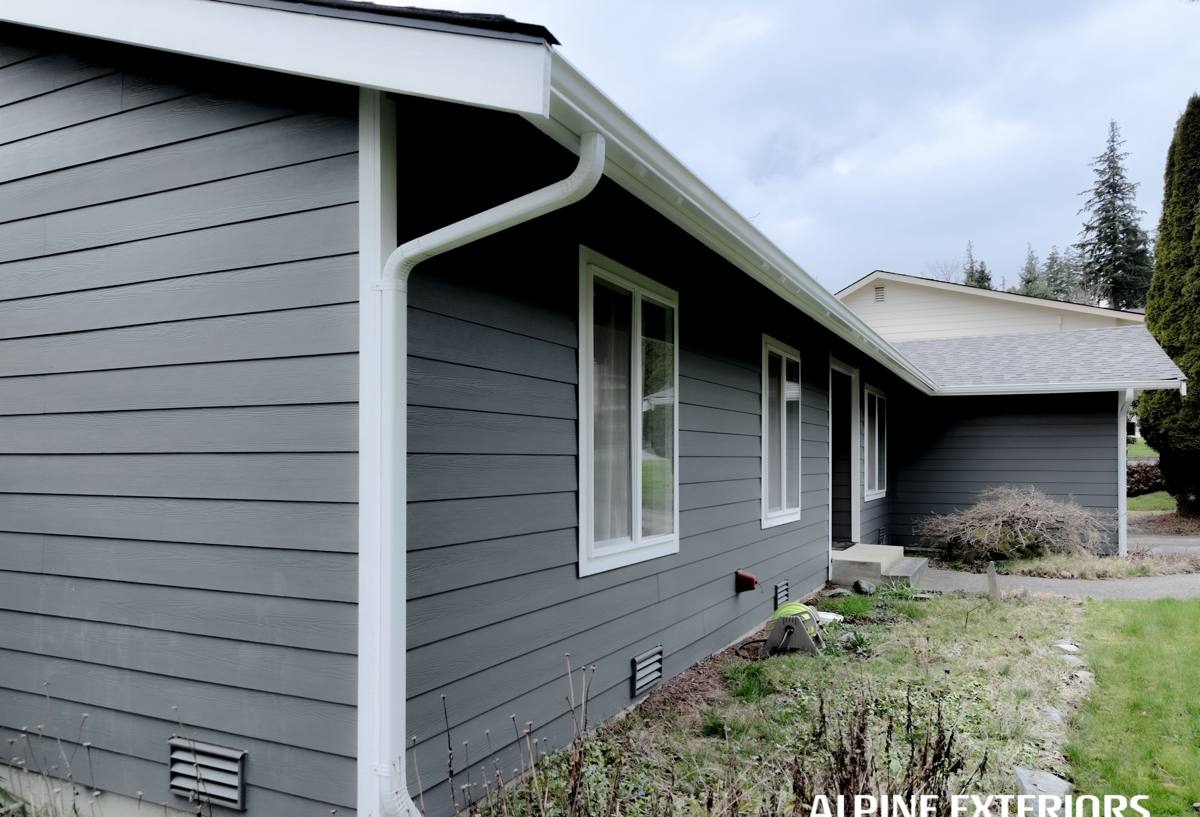
Why Fiber Cement Holds Up Where Other Materials Struggle
Wind and Storm Pressure
Pinellas County construction is governed by high-velocity wind zone provisions, and for good reason. Wind doesn't just push on a wall — it creates uplift and suction forces at corners, eaves, and openings that can pry loose siding that isn't fastened correctly. Fiber cement is dense and rigid compared to vinyl, which gives it a real advantage in wind events, but that advantage only holds if the fastening pattern, starter strip, and panel overlap are done to the manufacturer's specification. A product rated for high wind exposure installed with the wrong nail spacing performs like a product that isn't rated at all.
UV and Heat
Florida sun is relentless, and unlike products that rely on a field-applied paint film, James Hardie's ColorPlus finish is baked on in a factory process and backed by its own finish warranty. That matters in Gulfport specifically because south- and west-facing walls here see brutal, near-daily UV exposure for most of the year. Fading, chalking, and premature repainting are the visible symptoms of a coating system that wasn't built for this much sun.
Salt Air and Humidity
Salt air accelerates corrosion of fasteners and metal trim, and it degrades finishes that aren't engineered to resist it. Combined with Pinellas County's humidity, any siding material with a wood or wood-composite core is fighting moisture absorption on top of everything else. Fiber cement's composition — cement, sand, and cellulose fiber — doesn't feed rot or absorb water the way wood-based products can, which is a meaningful difference on a bay-adjacent property where humidity rarely lets up.
What a Correct Installation Actually Involves
Fiber cement is only as good as the wall assembly behind it. This is the part homeowners rarely see, and it's where most siding failures actually start.
Moisture Management Behind the Panel
Every correct installation starts with a water-resistive barrier, properly lapped and taped, with flashing at every window, door, and penetration so that any water that gets behind the siding has a path back out instead of a place to sit. This is standard on paper industry-wide; it's the step that gets rushed on jobs done wrong.
Clearances That Prevent Wicking
James Hardie specifies minimum clearances from roof lines, decks, patios, and grade — typically several inches, depending on the surface. Skip those clearances and you create a spot where the panel sits in standing water or splashback, which defeats the point of installing a moisture-resistant material in the first place.
Fastening to Spec
Nail type, length, spacing, and placement all matter, and they change depending on wind exposure and whether you're fastening into studs or over sheathing. Blind-nailing versus face-nailing, and hand-nailing versus certain pneumatic settings, all affect how the panel performs in wind. This is a spec sheet detail, not a matter of preference.
Trim, Caulking, and Touch-Up
Cut edges and joints need to be sealed and touched up with the manufacturer's approved products to preserve both the water resistance and the finish warranty. A siding job can look finished from the street and still have gaps that let water in at the seams.
Fiber Cement Compared to Other Common Siding Materials
| Factor | Vinyl | Engineered Wood (e.g. LP SmartSide) | James Hardie Fiber Cement |
|---|---|---|---|
| Wind resistance | Lower — can crack or blow off in high gusts | Moderate, fastener-dependent | High when installed to spec |
| Moisture / rot risk | Low material risk, but traps moisture behind it | Wood core can swell or degrade if the finish is compromised | Non-wood core; not a food source for rot |
| UV / fade resistance | Fades and can warp in direct sun | Depends on field or factory finish quality | Factory-baked ColorPlus finish, warrantied separately |
| Salt air exposure | Generally tolerant but can become brittle over time | More exposure-sensitive due to wood content | Well suited to coastal exposure when detailed correctly |
| Fire behavior | Combustible | Combustible | Non-combustible |
| Typical lifespan (installed correctly) | 20–30 years | 20–30 years | 30+ years, often longer |
We install James Hardie exclusively. We don't carry vinyl, LP SmartSide, or other engineered wood products, and we don't apologize for that — it's a standard we set because of what we've seen these materials do in exactly this climate over time. Every product on that table has legitimate uses somewhere; we simply don't think Gulfport's wind and salt exposure is the place to gamble on the ones with more moisture and UV sensitivity.
James Hardie Product Lines We Use Here
James Hardie engineers its HZ product lines by climate zone, and Gulfport falls into the HZ5 category used for humid, storm-prone regions. In practice, on most Gulfport homes that means:
- HardiePlank HZ5 lap siding — the primary field material, engineered for this humidity and wind zone
- HardieTrim boards — matched trim around windows, corners, and fascia so the whole system ages consistently
- ColorPlus factory finish — baked-on color with its own finish warranty, instead of a job-site paint job
- HardieSoffit, where soffit replacement is part of the scope, for a matched non-combustible system top to bottom
Color and profile choice (traditional lap, shiplap, board-and-batten) is a homeowner preference; the underlying product engineering is what's built for this specific climate.
Our Process on a Gulfport Siding Project
- On-site assessment — we look at existing wall condition, current siding, moisture history, and wind exposure by elevation before quoting anything
- Scope and product selection — profile, color, and trim details are decided with the homeowner, based on the home's exposure and style
- Tear-off and substrate check — old siding comes off and sheathing is inspected for hidden rot or moisture damage before anything new goes on
- Water-resistive barrier and flashing — installed and detailed at every penetration before a single piece of siding goes up
- Fiber cement installation — fastened, spaced, and cleared to James Hardie's published specifications for this wind zone
- Trim, caulking, and touch-up — finished to preserve both the water seal and the ColorPlus finish warranty
- Final walkthrough — we go over the completed job and warranty paperwork with the homeowner before calling it done
What Upkeep Looks Like After Installation
One of the practical advantages of fiber cement in this climate is how little it asks of you afterward. There's no repainting cycle driven by UV fading the way there is with some field-finished materials — the ColorPlus finish is designed to hold color for years under exactly this kind of sun exposure. Ongoing maintenance is mostly common sense: rinse off salt residue and pollen buildup periodically, keep an eye on caulking at trim joints over the years, and address any impact damage (from storm debris, lawn equipment, etc.) promptly rather than letting a chip sit exposed. None of it is labor-intensive, which is the point.
Why a Local Crew Matters for This Job
Fiber cement installation isn't complicated in concept, but it's unforgiving of shortcuts, and every region has its own wind, moisture, and humidity conditions that should inform how it's detailed. A crew that regularly works Pinellas County waterfront neighborhoods already knows which elevations take the worst wind-driven rain, how much clearance to leave near decks and patios that see regular splashback, and where salt exposure tends to concentrate corrosion at trim and fasteners. That local pattern recognition doesn't replace the manufacturer's install spec — it's what makes sure that spec gets applied where it matters most on your specific house.
What to Look For in a Contractor
- Manufacturer training or certification specific to James Hardie products, not just general siding experience
- A written scope that names the specific HZ product line, fastening method, and clearances for your home
- Willingness to explain the water-resistive barrier and flashing plan before tear-off starts, not after
- Local references and a track record working in Pinellas County's wind and moisture conditions
- Clear answers about who handles warranty claims — the installer, the manufacturer, or both — and what's covered
What Drives the Cost of a Siding Project
| Factor | Why It Matters |
|---|---|
| Home size and number of stories | More surface area and access complexity increase labor and material needs |
| Tear-off vs. new construction | Removing and disposing of existing siding, and repairing any hidden sheathing damage, adds time |
| Trim and architectural detail | Homes with more corners, dormers, or trim work take longer to detail correctly |
| Product profile and finish | Lap width, shiplap, or board-and-batten profiles and specialty ColorPlus colors vary in cost |
| Wind zone detailing | Proper fastening and clearance work for this coastal wind exposure is part of doing the job correctly, not an upsell |
Every home is different, and the only way to get an accurate number is to have someone look at your specific walls, trim, and access conditions in person.
If your Gulfport home's siding is aging, showing storm damage, or you're simply ready to stop repainting every few years, we're happy to take a look and walk you through what a correctly installed James Hardie fiber cement system would involve for your house. Fill out the form below for a free, no-pressure estimate.