 St. Petersburg Siding
 Decks in Roser Park Take a Different Kind of Beating
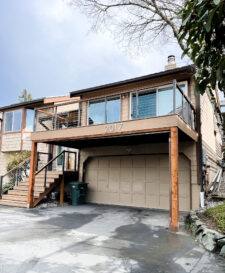
Roser Park is one of St. Petersburg's older, more established neighborhoods — mature oak canopy, historic bungalow-style homes, and lots that slope with the natural ravine terrain instead of sitting flat like a newer subdivision. That combination is beautiful to live with, but it's rough on an outdoor deck. Heavy shade from old trees keeps wood damp longer after every rain. Sloped, uneven lots mean more of the structure's weight rides on posts and footings rather than a simple flat foundation. And like everywhere else in Pinellas County, the deck is also fighting the same year-round sun, humidity, and salt-tinged air that wears down every exterior surface near Tampa Bay.
None of that means a deck in Roser Park can't last. It means it needs to be built — or rebuilt — with those specific conditions in mind, not with a generic, one-size-fits-all approach pulled from a colder, drier climate.
What's Actually Wearing Your Deck Down
Heat and UV
Florida sun is intense almost every month of the year. UV breaks down the lignin in wood fibers, which is why an untreated or unsealed deck surface goes gray and starts to splinter within a couple of seasons. Composite decking resists this better, but even composite has UV-stable and non-UV-stable grades — it's not automatically immune.
Wind-driven rain
St. Petersburg sits in a hurricane-exposed part of the Gulf Coast, and even routine summer storms bring rain sideways, driven under railings and into joints that were never designed to shed water from that angle. Water that gets into a ledger board connection, a post base, or a fastener hole and can't dry out is where rot starts — usually from the inside, so it's invisible until the wood is already failing.
Salt air
Roser Park isn't beachfront, but St. Petersburg's proximity to Tampa Bay and the Gulf still puts a measurable amount of salt in the air across the whole peninsula. Salt accelerates corrosion on any exposed metal — nails, screws, joist hangers, structural brackets. A deck built with the wrong fastener grade can have solid-looking lumber sitting on corroded hardware underneath.
Humidity and shade
The mature tree cover that makes Roser Park's streets so pleasant also means many decks stay damp longer after rain than a deck in full sun would. That extended moisture exposure is a major driver of wood rot and the kind of fungal growth that eats away at structural integrity from the inside.
Signs Your Deck Is a Replacement Candidate, Not a Repair Job
Not every tired-looking deck needs to come out. But there's a point where patching individual boards is just delaying an inevitable, more expensive fix — or a safety issue. Signs it's time to talk replacement rather than repair:
- Soft or spongy spots when you walk across the decking, especially near the house or stair landings
- Visible gaps, cracking, or cupping across multiple boards rather than one or two
- Rust streaking from fasteners, or fastener heads that are corroded and hard to remove
- Any looseness or give in the railing when you lean on it
- The ledger board (where the deck attaches to the house) shows staining, gaps, or soft wood
- Posts or footings that have shifted, settled unevenly, or show cracking at the base
- The deck is old enough that it predates current Florida Building Code wind and connection requirements
If you're seeing two or more of these, a full or near-full rebuild is usually the more honest recommendation — and often not much more expensive than a series of repeated repairs over a few years.
What a Correct Deck Replacement Involves
A deck replacement done right isn't just pulling up old boards and screwing down new ones. The parts nobody sees are the parts that determine whether the new deck lasts five years or twenty-five.
Structural assessment first
Before any demo, we look at the ledger board attachment, the post and footing layout, and the framing spacing against current code — not the code the original deck was built under, which in an older neighborhood like Roser Park could be decades out of date.
Footings sized for the site
On sloped or uneven lots, footing depth and post height aren't uniform across the deck. Each footing needs to be sized and set for the actual grade at that point, not assumed from a flat-lot template.
Framing and fasteners rated for coastal exposure
We frame with pressure-treated lumber rated for ground contact where it's called for, and we use stainless or coated fasteners and joist hardware rated for coastal/salt-air exposure — not standard interior-grade hardware that will corrode within a few seasons here.
Proper flashing at the ledger
The ledger board connection to the house is the single most common failure point on any deck, and it's almost always a moisture problem — water getting behind the ledger and rotting the house's rim joist along with the deck. Correct flashing details here matter more than almost anything else on the job.
Decking and railing to match the home
Roser Park's historic housing stock means a lot of homeowners want a deck that reads as appropriate to the house — clean lines, railing profiles that don't look out of place next to a century-old bungalow. That's a design conversation as much as a construction one.
Decking Material Comparison
| Material | Typical Lifespan Here | Maintenance | Notes for This Climate |
|---|---|---|---|
| Pressure-treated pine | 10–15 years | Annual sealing/staining recommended | Lowest upfront cost; needs consistent upkeep to resist UV and moisture |
| Composite decking | 20–30 years | Occasional washing, no sealing/staining | Better UV and moisture resistance; confirm UV-stable grade and proper ventilation underneath |
| Tropical hardwood (e.g., ipe) | 25+ years | Periodic oiling to maintain color | Very dense and rot-resistant, but heavier, pricier, and installation-sensitive |
| PVC decking | 20–30 years | Low — washing only | Fully synthetic, doesn't absorb moisture; can run hotter underfoot in direct sun |
We don't push one material on every homeowner. Budget, how much upkeep you actually want to do, and how much direct sun the deck gets all factor into the right call.
Railings and Code Compliance
Railing failure is one of the more serious safety issues we see on older decks, and it's also one of the most commonly overlooked items during a simple board-replacement job. Florida Building Code sets minimum guard height, baluster spacing (to prevent a small child from passing through), and load requirements for railings — and those requirements apply to a replacement even if the original deck predates them. On an older Roser Park home, this is frequently the single biggest code gap we find: railings that were fine when installed decades ago but don't meet current spacing or height standards.
Our Deck Replacement Process
- On-site assessment — we check the ledger, framing, footings, and railing against current code, and note anything specific to your lot's grade or tree cover
- Written scope and estimate — clear on what's being torn out, what's being rebuilt, and material options with honest tradeoffs
- Permitting — pulled through the City of St. Pete as required for the scope of work
- Demo and disposal — full removal of the old structure, checked for any hidden rot reaching into the house framing
- Framing rebuild — new footings, posts, ledger flashing, and joists sized and fastened for coastal exposure
- Decking and railing installation — your chosen material, installed to manufacturer spec and current code
- Final walkthrough — we go over the finished deck with you before calling the job done
Cost Factors to Expect
| Factor | Why It Moves the Price |
|---|---|
| Deck size and shape | More square footage and more corners/angles mean more material and labor |
| Decking material chosen | Pressure-treated is the lowest cost per square foot; composite, PVC, and hardwood cost more upfront |
| Footing and framing condition | If posts and footings need full replacement (common on older lots), that adds structural work beyond just surface decking |
| Site access and slope | Sloped Roser Park lots can require taller posts, more footings, or extra labor to get materials to the work area |
| Railing scope | Bringing older railings up to current code requirements adds material and labor not present in a simple resurface |
| Permitting | Included in most full replacements but varies by scope |
We'll give you a real number for your specific deck after we've actually looked at it — not a phone-quote guess that changes once we start tearing into it.
Maintaining Your New Deck
Whatever material you choose, a little consistent upkeep goes a long way in this climate. A basic seasonal checklist:
- Sweep debris and leaves off regularly, especially under heavy tree cover, so moisture doesn't sit trapped against the boards
- Check fasteners and railing connections once or twice a year for looseness or corrosion
- For wood decking, reseal or restain on the schedule recommended for our climate — annually is common for pressure-treated pine
- Rinse composite or PVC decking periodically to prevent mildew buildup in shaded areas
- After any major storm, walk the deck and check railings, stairs, and footings before assuming everything's fine
Why a Crew That Already Works Roser Park Matters
Older neighborhoods like Roser Park come with variables a generic contractor unfamiliar with the area might miss: sloped and uneven lots, mature root systems near footings, historic-district considerations on exterior appearance, and homes old enough that the existing deck framing may not match anything built to current code. A crew that already works in St. Petersburg and Pinellas County knows the local permitting process, understands what the Florida Building Code actually requires for wind and railing loads in this region, and has seen firsthand how sun, storms, and salt air affect a deck differently here than they would somewhere inland or up north. That familiarity shows up in fewer surprises mid-project and a deck that's actually built for where it's standing.
Let's Take a Look at Your Deck
If your deck in Roser Park is showing soft spots, loose railings, or just years of Florida sun and rain wearing it down, we're glad to come take an honest look. There's no pressure and no obligation — just a straight assessment of what's actually going on and what it would take to fix it right. Use the form below to request a free estimate.