 St. Petersburg Siding
 Why Siding Repair Looks Different in Kenneth City
Kenneth City is a small, tightly built residential community fully surrounded by St. Petersburg, and its housing stock is mostly older single-story homes that have already been through decades of Gulf Coast weather. That history matters when something goes wrong with the siding. A cracked plank, a gap in the caulk, or a rust streak below a fastener rarely shows up in isolation — it usually shows up because the wall has been absorbing hurricane-force wind, wind-driven rain, and intense year-round UV for years, and something finally gave. Repairing that damage correctly means understanding why it happened, not just covering the spot that's visible.
A siding repair is a smaller job than a full re-side, but it isn't a smaller decision. Get it wrong — mismatched material, a caulk-only patch over a moisture problem, fasteners that don't match the surrounding wall — and you've spent money on something that fails again within a season or two. Get it right, and a well-executed repair can add years of service life to siding that's otherwise sound. This page is about what "right" actually means for a Kenneth City home.
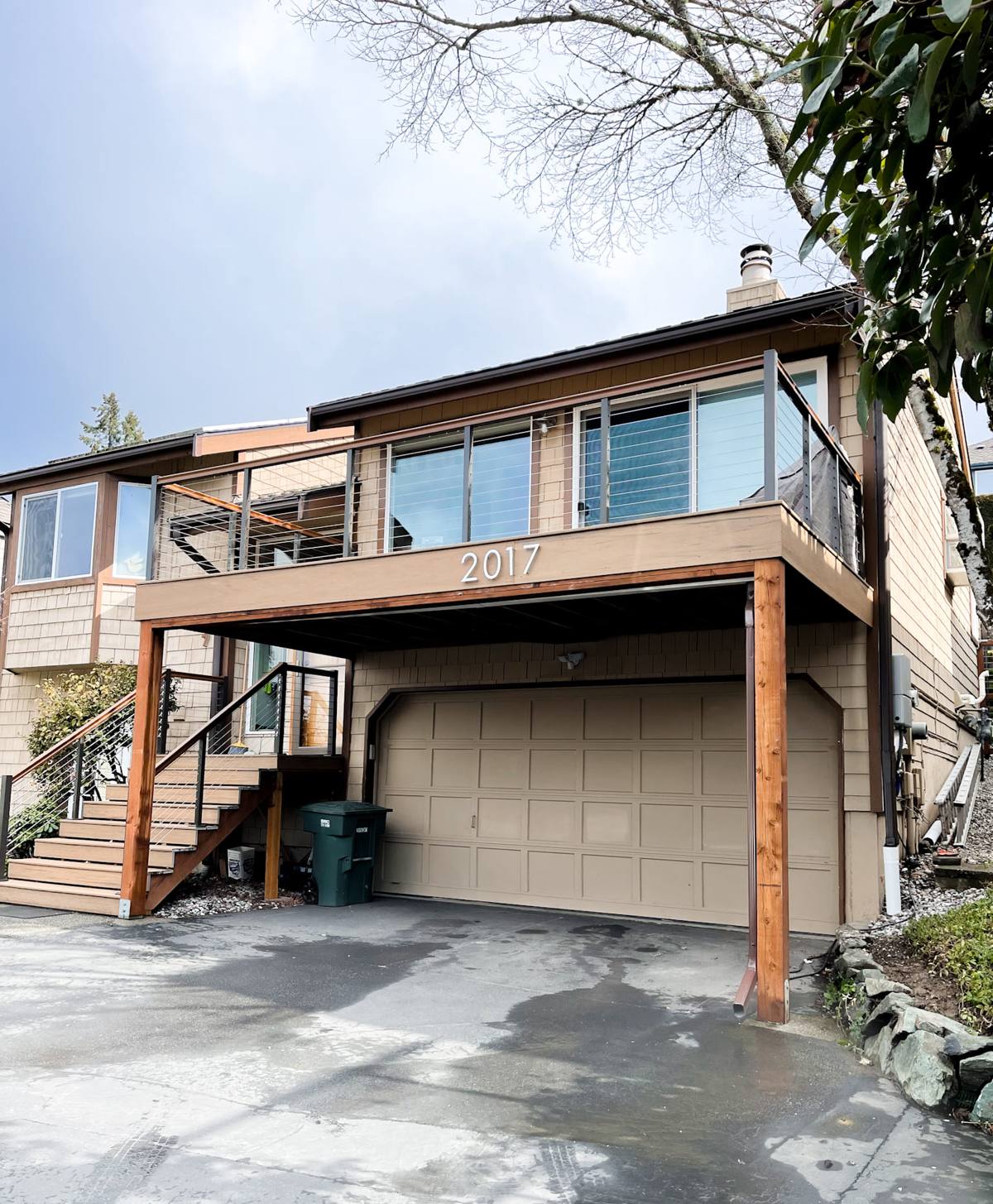
The Damage Patterns We Actually See Locally
Siding damage in this part of Pinellas County tends to fall into a handful of recognizable categories, and each one has a different root cause and a different correct fix.
Impact Damage From Wind-Driven Debris
Tropical storms and hurricane-adjacent wind events don't need a direct hit to cause damage. Branches, loose gutters, patio furniture, and general yard debris become projectiles in sustained high wind, and siding facing the prevailing storm direction takes the brunt of it. The result is usually a cracked or punctured plank, sometimes with the surrounding boards knocked loose or their fasteners backed out.
Caulk and Sealant Failure
Caulk is the shortest-lived material on any siding wall, and Florida's UV load is hard on it. Joints at trim, window and door casings, and butt joints between planks are usually the first thing to show wear — the sealant goes brittle, shrinks, and pulls away, opening a path for wind-driven rain to get behind the siding long before the siding itself looks like a problem.
Fastener Corrosion and Nail Pops
Salt-laden air moving off Tampa Bay and the Gulf accelerates corrosion in any exposed or marginal fastener. A corroding nail loses holding strength, can back partway out of the plank, and leaves a small gap right where water wants to get in. Nail pops are easy to spot once you know to look for them — a slight bulge or a dark ring around a fastener head — but they're often dismissed as cosmetic when they're actually an entry point.
Moisture Staining and Hidden Rot
The damage that worries us most is the kind that doesn't show up as a hole or a crack. Dark staining, a soft spot when you press on the wall, or paint that's bubbling rather than peeling usually means water has been getting behind the siding for a while, and the sheathing or framing underneath may already be compromised. A repair that only addresses the surface here is a repair that gets redone within a year or two.
Repair or Replace? How We Make the Call
Not every damaged wall needs a full re-side, and not every crack is a simple patch. We walk the house and look at the pattern of damage, not just the worst spot, before recommending either direction.
| Signal | Usually Points To |
|---|---|
| A handful of isolated cracked or impact-damaged planks, rest of the wall sound | Targeted repair — replace the affected boards |
| Caulk failure and a few nail pops concentrated at one elevation | Repair plus a re-caulk and fastener check on that wall |
| Water staining traced to one flashing detail (a window head, a roof-to-wall joint) | Repair the flashing and the siding around it, not the whole wall |
| Soft sheathing, widespread staining, or damage on multiple elevations | Likely points to a systemic moisture problem — full re-side is often the more honest answer |
| Siding is an older or discontinued product with no realistic color or profile match available | Repair may be visually mismatched even if structurally sound — worth discussing before committing |
We'd rather tell a homeowner their damage is a $600 repair than talk them into a $20,000 re-side they don't need — and we'd rather say plainly when a "repair" would end up looking patched and not actually solve the underlying problem.
What a Correct Repair Actually Involves
Diagnosing What's Behind the Siding, Not Just the Siding Itself
Before any board comes off, we look at what's underneath: the water-resistive barrier, the flashing at nearby windows or rooflines, and the condition of the sheathing. If water has already gotten past the siding, replacing the visible board without addressing the barrier behind it just resets the clock on the same failure. Every repair on our jobs starts with this check, even on something that looks like a simple crack.
Matching Plank Profile, Width, and Color
This is where a lot of repairs go wrong. Fiber cement siding comes in specific plank widths and exposures, and mismatching them throws off the coursing across the whole wall. Color is its own challenge — James Hardie's ColorPlus finish is a factory-baked coating, and while the current palette is broad, a home sided years ago may carry a color that's since been retired or has weathered to a slightly different shade than a brand-new board. We do our best to match as closely as current material allows and are upfront when a perfect match isn't realistic, so there are no surprises once the new board goes up.
Flashing and Fastening Done Right, Not Just Caulked Over
The fast, cheap version of a siding repair is a bead of caulk over the damage and a fresh coat of paint. It looks fine for a season. The correct version re-establishes proper flashing at any disturbed joint, uses corrosion-resistant fasteners suited to a salt-air environment, and respects the same clearances — off grade, clear of roof lines and decks — that a full installation follows. A repair that skips this is a repair that's designed to look finished, not to actually last.
Why Product Choice Matters Even on a Small Repair
We install and repair James Hardie fiber cement exclusively — we don't work in vinyl siding, LP SmartSide, or primed wood, even for patch work. That standard applies just as much to repairs as it does to full re-sides, and the reasoning is practical rather than a sales position.
Vinyl siding fades unevenly over years of UV exposure, so a brand-new panel dropped into an older wall is almost always visibly lighter than the surrounding material, and vinyl's expansion and contraction in Florida heat makes a tight, invisible patch difficult even with a perfect color match. Engineered wood products like LP SmartSide carry a moisture-management burden at every cut edge, which means a repair introduces a fresh vulnerable seam into a wall that's already shown it can develop moisture problems. Fiber cement isn't immune to any of these issues, but its dimensional stability and factory-cured finish give a repair a real shot at blending in and holding up, which is the entire point of doing the work in the first place.
If your home currently has vinyl or engineered wood siding and needs a repair, we'll say so honestly: patching in more of the same product is sometimes the practical short-term answer, but if the damage is recurring or the material is aging out, that's worth a conversation about what replaces it — and James Hardie is what we'll recommend.
Our Siding Repair Process for Kenneth City Homes
- Walkthrough and diagnosis. We inspect the damaged area and the surrounding wall, checking for signs the problem extends past what's visible.
- Honest scope and estimate. You get a clear explanation of what we found, whether it's a targeted repair or something bigger, and a written estimate before any work starts.
- Material sourcing and matching. We identify the correct plank profile, width, and closest available ColorPlus match, or price a field-paint solution if that's the better route.
- Removal and inspection behind the wall. Damaged boards come off, and we check the water-resistive barrier and sheathing before anything new goes up.
- Repair of the water management layer. Any compromised flashing, house wrap, or sheathing gets addressed — this step doesn't get skipped regardless of how small the visible damage was.
- Installation to spec. New boards go in with correct fastening, spacing, and clearances, matched into the existing coursing.
- Final walkthrough. We review the finished repair with you before calling the job done.
What Drives the Cost of a Siding Repair
Repair costs vary widely because "siding repair" covers everything from a single cracked board to a multi-board section with hidden water damage. As a broad, honest range, a straightforward single-board or small-section repair is a modest expense, while a repair involving flashing correction or sheathing replacement runs meaningfully higher. The factors that move the number:
| Cost Factor | Why It Matters |
|---|---|
| Number of boards affected | More boards means more material and more labor to remove and replace cleanly |
| Condition behind the siding | Sound sheathing keeps the job simple; rot or wet insulation adds real repair scope |
| Color and profile match | An exact ColorPlus match is straightforward; a discontinued color may mean field-painting the patch |
| Access and elevation | Second-story or hard-to-reach sections add staging and labor time |
| Trim involvement | Repairs near corners, windows, or fascia often require matching HardieTrim work too |
Before You Hire Anyone for a Siding Repair
Whether it's us or another crew, run through this list before signing anything:
- Verify the contractor's Florida license on the DBPR website and confirm the name matches the estimate. Ours is RB29003900.
- Ask them to explain what they found behind the damaged siding, not just what they plan to replace on the surface.
- Get the color and profile match discussed up front, including what happens if an exact match isn't available.
- Confirm whether flashing or the water-resistive barrier will be inspected and repaired as part of the job, not just the visible boards.
- Ask what fasteners they use and whether they're rated for a coastal, salt-air environment.
- Get a written estimate that separates a straightforward patch from work that would only be needed if hidden damage is found.
- Ask how the repaired section will be finished — factory ColorPlus touch-up versus field paint — and how closely it's expected to blend in.
If you've got damaged siding in Kenneth City — from a recent storm, ongoing caulk and fastener wear, or a spot that's just started staining — we're glad to take a look and give you a straight answer about what it actually needs. Reach out below for a free, no-pressure estimate.