 St. Petersburg Siding
 What Shore Acres Homes Are Up Against
Shore Acres sits close to the water, and that proximity is a double-edged sword. It's part of what makes the neighborhood desirable, but it also means the homes here take a harder hit from the elements than houses ten miles inland. Salt-laden air corrodes fasteners and finishes faster. Wind-driven rain during summer storms and hurricane season doesn't just fall on siding — it drives sideways into seams, laps, and trim joints that weren't built to handle horizontal water pressure. And the Florida sun is on duty essentially year-round, breaking down pigments, softening caulk, and stressing whatever material is holding the wall together.
None of this is unique to Shore Acres, but low-lying waterfront and near-waterfront neighborhoods in St. Petersburg and across Pinellas County feel it first and worst. Siding that's rated for a mild climate, or installed with shortcuts that would pass unnoticed in a drier region, tends to show its weaknesses here within a few years instead of a few decades.
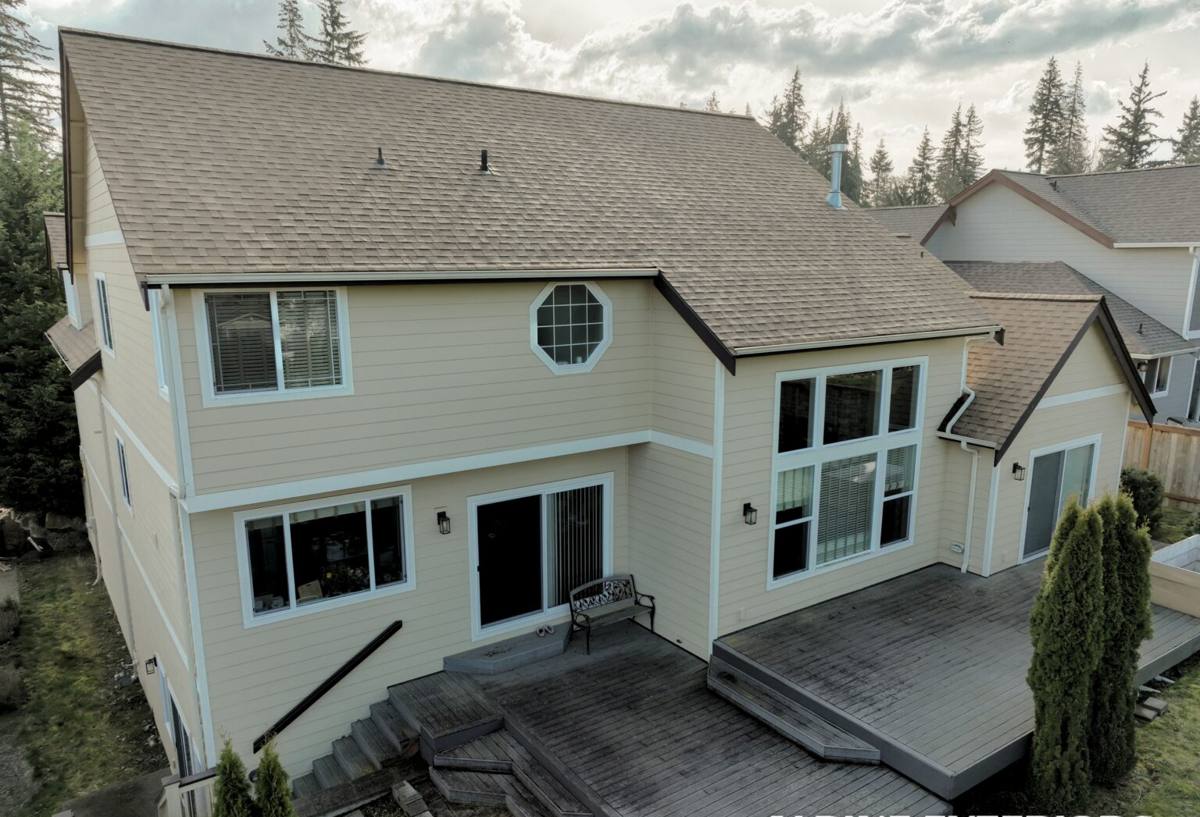
Why We Install Only James Hardie Fiber Cement in This Neighborhood
We don't offer vinyl, LP SmartSide, Cemplank, Allura, or primed wood siding like spruce or cedar. That's a deliberate standard, not a lack of options. In a coastal, storm-exposed area like Shore Acres, the material matters as much as the installation.
Fiber cement holds up where other materials struggle
James Hardie siding is cement, sand, and cellulose fiber — it doesn't rot, it's not a food source for insects, and it's non-combustible. Wood-based products, even engineered ones with treated strand or primed spruce, are still organic material at their core. In a humid, salt-air environment, any breach in the coating or seams gives moisture a path in, and wood-based substrates swell, delaminate, or decay from that point outward. Vinyl doesn't rot, but it's a thin plastic panel that can warp under intense, sustained UV and crack or blow off in high wind if it isn't rated and installed correctly for the exposure.
Engineered for this specific climate
Hardie's HZ5 product line is formulated for hot, humid, high-moisture climates like ours, as opposed to the HZ10 formulation sold in colder, drier regions. That's not a marketing distinction — the resin and moisture-management engineering are different because the failure modes are different. A product engineered for freeze-thaw cycles up north isn't solving the same problem as one engineered for year-round humidity and salt exposure on the Gulf Coast.
ColorPlus vs. field-applied paint
Hardie's ColorPlus finish is baked on at the factory in a controlled environment, with a UV-resistant topcoat, rather than rolled or sprayed on site. Field-applied paint on any siding material — fiber cement, wood, or otherwise — is more exposed to adhesion problems from humidity during application and fades faster under intense sun. ColorPlus finishes carry their own multi-year finish warranty separate from the substrate warranty, which matters in a market where repainting every few years is otherwise the norm.
What a Correct Siding Installation Actually Involves
Fiber cement siding is only as good as the installation behind it. Most siding failures we're called out to inspect in St. Petersburg aren't a material problem — they're a water-management problem created during installation.
Tear-off and substrate inspection
Old siding comes off down to the sheathing, and the sheathing gets inspected before anything new goes up. Soft spots, existing rot, or previous water intrusion get addressed at this stage — covering over a compromised substrate with new siding just hides the problem until it's bigger and more expensive.
Weather-resistive barrier and flashing
A correctly lapped weather-resistive barrier, with properly integrated flashing at every window, door, and penetration, is what actually keeps wind-driven rain out of the wall assembly. The siding itself sheds most of the water, but it is not the waterproofing layer — the barrier and flashing behind it are. This is the step that gets rushed or skipped on lower-quality jobs, and it's invisible once the siding goes on, which is exactly why it has to be done right the first time.
Fastening pattern and clearances
Hardie specifies fastener type, spacing, and placement for wind zones like ours, and those specs exist because Pinellas County sits in a high-velocity hurricane zone under Florida's building code. Under-fastening or using the wrong fastener type can let panels work loose in sustained wind well before a named storm ever arrives. Proper clearance from the ground, roofline, and adjacent hard surfaces also keeps the bottom edge of the siding from sitting in standing water or trapped moisture.
Caulking and joint treatment
Every butt joint, corner, and trim intersection needs the right sealant, applied correctly, and painted joints need to be caulked before or per the finish schedule so the seam doesn't become a wicking point for water. Poor caulking is one of the most common causes of early paint failure and moisture staining on otherwise sound siding.
Our Installation Process in Shore Acres
- On-site inspection: we walk the exterior, check the current siding and substrate condition, and note any problem areas — old water stains, soft trim, prior repair patches.
- Product and color selection: we walk through Hardie's plank profiles, textures, and ColorPlus palette so the finished look fits the home and the neighborhood.
- Written scope and schedule: a clear plan for tear-off, substrate repair if needed, barrier and flashing work, and installation sequencing, plus a realistic timeline that accounts for Florida's summer storm pattern.
- Tear-off and substrate repair: old material comes off, damaged sheathing gets replaced, and the wall is brought to a sound, dry starting point.
- Barrier, flashing, and installation: weather-resistive barrier, flashing, and Hardie planks go on to manufacturer spec and Florida building code fastening requirements.
- Trim, caulking, and touch-up: joints are sealed, trim is finished, and any factory-finish touch-up is completed with Hardie-matched product.
- Final walkthrough: we go over the finished job with the homeowner before calling it done.
Signs a Shore Acres Home May Need New Siding
- Visible cracking, buckling, or warping in panels, especially on sun-facing or water-facing walls
- Soft or spongy spots when you press on the siding near the bottom edge or around windows
- Peeling or bubbling paint that keeps coming back in the same spots after repainting
- Dark streaking, staining, or a musty smell along interior walls that share an exterior wall
- Visible gaps at seams, corners, or trim where caulking has dried out and pulled away
- Siding that flexes or feels loose to the touch, particularly after high wind
- Rising cooling costs that can't be explained by anything else, which can point to a compromised wall assembly
What Affects the Cost of a Siding Installation
Every home is different, but the following factors are what actually move the number on a Shore Acres siding job:
| Factor | Why It Matters |
|---|---|
| Home size and wall complexity | More square footage and more corners, gables, and dormers mean more cutting, flashing, and labor |
| Substrate condition | Rotted or water-damaged sheathing found during tear-off adds repair work that can't be scoped until the old siding is off |
| Plank profile and texture | Lap width, smooth vs. woodgrain texture, and trim style all affect material cost |
| ColorPlus color selection | Factory-finished color is included in the product line, but some premium colors and finishes carry a price difference |
| Access and site conditions | Tight lot lines, fencing, landscaping, or limited staging space near the water can add labor time |
| Removal and disposal | Tear-off and haul-away of the old siding, especially if it's a heavier or hazardous material, factors into the total |
Why It Matters to Hire a Crew That Already Works This Neighborhood
A crew that regularly works Shore Acres and the rest of St. Petersburg already knows what the salt air, wind exposure, and local permitting process require — they're not learning it on your house. They know how Pinellas County's wind-load and building code requirements apply to fastening and flashing, and they've seen how quickly a poorly sealed joint or under-fastened panel turns into a callback in this climate. That familiarity shows up in fewer surprises during tear-off, a scope that accounts for what's actually common in this area, and a finished job that's built for the conditions it will actually face — not generic conditions from a manufacturer spec sheet written for the whole country.
Caring for Your New Siding After Installation
James Hardie siding is low-maintenance, not no-maintenance, especially this close to the water. A rinse with a garden hose a few times a year clears off salt residue and airborne grime before it builds up. Keep an eye on caulking at joints and trim over the years — sealant is the one component that wears out well before the siding itself does, and refreshing it when it starts to crack or pull away protects the substrate behind it. Trim back plants and irrigation heads that spray directly on the siding, since constant dampness against any exterior material shortens its life. Beyond that, a periodic visual check after major storms is enough to catch small issues before they become bigger ones.
If you're weighing a siding project for a home in Shore Acres, we're glad to take a look and give you an honest read on what your home actually needs — no pressure, no hard sell. Fill out the form below to set up a free estimate.