 St. Petersburg Siding
 Why Shore Acres Decks Take a Different Kind of Beating
Shore Acres sits close to Tampa Bay, and that waterfront position is exactly what makes it a beautiful place to add an outdoor living space — and exactly why a deck built here has to work harder than one going up a few miles inland. Open water means more wind exposure, more salt carried on the air, and more humidity sitting on every surface for most of the year. Add in St. Petersburg's hurricane season, intense year-round UV, and the wind-driven rain that comes with almost every serious Gulf coast storm, and you've got a punch list of stresses that a "standard" deck simply isn't built to handle.
We see the results of that mismatch a lot: fasteners bleeding rust through the decking within a year or two, wood that cups and grays out fast, composite boards that fade unevenly on the sun-facing side, and railings that develop play at the posts because the connection underneath was never rated for real wind load. None of that is unusual for the area — it's just what happens when a deck is built to a generic spec instead of a Pinellas County, near-the-bay spec.
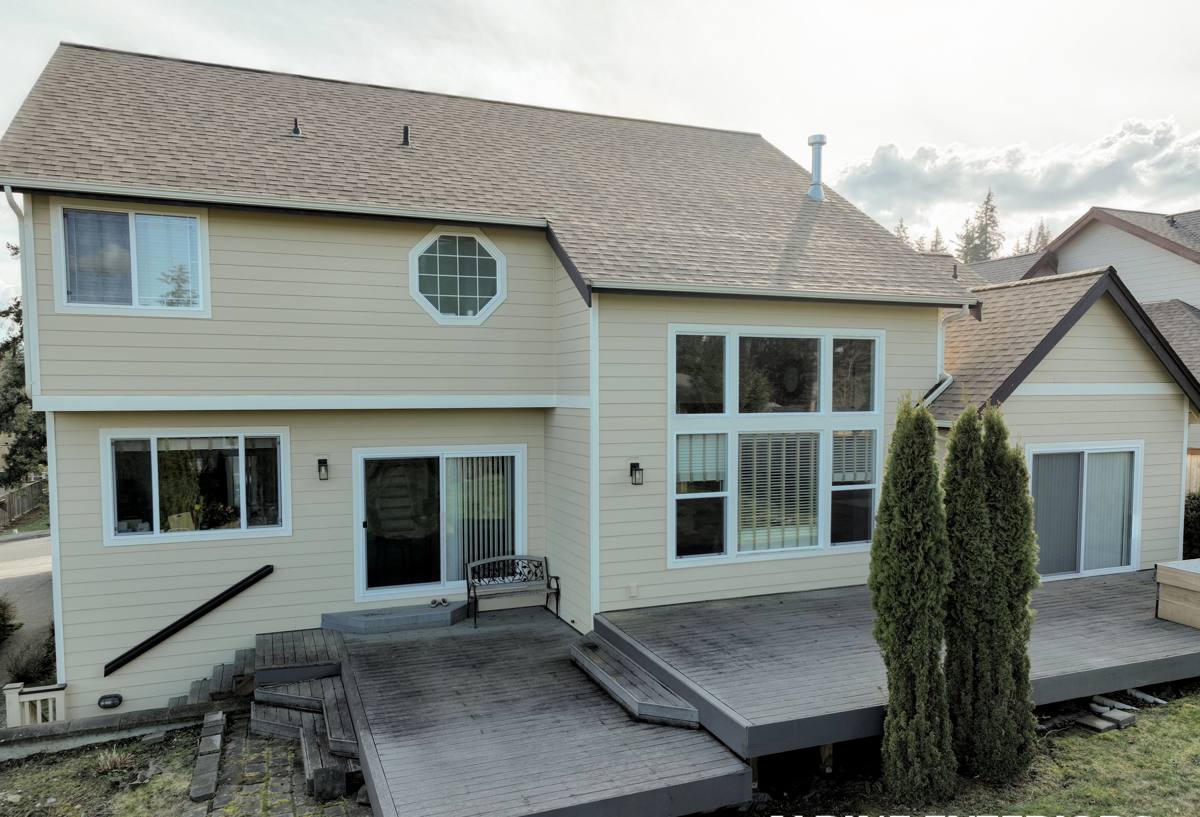
Picking a Decking Material That Can Actually Take the Exposure
The decking surface takes the brunt of the sun, rain, and salt spray, so material choice matters more here than it would somewhere drier and further from the coast. There's no single "best" answer — it depends on your budget, how much upkeep you're willing to do, and how close your lot sits to open water.
| Material | Salt-air resistance | UV/fade resistance | Maintenance | Typical lifespan (well-built) |
|---|---|---|---|---|
| Pressure-treated pine | Fair — needs sealing | Fades/grays without upkeep | Annual cleaning + resealing | 10–15 years |
| Dense tropical hardwood | Good | Grays naturally, can be oiled | Periodic oiling if color is wanted | 20-25+ years |
| Capped composite | Very good | Good, varies by brand/color | Occasional washing | 25-30 years |
| Cellular PVC | Excellent | Very good | Low — occasional washing | 30+ years |
Pressure-treated wood is still the lowest up-front cost and gives a natural look, but it's also the most maintenance-hungry option in a salt-air environment — skip a year of sealing and you'll see it. Capped composite and cellular PVC cost more initially but shrug off moisture and salt far better and don't need refinishing, which matters when your deck faces open water most days of the year. Dense tropical hardwoods split the difference: naturally durable and salt-tolerant, but heavier, pricier, and pickier about installation than either treated wood or composite.
A Word on "Waterfront-Grade" Claims
Every decking brand markets itself as built for coastal conditions. In practice, the difference between a product that holds up here and one that doesn't usually comes down to installation — proper gapping for drainage and expansion, correct fastener compatibility, and ventilation underneath — more than the marketing on the board itself. We'll walk you through the honest trade-offs for your specific lot rather than push whatever has the best brochure.
Framing That Holds Up to Wind and Water — Not Just the Boards on Top
A deck's surface gets all the attention, but its structure is what actually has to survive a hurricane season. For Shore Acres properties, that means:
- Footings sized and set to local frost/soil and wind-uplift requirements, not just "deep enough to look right"
- Structural screws or approved connectors at every joist-to-beam and post-to-beam connection, rated for wind uplift, not just gravity loads
- Ledger board flashing that actually sheds water away from the house's exterior wall — a poorly flashed ledger is one of the most common sources of hidden rot and, on stucco or siding-clad homes, water intrusion behind the wall
- Proper joist spacing and blocking for the decking material chosen, since composite and PVC often have tighter span requirements than solid wood
On canal-front or low-lying lots, elevation and drainage under the deck also deserve real thought — standing water after a heavy rain event doesn't just create a mess, it accelerates corrosion on hardware and rot at post bases.
Hardware and Fasteners: Where Cheap Decks Fail First
This is the detail that separates a deck that looks fine for two years from one that's still solid in fifteen. Salt-laden air corrodes standard fasteners faster than almost anywhere else in the state, and most treated lumber today uses a chemical formulation that actively reacts with the wrong metal — using mismatched fasteners can accelerate corrosion instead of preventing it.
For a deck going up in Shore Acres, we specify stainless steel or coated fasteners rated for compatibility with modern treated lumber and for coastal exposure, and we use hidden fastener systems on composite and PVC decking where the product supports it, both for a cleaner look and to reduce the number of exposed metal points that can corrode and stain the surface around them.
Permitting and Wind/Flood Realities in St. Petersburg and Pinellas County
Most deck projects in the city require a building permit, and the review will typically check the structure against local wind-load requirements — Pinellas County is in a high-wind coastal zone, so framing and connection details get scrutinized more closely than they would inland. If your lot is near the water, flood zone designation and base flood elevation can also factor into how the deck is designed, particularly for height and support placement close to a canal or seawall.
Some Shore Acres properties also carry deed restrictions or neighborhood guidelines that affect setbacks, height, or materials — if yours does, it's worth checking before design work goes too far, since it can change the plan. We handle the permit application and plan submission as part of the job so you're not the one chasing paperwork or code citations.
How We Build a Custom Deck for a Shore Acres Property
- Site visit and assessment — we look at sun exposure, wind exposure relative to the water, drainage, soil, and how the deck will tie into the house
- Design and material selection — we walk through the honest trade-offs between wood, hardwood, composite, and PVC for your budget and how close you are to open water
- Engineering and permitting — structural details are set to meet local wind and, where applicable, flood requirements, and we submit for permit
- Construction — footings, framing, decking, and railings, built in the sequence and with the hardware discussed above
- Final walkthrough — we go over the finished deck with you, including what maintenance it needs and on what schedule
Keeping a Waterfront Deck Looking Good Year After Year
No decking material is truly maintenance-free in a salt-air, high-UV climate — some just need less than others. A short, honest maintenance routine keeps any of these materials performing for their full lifespan:
- Rinse salt spray and pollen buildup off the surface and railings every few weeks during dry spells
- Check fastener heads and railing connections once or twice a year for rust bleed or looseness
- Reseal or oil wood and hardwood decking on the schedule the product calls for — don't wait until it looks gray
- Keep gutters and downspouts clear so runoff isn't dumping extra water onto or under the deck
- After any named storm, walk the deck and check post bases, stairs, and railing anchors before assuming everything's fine
What Drives the Cost of a Custom Deck Here
| Cost factor | Why it matters in Shore Acres |
|---|---|
| Size and footprint | More square footage means more footings, framing, and decking material |
| Material choice | Treated wood costs less up front; composite and PVC cost more but need less upkeep near the water |
| Height and elevation | Taller decks and stair runs need more structural support and railing code compliance |
| Site access | Canal-front or fenced-in backyards can limit equipment access and add labor time |
| Permit complexity | Flood zone or wind-load engineering requirements can add design and review time |
| Railings and features | Cable, glass, or custom railing systems cost more than standard baluster rail |
We give straightforward, itemized pricing so you can see exactly what you're paying for and where you have room to adjust the scope if needed.
Why a Crew That Already Works Shore Acres Matters
A deck built to a generic inland spec can still pass a quick inspection and look fine on day one — the problems show up eighteen months later, once salt air and storm season have had a chance to find every weak point. Working with a crew that already builds decks in this specific stretch of St. Petersburg means the material choices, fastener specs, and framing details described above aren't guesswork — they're the standard we build to by default, because we've seen what happens when a deck isn't built that way in this exact climate. We also already know the local permitting process and what the wind and flood review will be looking for, which keeps your project moving instead of stalling on paperwork.
If you're planning a new deck or replacing one that didn't hold up, we're happy to take a look at your property and talk through what makes sense for your budget and your spot on the water. Reach out for a free, no-pressure estimate using the form below.