 St. Petersburg Siding
 St. Petersburg's Climate Doesn't Go Easy on Roser Park
Roser Park sits close enough to Tampa Bay that every siding material on every home in the neighborhood is dealing with the same four stresses year-round: hurricane-force wind gusts during the summer and fall storm season, intense UV exposure nearly every day of the year, wind-driven rain that gets pushed sideways into walls instead of falling straight down, and a steady dose of salt air carried in off the water. None of that is unique to this one neighborhood, but it hits differently on a block of older homes than it does on new construction, and that's the situation a lot of Roser Park homeowners are actually in.
Older siding — especially original wood board siding that's been painted over for decades — starts to lose the fight against this combination well before homeowners expect it to. Paint holds moisture in longer than it should, boards cup and split, and nail heads work loose as the wood swells and shrinks through Florida's humidity swings. By the time siding starts visibly failing, there's often already moisture damage happening underneath that isn't obvious from the curb.
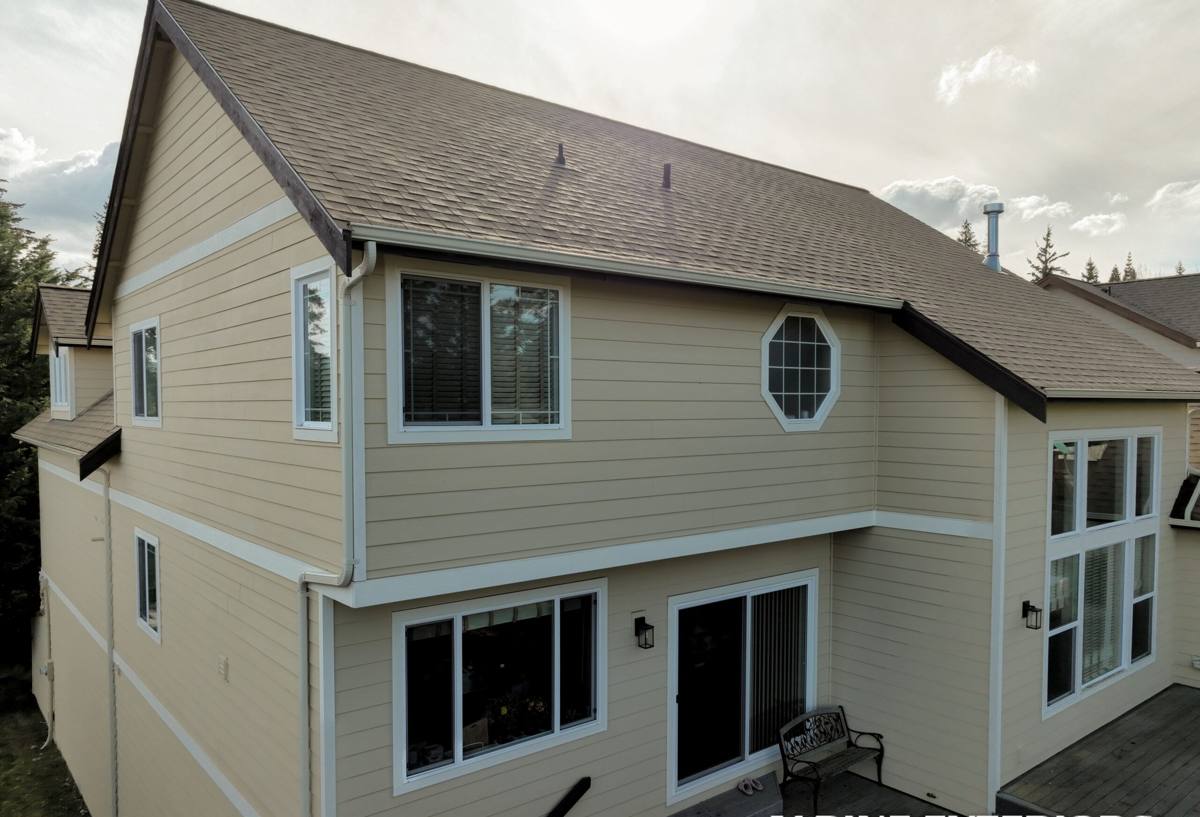
What Makes Roser Park Different From a Typical Siding Job
A Historic Neighborhood With Real Character
Roser Park is one of St. Petersburg's older, architecturally distinct neighborhoods, and homeowners here are usually not looking to modernize the look of their house — they want to protect it. That means siding profile, reveal, and trim detail matter as much as the material itself. A product that looks generic or clearly modern on a home with genuine early-20th-century character does the house a disservice, even if it performs well.
Hills, a Ravine, and Drainage Homeowners Don't Always See
Unlike most of flat St. Petersburg, Roser Park has real topography — sloped lots and a ravine running through the neighborhood. That terrain affects how water moves around a foundation and up against exterior walls during heavy rain, and it affects site access for a crew doing tear-off and staging materials. A siding job here needs someone paying attention to grading and drainage at the base of the wall, not just the wall itself.
A Heavy Tree Canopy
Mature tree cover is one of the neighborhood's best features and one of the harder things on siding. Shaded, damp wall sections dry out slower after rain, leaf litter collects against lower courses and trim, and organic debris sitting against wood siding is exactly the kind of long-term moisture exposure that leads to rot. Material choice and detailing at grade level matter more here than on an open, sun-exposed lot.
Why Fiber Cement Fits This Neighborhood
Engineered for Gulf Coast Humidity and Salt Exposure
James Hardie builds its fiber cement products with different formulations for different climate zones specifically because humidity, moisture, and coastal exposure vary so much across the country. The Gulf Coast configuration is engineered for exactly the conditions St. Petersburg deals with — sustained humidity, wind-driven rain, and salt-laden air — rather than a one-size-fits-all product. Fiber cement itself is cement, sand, and cellulose fiber; it doesn't absorb moisture and swell the way wood does, and it isn't food for termites or wood-boring insects, which matters in a neighborhood with mature trees and older, sometimes original, wall framing.
Color That Doesn't Chalk and Fade in Florida Sun
Florida's UV load is hard on paint film, full stop. Field-applied paint on wood or fiber cement starts to chalk and fade years before it should here, which is why repainting every 5-8 years becomes a recurring cost on a lot of older St. Pete homes. Hardie's ColorPlus factory finish is baked on under controlled conditions and backed by its own finish warranty, which means the color holds up to sun exposure noticeably longer than a field-applied coat, and touch-up work matches because it comes from the same finish system.
Wind and Impact Resistance the Florida Building Code Cares About
Pinellas County enforces the Florida Building Code's coastal wind provisions, and siding attachment matters as much as the siding material when hurricane-force gusts are part of the annual forecast. Fiber cement is dense and rigid compared to vinyl, which means it holds a fastening pattern correctly and doesn't flex, deform, or blow off in wind loads that would compromise lighter materials. It's also non-combustible, which is a real consideration during dry, windy conditions when wildfire embers or a neighboring structure fire become a factor.
What a Correct Fiber Cement Installation Actually Involves
Following the Manufacturer's Installation Manual, Not a Shortcut Version
James Hardie publishes detailed installation requirements — fastener type and spacing, minimum clearances from grade, roof lines, and decks, and specific guidance for coastal wind zones. A correct installation follows that manual exactly, because Hardie's product warranty is tied to installation meeting those specifications. Skipping steps to save time on labor is the single most common way a fiber cement job ends up with problems years down the road that have nothing to do with the material itself.
Flashing, Clearances, and Moisture Management
Siding is one part of a wall assembly, not the whole system. Proper installation means a correctly lapped weather-resistant barrier underneath, kick-out flashing where a roofline meets a wall, head flashing over windows and doors, and cut edges sealed before they go up. On a shaded, tree-covered lot like a lot of Roser Park properties, getting this right is what actually keeps moisture from working its way behind the siding over time — the siding material can be excellent and still fail early if the flashing details behind it are wrong.
Matching a Historic Profile Without Faking It
Hardie's product lines include traditional lap siding in multiple exposures, shingle-style panels, and board-and-batten profiles, which gives real flexibility to match the reveal and shadow line of an older home's original siding instead of forcing a modern look onto a historic house. Getting the profile and reveal right is a judgment call that comes from actually looking at what's there — not defaulting to whatever's fastest to install.
Our Process on a Roser Park Project
- On-site inspection of the existing siding, trim, and visible wall condition, including a look at drainage and grading around the foundation.
- Full tear-off of the old siding rather than installing over it, so the sheathing and framing underneath can actually be checked and any rot or damage addressed before new material goes up.
- Repair of any compromised sheathing or framing found during tear-off, documented and discussed before we move forward.
- Installation of a correctly lapped weather-resistant barrier and all required flashing at windows, doors, and roof-to-wall intersections.
- Fiber cement installation following James Hardie's fastening and clearance specifications for coastal wind exposure.
- Trim, caulking, and touch-up work matched to the ColorPlus finish system.
- Final walkthrough so you can see the completed work and ask questions before we consider the job done.
Fiber Cement vs. What's Probably On Your Home Now
| Factor | Original Wood Siding | Vinyl Siding | James Hardie Fiber Cement |
|---|---|---|---|
| Moisture / humidity | Absorbs, swells, rots over time | Doesn't absorb, but traps moisture behind panels | Doesn't absorb; engineered for humid climates |
| UV / sun fading | Field paint chalks and fades | Color fades and can become brittle | Factory ColorPlus finish resists fading |
| Wind performance | Boards can split, warp, loosen | Can deform or blow off in high gusts | Dense and rigid; holds fastening pattern |
| Salt air exposure | Accelerates paint failure and rot | Generally tolerant but can chalk | Formulated for coastal exposure |
| Insects / rot | Vulnerable | Not vulnerable, but no fire resistance | Not vulnerable; non-combustible |
| Historic profile matching | Original, but deteriorating | Limited, often looks modern | Multiple profiles available to match reveal |
What Roser Park Homeowners Should Budget For
| Cost Factor | Why It Matters Here |
|---|---|
| Substrate condition | Older homes sometimes have hidden sheathing or framing damage found during tear-off; this can only be scoped accurately once the old siding is off. |
| Profile and trim complexity | Matching a historic reveal and detailed trim takes more labor than a simple flat run of lap siding on a new build. |
| Site access | Sloped lots and ravine-adjacent terrain can affect staging and material handling, which factors into labor time. |
| Tear-off vs. overlay | We don't install over existing siding — full tear-off costs more up front but is the only way to verify what's underneath and install correctly. |
| Trim and accessory selection | Fascia, soffit, and trim material choices to complement the siding add to the scope depending on what the home needs. |
After Installation: Keeping Fiber Cement Performing in This Climate
- Rinse siding periodically with a garden hose to clear salt residue and airborne debris, especially on sides of the house facing open exposure.
- Keep tree branches and shrubs trimmed back from the siding so shaded, damp wall sections get airflow and dry out after rain.
- Clear leaf litter and organic debris away from the base of the walls rather than letting it pile up against lower courses.
- Inspect caulking at trim joints, windows, and doors annually and have any cracked or missing caulk redone before the next rainy season.
- Watch for any hairline cracks or impact damage after storms and have them addressed promptly rather than left through another hurricane season.
- Avoid pressure washing at high PSI directly against the siding; a gentle rinse is enough and won't drive water behind panels or joints.
Why Hire a Crew That Already Works This Neighborhood
A crew that's worked in Roser Park before already understands the practical realities that a generalist contractor has to figure out on the fly: how the city's permitting process works for exterior work in St. Petersburg, what to expect when a property falls within a historic district's guidelines, how to stage a job on a sloped or ravine-adjacent lot, and what Pinellas County's wind exposure requirements mean for fastening schedules on a given elevation. If your property is within Roser Park's historic district boundaries, it's worth checking with the city's planning or historic preservation staff on any review requirements before work begins — we're glad to help homeowners navigate that conversation as part of scoping the job.
Experience with older homes also means recognizing problems before they become expensive ones — knowing what original wall assemblies in homes from this era typically look like once the siding comes off, and not being caught off guard by what's underneath.
If you're weighing your options for a home in Roser Park, we're happy to walk the property, look at what's there now, and talk through what a correct fiber cement installation would involve — no pressure, no obligation. Reach out for a free estimate using the form below.