 St. Petersburg Siding
 Building a Deck That Can Actually Handle Pinellas Point's Climate
Pinellas Point sits at the southern edge of St. Petersburg, close enough to open water that homes here take a harder hit from the weather than most inland properties. Hurricane-force winds test every connection in a deck's frame. Intense, near-constant Florida sun breaks down wood fibers and fades or chalks lesser finishes. Wind-driven rain finds its way into any gap in flashing or fastener coverage. And salt air corrodes hardware that would last decades further inland. A deck built to a generic national standard, using whatever material happens to be on the truck, is not built for this. A deck built correctly for Pinellas Point is a different project, from the footings up.
This page covers what a properly built deck for a Pinellas Point home actually requires, what our process looks like from first visit to final walkthrough, and why it matters to work with a crew that already builds in this specific part of Pinellas County rather than one learning the coastal lessons on your project.
What Holds a Deck Together: Framing, Footings, and Fasteners
Most deck failures don't start with the decking boards people notice — they start underneath, with framing, footings, or fasteners that were undersized, under-protected, or attached wrong for a coastal environment. Get this part right and the visible deck surface has something solid to sit on for decades.
Footings and Ledger Attachment
Footings need to be sized and set to the depth the local building code requires, not just poured to whatever looked adequate on the last job. Where a deck attaches to the house, the ledger board connection is one of the most common failure points in decks nationwide, and it's worse here because wind-driven rain pushes water sideways into any gap. A correct ledger attachment uses proper flashing integrated with the house's water barrier, structural lag bolts or through-bolts (never nails), and a gap or flashing detail that lets water drain instead of pooling against the house band board. Skipping or shortcutting this is how homeowners end up with hidden rot behind the siding years later.
Fasteners and Hardware
Standard galvanized fasteners degrade faster in salt-laden coastal air than they do a few miles inland. We use stainless steel or coated fasteners and connectors rated for coastal or ACQ-treated lumber use, along with joist hangers and structural connectors sized to actual wind and load requirements rather than the minimum that will pass a casual glance. Every screw, bolt, and hanger on a deck is a potential weak point if it's the wrong grade of hardware — this is not a place to save a few dollars on materials.
Choosing the Right Decking Material for a Coastal Neighborhood
The decking surface itself is where most homeowners focus, and the material choice has real consequences for how the deck holds up to sun, salt, and rain over time. There is no single "best" material for every budget and taste, but each option comes with real trade-offs worth understanding before you decide.
| Material | How It Holds Up Here | Maintenance Reality |
|---|---|---|
| Pressure-treated pine | Affordable and strong, but UV and humidity cycles cause checking, splintering, and graying faster in this climate than up north | Needs sealing or staining every 1–2 years to control moisture and UV damage |
| Tropical hardwoods (e.g., ipe) | Naturally dense and rot-resistant, handles moisture well, but is a premium material that must be installed with the right fasteners to avoid splitting | Periodic oiling to maintain color; will silver over time if left untreated |
| Composite decking | Resists rot and doesn't splinter or need staining; quality varies by brand and cap-stock design for UV and moisture resistance | Occasional cleaning; no staining or sealing required |
| PVC/vinyl decking | Fully synthetic, highly resistant to moisture and salt air, tends to run cooler-colored options better in direct sun than dark composites | Low; mainly routine cleaning |
Our standard is to walk homeowners through these trade-offs honestly rather than push whatever has the best margin. A lower-maintenance composite or PVC product often makes sense for a rental or a homeowner who doesn't want a recurring sealing schedule; a well-installed hardwood or treated wood deck can be the right call for someone who prefers the look and doesn't mind the upkeep. What matters most is that whichever material you choose is installed with the fastening and spacing details appropriate for that specific product, since improper board spacing is a common cause of cupping and moisture trapping in Florida's humidity.
Railings, Stairs, and Hardware That Won't Corrode
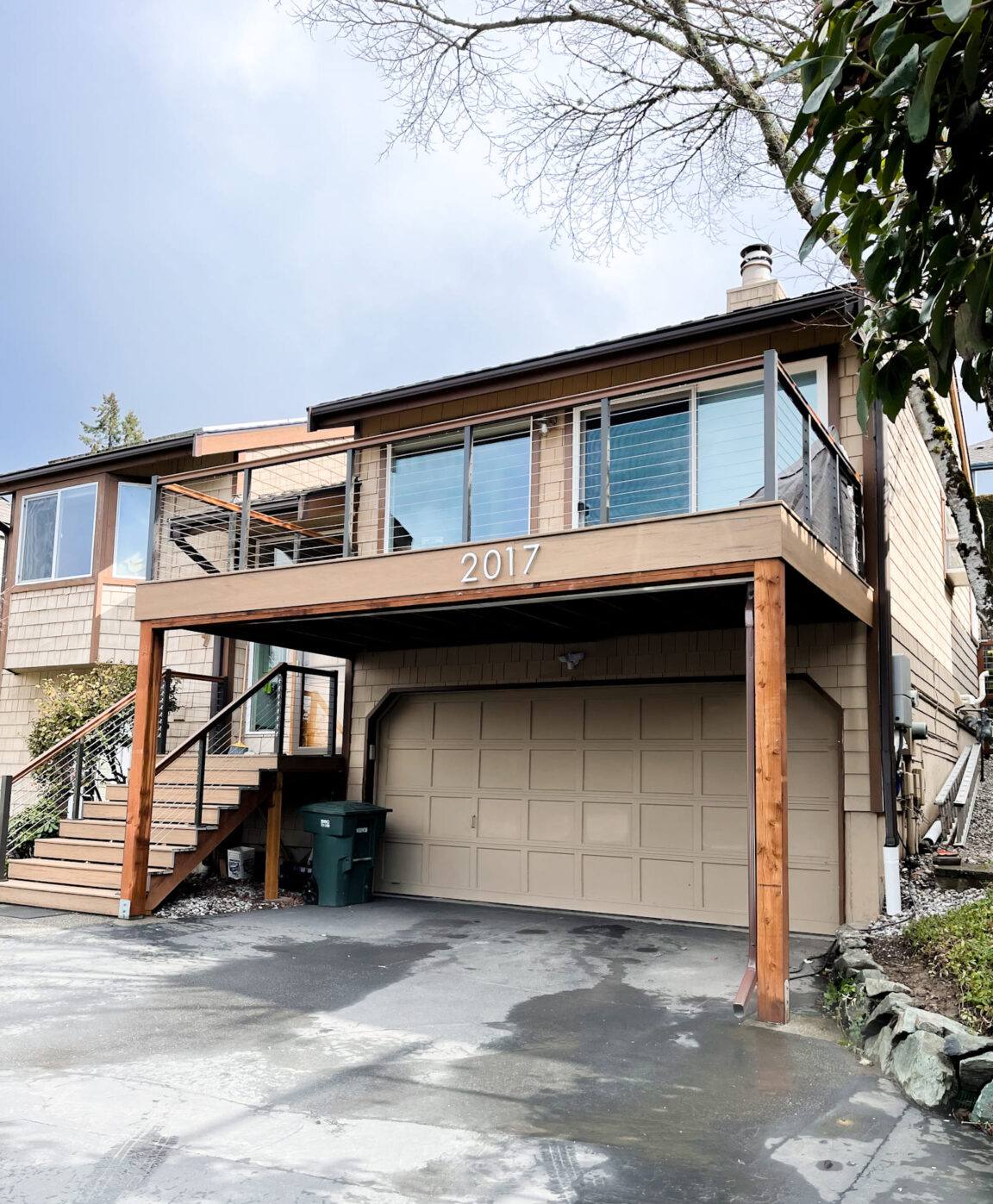
Railings take constant sun exposure and, on many Pinellas Point lots, direct salt air off the water. Wood balusters and rails need the same UV and moisture protection as the decking surface. Metal railing systems — aluminum, in particular — resist corrosion far better than lower-grade steel components, which can rust and stain a deck within a few seasons this close to the coast. Cable railing systems look great but require stainless steel cable and hardware specifically rated for coastal use, or the cables will rust and discolor quickly.
Stairs deserve the same attention as the deck itself: proper stringer sizing, secure attachment at the top and bottom, and non-slip tread surfaces matter more here given how often Florida decks get wet from sudden afternoon storms.
Permits, Codes, and Wind Considerations in Pinellas County
Deck construction in St. Petersburg and unincorporated Pinellas County requires a permit, and inspections along the way — typically at footing/framing stage and again at final completion. Building codes here account for the region's wind exposure, which affects how framing connections, railing attachment, and in some cases footing depth are engineered compared to a deck built in a low-wind inland state. Homes closer to the water, including many in Pinellas Point, may also have elevation or flood zone considerations that affect how a deck is designed, particularly for ground-level structures or decks attached to homes on raised foundations.
We pull the required permits and coordinate inspections as part of the job rather than leaving that step to the homeowner. Skipping permitting on a deck is a common shortcut some contractors take to move faster, but an unpermitted deck can create real problems at resale, with insurance claims, or if it's damaged in a storm and needs to be rebuilt to current code.
Our Deck Building Process
Every deck project follows the same sequence, whether it's a small ground-level platform or a larger elevated deck off the back of the house:
- Site visit and consultation — we look at the lot, discuss how you'll use the space, note any drainage, elevation, or access issues specific to the property.
- Design and material selection — we go over decking, railing, and framing options honestly, including cost and maintenance trade-offs for each.
- Permitting — we prepare and submit the permit application and plans required by the local building department.
- Framing and footings — footings are set, framing is built to the engineered layout, and the ledger connection (if attached to the house) is properly flashed.
- Decking, railing, and stairs — the visible structure goes on with fasteners matched to the chosen material.
- Inspection and final walkthrough — we coordinate the required inspections and walk the finished deck with you before calling the job done.
We don't skip steps to move faster, and we don't ask homeowners to handle their own permit or inspection scheduling. That's part of the job.
Keeping a Pinellas Point Deck in Good Shape Over Time
No deck material is completely maintenance-free in this climate, though some need far less attention than others. A short seasonal routine goes a long way toward protecting the investment:
- Rinse off salt residue and debris periodically, especially after storms with onshore wind
- Inspect fasteners and railing hardware once or twice a year for early signs of rust or looseness
- Check the ledger board area where the deck meets the house for any staining or soft spots
- Reseal or restain wood decking on the schedule appropriate to that product — don't wait until it's visibly gray and dry
- Keep gutters and downspouts near the deck clear so runoff isn't dumping extra water onto framing or footings
- Trim back vegetation that traps moisture against the deck structure
Signs an Existing Deck Needs Attention
We get calls from Pinellas Point homeowners for repairs as often as new builds, usually once a problem has become visible. Catching these early is cheaper and safer than waiting:
- Soft, spongy, or discolored decking boards, especially near the house connection
- Rust streaks running down from screws, bolts, or railing posts
- Railings or stair rails that flex or feel loose when you put weight on them
- Visible gaps or staining where the deck ledger meets the exterior wall
- Boards that have cupped, split, or pulled away from fasteners
If any of these look familiar, it's worth having the structure looked at before it's used heavily again.
Why a Crew That Already Works Pinellas Point Matters
Deck construction rules and best practices don't change dramatically from one Florida neighborhood to the next, but the practical details do. A crew that regularly works in Pinellas Point already understands the wind exposure and salt air conditions specific to homes this close to the water, has a working relationship with the local permitting process, and has seen firsthand which fastener grades and material choices actually hold up here versus which ones look fine on day one and fail in year three. That experience shows up in the small decisions — flashing details, hardware grade, footing depth — that don't get noticed until they either hold up or don't.
St. Petersburg and Pinellas County as a whole share this coastal exposure, but neighborhoods like Pinellas Point that sit closer to open water see it more directly. Building a deck here isn't fundamentally different work than building one anywhere in Florida, but it does reward a contractor who treats the climate as a design factor from the start rather than an afterthought.
Getting Started
If you're planning a new deck or need an honest look at one that's showing its age, we're happy to take a look and talk through your options. There's no pressure and no obligation — just a straightforward assessment of what your property needs and what it would take to do the job right. Use the form below to request a free estimate.