 St. Petersburg Siding
 Kenwood's Older Homes Were Built for a Different Era of Weather
Historic Kenwood is one of St. Petersburg's oldest residential neighborhoods, known for its concentration of early-20th-century bungalow and Craftsman-style houses. Many of these homes have already been re-sided once or twice since they were built, and the siding on them today is often reaching the end of its useful life at the same time Pinellas County's weather is getting harder on exterior materials, not easier. Sun exposure is more intense, storms track through more often, and salt-laden air off Tampa Bay works on painted wood and older composite products year-round.
When a Kenwood homeowner calls us about siding, the conversation is rarely just "what color." It's usually about a home with real architectural character — deep eaves, decorative trim, visible rafter tails, narrow lap reveals — that the owner doesn't want to lose, paired with a material underneath that's failing. Getting this right means respecting the look of the house while replacing what's underneath it with something built for the climate it actually lives in.
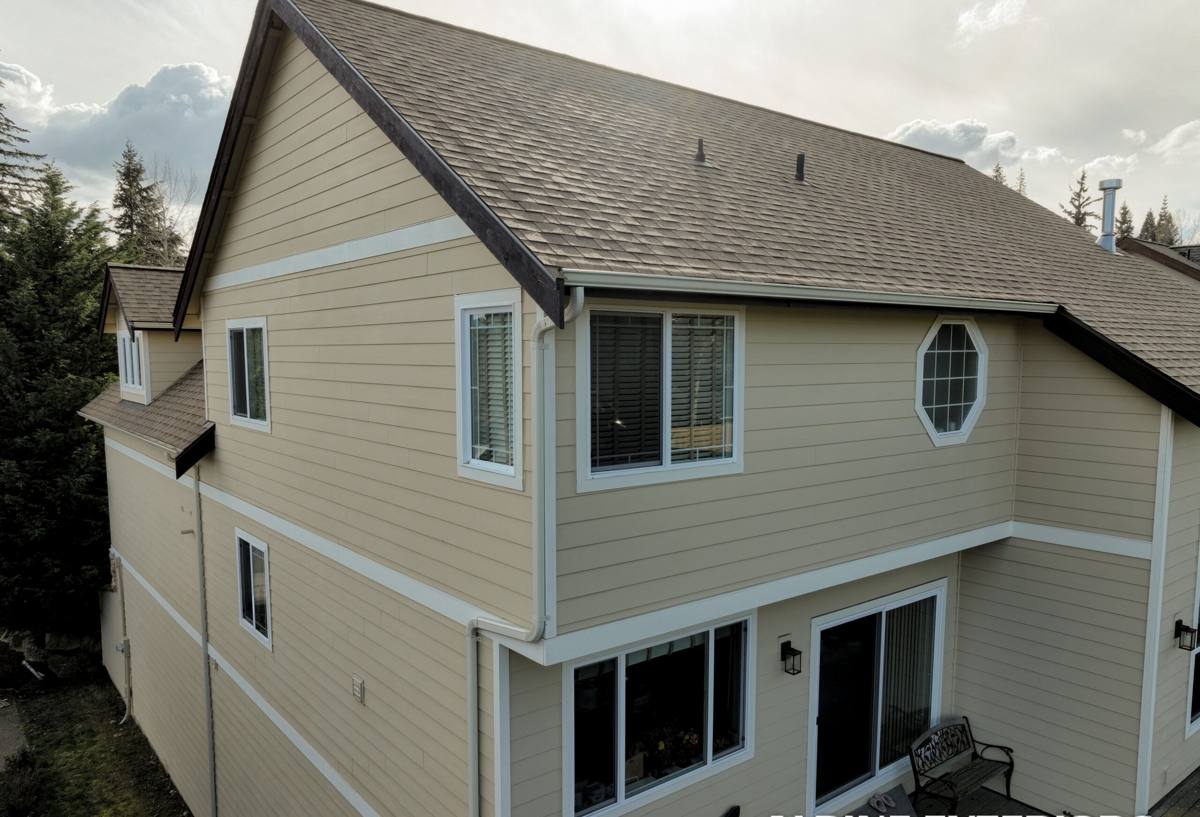
What Kenwood's Architecture Asks of a Siding Job
Matching the Original Lines
Bungalow and Craftsman homes typically use narrower lap reveals than a lot of newer suburban construction, along with wide trim boards, exposed rafter tails, and sometimes shingle-style accents in gable ends. A siding replacement that ignores these details — swapping in a wide modern reveal or skipping the trim profile — can make a historic-character home look noticeably "off" even with brand-new material on the wall. We match reveal width and trim detailing to the home's existing lines rather than defaulting to whatever's fastest to install.
Working Around What's Already There
Older Kenwood homes often have layers of history behind the siding: original wood sheathing, decades-old repairs, sometimes moisture damage that's been painted over rather than fixed. A correct installation starts by inspecting what's underneath, not just covering it. That inspection step matters more here than on a newer home, because problems hidden behind old siding tend to be older and more advanced by the time they're found.
What St. Petersburg's Climate Does to Siding Over Time
St. Petersburg sits on a peninsula between Tampa Bay and the Gulf, which means Kenwood homes deal with a specific combination of stresses:
- Hurricane-force wind: Siding needs to stay fastened and intact through sustained wind events, not just light storms — loose or lifted siding becomes a wind-driven projectile and an entry point for water.
- Intense, year-round UV: Florida's sun angle and exposure hours fade and break down painted surfaces faster than in most of the country, which is why paint-grade siding needs repainting on a much shorter cycle here.
- Wind-driven rain: Storms in this area rarely fall straight down. Rain gets pushed sideways into seams, laps, and trim joints, which makes flashing and water management details more important than the siding material itself in a lot of failures.
- Salt air: Even a few miles inland from the Bay, airborne salt accelerates corrosion on fasteners and trim hardware and can degrade some finishes over time.
None of this is unique to Kenwood, but it's concentrated here because of how close the neighborhood sits to the water and how much older housing stock is still standing. A siding product and installation method that works fine in a drier, calmer climate can fail faster here than it would elsewhere.
Why We Install Only James Hardie Fiber Cement
We standardized on James Hardie for every job we take, including Kenwood's historic homes, and we don't install vinyl, LP SmartSide, or other composite or wood siding products. That's not a marketing position — it's a decision based on how these products perform in this specific climate over the long run.
Non-Combustible and Dimensionally Stable
Fiber cement doesn't expand and contract with heat and humidity the way vinyl and wood-based products do, and it's non-combustible. In a climate with this much sun exposure and humidity swing, that stability matters for keeping seams tight and paint or factory finish intact over decades rather than years.
Climate-Engineered Product Lines
James Hardie makes region-specific HZ product formulations engineered for high-humidity, high-moisture climates like Florida's, as opposed to a one-size-fits-all product sold nationwide. That's a meaningful difference for a coastal Pinellas County home.
ColorPlus Factory Finish
Rather than field-painted siding that starts fading under Florida sun almost immediately, Hardie's ColorPlus finish is baked on at the factory and backed by its own finish warranty. For homeowners who want a historically accurate color without the maintenance cycle of repainting every few years, this is a real practical advantage, not just a convenience.
A Warranty That Reflects Confidence in the Product
James Hardie backs its siding with a strong, transferable warranty — something that matters both for a homeowner planning to stay long-term and for resale value on a historic-district home, where buyers often ask pointed questions about exterior condition and materials.
How Hardie Compares to Other Options Homeowners Ask About
| Factor | James Hardie Fiber Cement | Vinyl Siding | Painted Wood / Composite |
|---|---|---|---|
| UV / fade resistance | Factory-baked ColorPlus finish, built for long-term color retention | Prone to fading and warping under intense sun | Repainting needed every few years in this climate |
| Wind performance | Engineered and rated for high-wind installation | Can crack, loosen, or blow off in sustained high wind | Depends heavily on fastening; wood can split |
| Moisture / humidity behavior | Dimensionally stable, moisture-resistant HZ formulations | Doesn't rot, but can trap moisture behind panels if installed poorly | Vulnerable to rot and moisture damage over time |
| Salt air exposure | Holds up well; minimal corrosion concern for the siding itself | Generally fine, but hardware and trim can still corrode | Wood is more vulnerable to salt-accelerated decay |
| Long-term maintenance | Low — occasional cleaning and caulk checks | Low, but limited repair/color options once faded | Higher — repainting, caulking, spot repairs |
This isn't about any of these products being "bad" across the board — vinyl and painted wood both have legitimate uses elsewhere. It's about which material holds up best, with the least ongoing maintenance, on the specific kind of home and climate combination Kenwood represents. That's why Hardie is the only product we put on a wall.
What a Correct Installation Looks Like on a Historic Kenwood Home
The material is only half the equation. A lot of siding failures we get called out to inspect — on any brand — trace back to installation shortcuts, not the product itself. On an older Kenwood home, a correct job includes:
- Removing the old siding and inspecting the sheathing and framing underneath for hidden moisture damage or rot before anything new goes up.
- Installing a proper weather-resistive barrier and correctly lapped, sealed flashing at every window, door, and horizontal joint — the details that actually stop wind-driven rain.
- Fastening according to James Hardie's published specifications for wind zone and exposure, not just "close enough" spacing.
- Maintaining correct clearances from grade, roofing, and other transitions so water has somewhere to go instead of sitting against the bottom edge of the siding.
- Matching reveal width, corner treatment, and trim profile to the home's existing architectural style rather than defaulting to a generic modern look.
- Field-cutting and finishing edges properly so factory finish and cut edges are treated per manufacturer requirements, protecting the warranty.
Our Process for Kenwood Projects
Every Kenwood job starts with an on-site walk of the home, not a phone estimate. We look at the existing siding, trim, and any visible signs of moisture or wind damage, then walk the homeowner through what we're seeing and what it means for scope. From there:
- We provide a written estimate that spells out product line, color, and scope — no vague allowances.
- We handle removal, sheathing inspection, and any necessary repairs before new siding goes on, and we flag anything unexpected we find before proceeding, not after.
- We install to James Hardie's specifications for this wind zone and climate, with attention to the trim and reveal details that keep an older home's character intact.
- We walk the finished job with the homeowner before we consider it done.
What to Look for When Hiring a Siding Contractor in Kenwood
Because Kenwood's housing stock is older and more architecturally specific than a typical newer subdivision, the contractor you choose matters more than usual. Before hiring anyone, it's worth asking:
- Have they worked on older bungalow or Craftsman-style homes before, and can they explain how they'll match trim and reveal details?
- Do they install to the manufacturer's published fastening and flashing specifications for this wind zone, or just "how we always do it"?
- Will they inspect and address sheathing or structural issues found during tear-off, or just cover over what's there?
- Is their estimate specific about product line, finish, and scope, or vague on materials?
- Are they licensed and insured to work in Pinellas County, and can they provide proof without hesitation?
A contractor who's done real work in this neighborhood — not just driven through it — will have specific answers to these questions, not general reassurances.
Why Local Experience in This Neighborhood Matters
Kenwood's mix of historic character, older construction, and coastal exposure to hurricane wind, UV, wind-driven rain, and salt air isn't something a crew that mostly works new subdivisions runs into every day. Getting the trim details right, knowing what to expect when you pull old siding off a home built decades ago, and installing to the wind and moisture standards this part of St. Petersburg actually demands takes repetition, not just a manufacturer certification. That's the difference between a siding job that looks right for a season and one that holds up — and looks right — for decades.
If you're weighing a siding replacement on a Kenwood home, we're happy to walk the property, look at what you're currently dealing with, and give you a straightforward, no-pressure estimate on what a correct James Hardie installation would involve for your house specifically.