 St. Petersburg Siding
 Siding Repair Built Around How Historic Kenwood Homes Are Actually Built
Historic Kenwood is one of St. Petersburg's older residential neighborhoods, known for its concentration of early-20th-century bungalow and Craftsman-style houses. Homes of that era were built with materials and framing methods that are very different from a house built in the last twenty years, and that matters when something goes wrong with the siding. A repair approach that works fine on a newer subdivision house in Pinellas County can be the wrong move on a house in Kenwood — wrong reveal, wrong fastening pattern, wrong assumption about what's underneath the siding to begin with.
We treat siding repair here as a diagnostic job first and a materials job second. Before anything gets patched, cut out, or replaced, we want to know what's actually going on behind the surface: what the substrate is, whether moisture has traveled further than the visible damage suggests, and whether the original siding profile can be matched or needs to be addressed as a larger section rather than a single board.
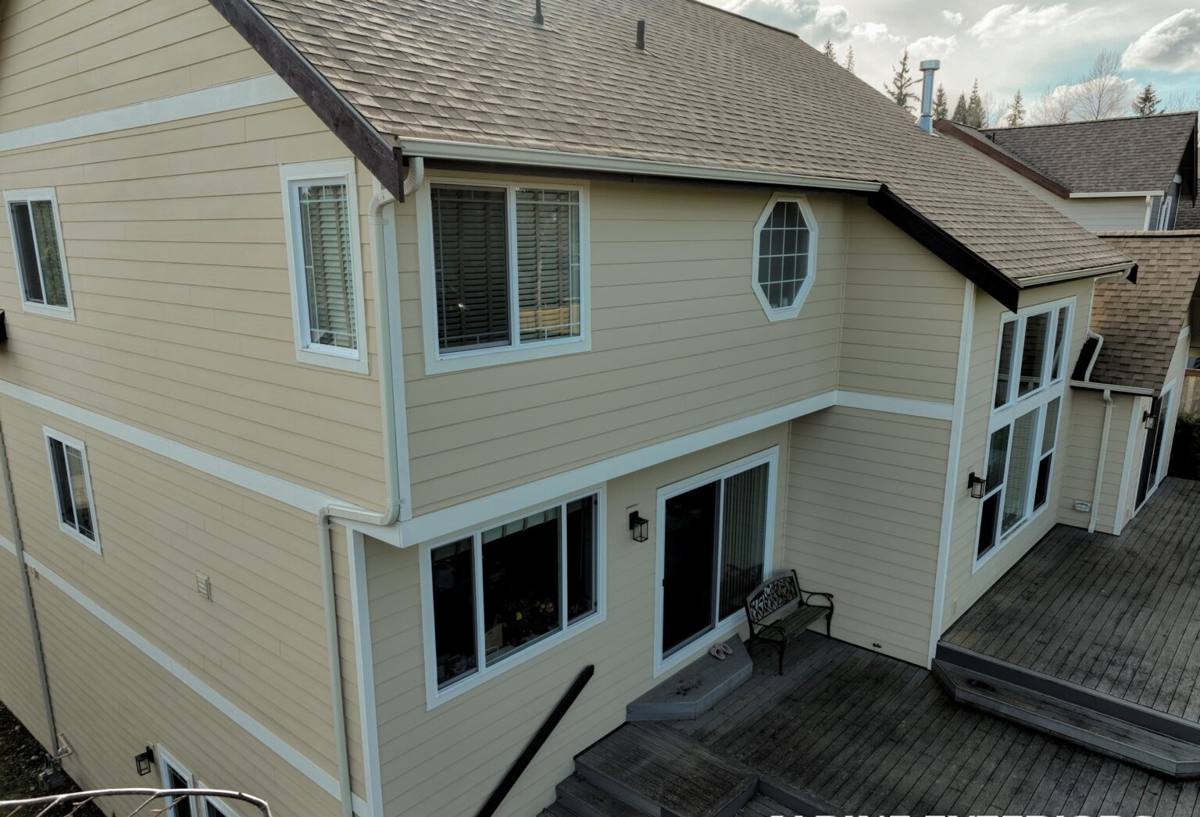
What St. Petersburg's Climate Does to Older Siding
Pinellas County sits on a peninsula, and every house in it — Kenwood included — takes a steady beating from the same handful of conditions year after year: hurricane-force wind during storm season, intense UV exposure nearly every day of the year, wind-driven rain that gets pushed sideways into wall assemblies, and salt-laden air that accelerates corrosion of fasteners and trim. None of this is unique to Kenwood, but it hits harder on older siding that was never engineered for it in the first place.
Wind and Wind-Driven Rain
Older lap siding, especially wood, relies on caulking, paint film, and butt-joint quality to keep wind-driven rain out. As those seals age and paint fails, water finds its way behind the boards. On a historic home this often shows up first at corners, under windows, and near roof-to-wall transitions — areas where the original detailing is more decorative than watertight by modern standards.
UV and Sun Exposure
Constant Florida sun breaks down paint film and, over enough years, the wood fiber underneath it. Faded, chalking, or peeling siding isn't just cosmetic — it's a sign the protective layer is thinning and the material underneath is starting to take direct UV and moisture exposure it wasn't built to handle long-term.
Salt Air
Even away from the immediate waterfront, salt air circulates across the whole St. Petersburg peninsula and speeds up corrosion on nails, staples, and any exposed metal trim. Corroded fasteners are one of the most common hidden causes of loose or bowing siding that looks like a simple cosmetic problem but is actually a fastening failure.
Signs a Kenwood Home Needs Siding Repair
Because many homes in this neighborhood are original wood siding or have been re-sided at some point with vinyl or an older fiber cement product, the warning signs vary by material — but a few show up regardless of what's on the wall.
- Soft, spongy, or crumbling spots when you press on the siding, especially near the bottom courses
- Visible gaps opening up at butt joints, corners, or where siding meets trim
- Paint that's peeling, bubbling, or failing in the same spots repeatedly, even after repainting
- Boards or panels that have started to bow, cup, or pull away from the wall
- Staining or dark streaking below seams, which usually points to water tracking behind the siding
- Visible daylight or drafts felt from inside near exterior walls
- A musty smell in an interior room that backs up to an exterior wall
Any one of these on its own might be a minor fix. Several together, or any sign of soft/spongy material, usually means water has been getting behind the siding for a while and the repair needs to address the water intrusion path, not just the visible board.
Repair or Replace: How We Make That Call
Not every siding problem on an older Kenwood home needs a full re-side, and we're not going to tell you it does. But there's a point where patching individual boards stops making sense — either because the damage keeps recurring in the same areas, or because the cost and disruption of matching old material board-by-board starts to rival doing the wall properly once.
| Factor | Repair Usually Makes Sense | Replacement Usually Makes Sense |
|---|---|---|
| Extent of damage | Isolated to one or two areas (a corner, under one window) | Spread across multiple walls or recurring in the same spots |
| Moisture behind siding | Surface-level, caught early | Sheathing or framing already affected |
| Age and condition of remaining siding | Sound material elsewhere, good paint adhesion | Widespread cupping, thinning, or failed finish |
| Material match | Compatible profile still available or easily matched | Discontinued profile or mismatched prior repairs already visible |
| Underlying substrate | House wrap/felt intact, sheathing sound | Compromised weather barrier or soft sheathing found during inspection |
We walk through this with you honestly during the inspection. If a section can be repaired properly and it's the right call, that's what we'll recommend — a full re-side isn't automatically the answer just because it's more work.
What a Correct Repair Actually Involves
Finding the Real Extent of the Damage
The visible damage is rarely the whole story. We pull affected boards or panels and check the sheathing and house wrap behind them before deciding what the repair scope is. Patching over a compromised substrate just hides the problem for a little while longer.
Matching Profile and Reveal
On a historic-style home, the siding profile — board width, exposure, and butt-joint style — is part of what makes the house look right. A repair that uses a mismatched reveal or a slightly different plank width stands out immediately, even to a casual eye. We match the existing lines as closely as the material allows, or address a full elevation at once when an exact match isn't realistic.
Restoring the Water Management Layer
Every repair is an opportunity to correct what let water in to begin with — proper house wrap lapping, flashing at windows and rooflines, and sealed penetrations. Reinstalling the same siding over the same gaps just resets the clock on the same failure.
Fastening for Florida Wind Loads
Fastener spacing and type matter more here than in most parts of the country because of hurricane wind exposure. We fasten to the manufacturer's high-wind-zone specification, not a generic pattern, and use corrosion-resistant fasteners given the salt air on the peninsula.
Finish That Matches
Where we're repairing with James Hardie fiber cement, factory-applied ColorPlus finish is manufactured in specific, repeatable colors, which makes it far easier to match new repair sections to existing Hardie siding than it is to touch up faded field-painted wood or an older fiber cement product with a discontinued color.
Our Process for a Kenwood Siding Repair
- Inspection: We look at the visible damage and check behind it — sheathing, house wrap, fastening — before scoping the job.
- Honest scope and quote: You get a clear picture of what's a spot repair, what's a section replacement, and why, along with a written estimate.
- Material match: We identify the closest match to existing siding, or recommend where a small full-wall replacement in Hardie makes more sense than chasing a mismatched patch.
- Repair work: Removal of damaged material, correction of the water barrier underneath, proper fastening, and installation of new siding to spec.
- Finish and cleanup: Trim, caulking, and touch-up finish work so the repair blends in, followed by full site cleanup.
Why We Only Repair With and Recommend James Hardie
When a repair calls for new material rather than a like-for-like patch, we use James Hardie fiber cement — it's the only siding product we install, full stop. We don't install vinyl, LP SmartSide, Cemplank, Allura, or primed wood siding, and on a job like this the reasons are practical, not marketing. Hardie is non-combustible, holds up to UV without the chalking and fading that plagues field-painted wood, and its engineered HZ product lines are built for climates exactly like ours — wind-driven rain, humidity, and salt air. The ColorPlus factory finish also means a repair section done today will match a repair section done years from now far more reliably than trying to color-match faded paint on old wood siding.
On a historic-style home, that durability matters even more, because the whole point of a good repair is that you shouldn't have to do it again in three years.
Why It Matters That We Already Work in Historic Kenwood
A crew that regularly works in this neighborhood already has a feel for the age and construction patterns common to Kenwood homes, the kinds of siding and substrate issues that tend to show up here, and how to schedule around narrower lots and closer-set houses without disrupting the block. That familiarity shows up in small but real ways — faster, more accurate diagnosis during the inspection, fewer surprises once we open up a wall section, and a repair that actually looks like it belongs on the house instead of a visible patch job.
If your siding in Historic Kenwood is showing damage, soft spots, or repeated paint failure, we're happy to take a look and give you a straight answer on what it needs. Reach out for a free, no-pressure estimate using the form below.