 St. Petersburg Siding
 Gulfport's Waterfront Setting Puts Extra Demands on Siding
Gulfport sits on Boca Ciega Bay, a short stretch from open water, which means homes here take on a different combination of stresses than siding just a few miles inland. Salt-laden air moves through the neighborhood constantly, humidity stays high most of the year, and the same bay breezes that make the area pleasant also carry moisture straight into siding seams, fastener heads, and trim joints. Add in the older bungalow and coastal-cottage housing stock that makes up much of Gulfport, and you have a lot of homes where the original siding was never engineered for this specific mix of exposure.
Siding replacement in a neighborhood like this isn't just a cosmetic upgrade. It's an opportunity to correct decades of moisture intrusion, failed paint systems, and wood rot that standard siding products were never built to resist in a Gulf Coast bay environment.
What Pinellas County's Climate Does to the Wrong Siding
St. Petersburg and Pinellas County sit in a zone where four separate stresses hit siding at the same time, year after year:
- Hurricane-force winds: tropical systems and seasonal squalls test every fastener, seam, and panel edge, and wind-driven debris can chip or crack brittle materials.
- Intense, near-constant UV: Florida's sun bleaches color and breaks down surface coatings faster than in most of the country, especially on south- and west-facing walls.
- Wind-driven rain: storms here don't just fall straight down — wind pushes water sideways into laps, joints, and any gap in the water-resistive barrier.
- Salt air: being close to the bay means airborne salt settles on siding and fasteners continuously, accelerating corrosion and breaking down materials that aren't rated for coastal exposure.
Any one of these on its own is manageable. Together, and applied continuously over years, they're what separates a siding job that looks good for two seasons from one that holds up for decades.
Why This Matters More in Gulfport Specifically
Homes set back from the water still deal with UV and general Florida humidity, but the closer a property sits to Boca Ciega Bay, the more the salt-air factor compounds everything else. Salt residue holds moisture against a wall longer than plain rainwater would, which means seams and fastener points that would be a minor concern inland become chronic failure points near the water. This is also why we pay close attention to which side of a Gulfport home faces the bay when we plan a replacement — exposure isn't uniform on every wall.
Why We Only Install James Hardie Fiber Cement Here
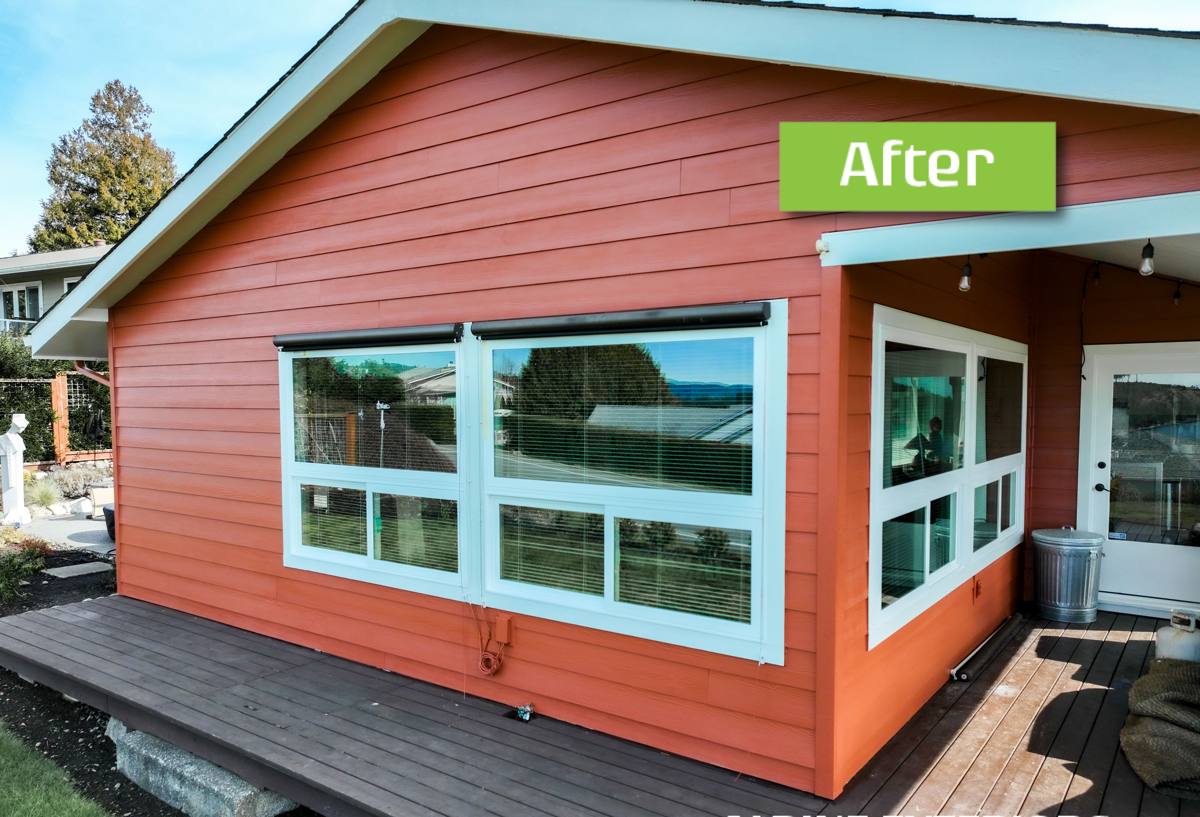
We made a decision as a company to install James Hardie fiber cement siding exclusively — not vinyl, not LP SmartSide, not Cemplank, Allura, or primed wood products. That's not a marketing position; it's based on what actually holds up under the exact conditions Gulfport homes face.
Fiber cement is non-combustible and dimensionally stable, meaning it doesn't expand and contract with heat and humidity the way vinyl and engineered wood products do. That stability matters in a climate where a wall can go from a humid, still morning to a wind-whipped afternoon storm in the same day. Hardie's ColorPlus factory-applied finish is also baked and cured under controlled conditions, which gives it far better resistance to UV fade than field-applied paint on wood-based products — a real advantage on a peninsula that sees sun exposure most of the year.
Just as important, James Hardie engineers specific product lines for different climate zones, including HardieZone HZ5 formulations built for regions with the humidity and moisture cycling we get on the Gulf Coast. That's an engineering response to exactly the problem Gulfport homes face, not a generic siding product hoping to hold up.
What We're Choosing Not to Install, and Why
Vinyl siding can soften and warp under sustained heat and shows joints and seams more visibly over time, and it doesn't hold paint the way fiber cement does if a homeowner ever wants to change color. Engineered wood products like LP SmartSide perform reasonably in drier climates but rely on treated wood substrates that are more vulnerable to the sustained moisture and humidity cycling common near the bay. Other fiber cement brands may be reasonable products, but we've standardized on Hardie because of the combination of factory finish quality, documented climate-specific engineering, and the strength of Hardie's transferable warranty. Standardizing on one system also means our crews install it correctly every time, rather than switching methods between different products.
What a Correct Siding Replacement Job Actually Involves
Siding replacement is not just pulling off old panels and nailing up new ones. In a coastal humidity zone like Gulfport, the assembly behind the siding matters as much as the siding itself. A correct job includes:
- Full tear-off and substrate inspection. Removing old siding exposes the sheathing, which lets us find and address any wood rot, soft spots, or prior water damage before it's covered up again.
- A continuous water-resistive barrier. This is the layer that protects the wall assembly if wind-driven rain ever gets past the siding itself — it needs to be installed without gaps and properly lapped.
- Correct flashing at every penetration. Windows, doors, hose bibs, vents, and any other wall penetration need flashing detailed to shed water outward, not trap it against the sheathing.
- Manufacturer-specified fasteners and spacing. Fiber cement has specific nailing patterns and clearances; getting this wrong compromises both the wind rating and the warranty.
- Proper clearances at grade and roof lines. Siding installed too close to the ground or to roof surfaces stays damp longer and is more prone to wicking moisture.
- Caulking and joint treatment per spec. Not every joint should be caulked — Hardie's installation guidelines specify where sealant belongs and where a gap is intentional for drainage.
Skipping or rushing any one of these steps is usually invisible on installation day and becomes a visible problem two or three years later, often in the form of streaking, soft trim, or paint failure at the seams.
Our Process From Estimate to Finished Job
We keep the process straightforward and give homeowners a clear picture of what's happening at each stage:
| Step | What Happens |
|---|---|
| On-site assessment | We walk the exterior, check current siding condition, identify problem areas, and note bay-facing exposure that may need extra attention. |
| Written estimate | A clear scope of work and pricing, with the Hardie product line and profile recommended for your home. |
| Substrate check on tear-off | Once old siding is removed, we inspect sheathing and framing before anything new goes up. |
| Water barrier and flashing | Installed to manufacturer spec before a single piece of siding is hung. |
| Siding installation | Panels or planks installed with correct fasteners, spacing, and clearances. |
| Final walkthrough | We review the finished work with the homeowner and confirm everything matches the agreed scope. |
Matching Gulfport's Character with the Right Hardie Profile
Gulfport's mix of older Florida bungalows, coastal cottages, and mid-century homes means one siding profile doesn't fit every house. James Hardie's product lines give us options that can match different architectural styles without stepping outside the fiber cement system we trust:
| Hardie Product | Typical Use | Why It Fits |
|---|---|---|
| HardiePlank lap siding | Classic bungalow and cottage-style homes | Traditional lap profile that matches Gulfport's existing architectural character |
| HardieShingle | Accent areas, gables, coastal-style homes | Adds texture and a beach-cottage look while staying non-combustible |
| HardiePanel | Modern or mixed-material exteriors | Clean vertical lines for contemporary updates or accent walls |
| HardieTrim | Window and door surrounds, corners | Finishes the assembly with a product engineered to match the siding's durability |
Cost Factors for a Gulfport Siding Job
Every home is different, so we don't quote pricing sight unseen, but the main factors that move a project's cost up or down are consistent:
- Total square footage of exterior wall area
- Condition of the existing sheathing once old siding is removed
- Number of stories, dormers, and roofline transitions
- Amount of trim, window and door detail work involved
- Product line and profile selected (plank, shingle, or panel)
- Accessibility of the property, including how close the home is to the water and any related staging needs
We give a firm written estimate after the on-site assessment, not a phone-quote guess, because so much of the real cost depends on what's actually behind the existing siding.
Wind Load, Permitting, and Florida Building Code
Pinellas County enforces Florida Building Code wind-load requirements, and siding replacement on an existing home typically requires a permit and installation methods that meet current wind-resistance standards for the area. James Hardie products carry wind-load ratings that are tested and documented, which makes it straightforward to install to code rather than working around uncertainty. We handle permitting as part of the project so homeowners aren't left navigating county requirements on their own.
After Installation: Keeping Gulfport Siding Performing
Correctly installed Hardie siding is low-maintenance, but "low-maintenance" doesn't mean "no attention needed" in a bay-front environment. A short annual routine keeps it performing as designed:
- Rinse salt residue and airborne grime off exterior walls, especially bay-facing sides, a few times a year
- Inspect caulked joints around windows, doors, and penetrations for cracking or separation
- Check that gutters and downspouts are directing water away from the base of the walls
- Look for any soft spots or discoloration near ground level, which can signal moisture wicking
- Keep landscaping and irrigation from spraying directly onto siding surfaces
Why Hiring a Crew That Already Works Gulfport Matters
A contractor who has worked on homes in and around Gulfport already understands the local permitting process through Pinellas County and St. Petersburg, knows how bay-facing exposure changes an installation plan, and has already worked with the area's mix of older framing and newer construction. That's different from a crew that treats every job as a generic siding install. It shows up in the details — which walls get extra attention to flashing, how clearances are handled near the water, and how the project is sequenced around Florida's storm season. That local familiarity, paired with a single, well-understood product system in James Hardie, is what keeps a siding replacement performing the way it's supposed to for the long run.
If you're considering siding replacement for a home in Gulfport, we're happy to walk the property, look at what's actually going on behind your current siding, and give you a straightforward, no-pressure estimate using the form below.