 St. Petersburg Siding
 Why Siding in Old Northeast Has to Work Harder
Old Northeast sits close to the Tampa Bay waterfront, which means the siding on these homes deals with a tougher mix of conditions than siding a few miles inland. Salt-laden air moves off the water and settles on exterior surfaces year-round. Summer humidity and afternoon storms drive rain sideways into wall assemblies. Florida sun beats down on painted surfaces for most of the year, breaking down pigment and finish faster than in milder climates. And when a tropical system or hurricane comes through Pinellas County, siding has to survive sustained wind loads and flying debris, not just look good on a calm day.
None of that is unique to this one neighborhood, but Old Northeast's combination of an older housing stock, mature tree canopy, and proximity to the water means the siding decisions here carry more weight than they would on a newer subdivision further inland. Get the material and the installation right and you get decades of low-maintenance protection. Get it wrong and you're repainting, patching, or replacing sooner than you should be.
The Housing Stock We're Often Working On
A lot of Old Northeast's homes date back to the early-to-mid 20th century, with bungalow and Mediterranean Revival influences common throughout the neighborhood. Many were originally sided in wood, and some have been re-sided at some point with materials that weren't built for this climate. What we typically find underneath failing siding is a mix of moisture-damaged sheathing, old caulk joints that gave up years ago, and trim details that were never properly flashed to begin with.
Older homes also tend to have irregular wall dimensions, non-standard trim profiles, and architectural details worth preserving — porch columns, decorative gable vents, window surrounds. Re-siding a home like this isn't a matter of stripping it down and running the same flat panel across every wall. It takes someone who will actually look at what's there before quoting the job, not just measure square footage from the curb.
Why We Install Only James Hardie Fiber Cement Here
We don't install vinyl, LP SmartSide, primed wood, cedar, or other fiber cement brands. We install James Hardie fiber cement siding, and only James Hardie. That's not a marketing line — it's a standard we hold to because of what this climate does to siding over ten, twenty, and thirty years, not just what it looks like on install day.
HZ5 Formulation for Gulf Coast Exposure
James Hardie engineers its fiber cement products by climate zone, and Pinellas County falls in the HZ5 zone — their formulation built for high humidity, heavy rain, and salt exposure along the Gulf and Atlantic coasts. Fiber cement itself is a mix of cement, sand, and cellulose fiber, which means it doesn't rot, doesn't attract termites, and doesn't expand and contract with moisture the way wood-based products can. It's also non-combustible, which matters to insurers and to homeowners alike.
ColorPlus Factory Finish
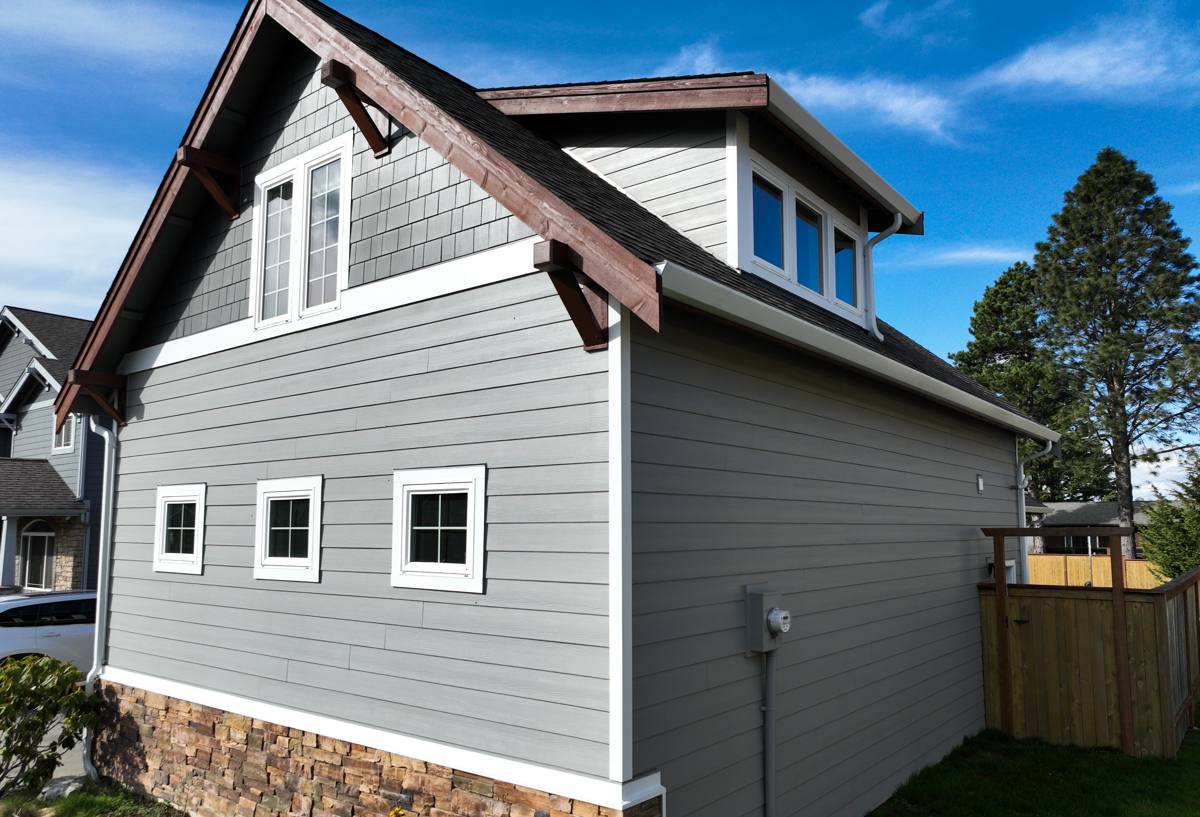
Most Old Northeast projects we do use Hardie's ColorPlus finish — color baked onto the board in a controlled factory setting rather than sprayed or brushed on site. That finish holds up to UV exposure and salt air significantly better than field-applied paint, and it comes with its own finish warranty separate from the substrate warranty. For a neighborhood that gets this much sun and this much humidity, that's not a small detail — it's the difference between repainting every five to seven years and not repainting at all for a long time.
What a Correct Installation Involves
Fiber cement is only as good as the installation behind it. James Hardie publishes detailed installation specifications, and most of the siding failures we get called out to inspect trace back to someone skipping a step, not the material itself.
Clearances, Flashing, and Fasteners
- Proper clearance between the bottom of the siding and roof lines, decks, and grade — tight clearances trap moisture against the board
- Correct fastener type, spacing, and depth — over-driven or under-driven nails void warranty coverage and let boards work loose in high wind
- Flashing at every window, door, and penetration, installed to shed water outward rather than behind the cladding
- Properly lapped and sealed house wrap or weather-resistant barrier underneath the panels
- Caulking only at joints designed to be caulked, with a product rated for exterior movement and UV exposure
Manufacturer Spec Compliance
We install to James Hardie's published specifications, not to whatever gets a job finished fastest. That matters for the warranty — Hardie's transferable warranty depends on the product being installed correctly, and it also matters for how the wall performs in a named storm. A panel that's fastened and flashed correctly stays put in wind; one that isn't becomes a liability during the next tropical system.
Our Process for Old Northeast Projects
- Walkthrough and assessment — we look at the existing siding, trim, and any signs of moisture intrusion before quoting anything
- Written estimate — product line, trim details, color, and scope spelled out, no vague allowances
- Tear-off and inspection — old siding comes off and we inspect sheathing underneath for rot or damage before covering anything back up
- Repair and weather barrier — any damaged sheathing gets replaced, and a proper weather-resistant barrier goes down before a single board is hung
- Installation to spec — Hardie boards, trim, and fasteners installed per manufacturer clearances and fastening schedules
- Final walkthrough — we go over the finished job with the homeowner before calling it done
Older homes sometimes turn up surprises once the old siding comes off. When that happens, we stop and talk it through with the homeowner rather than covering a problem up and moving on — that's a conversation, not a change order sprung on you at the end.
Fiber Cement vs. Other Siding Options for This Neighborhood
| Material | Salt air / humidity performance | Wind resistance | Long-term appearance |
|---|---|---|---|
| James Hardie fiber cement (HZ5) | Engineered for coastal exposure; doesn't rot or absorb moisture | Rated for high wind zones when installed to spec | ColorPlus finish resists fading; no rot or insect risk |
| Vinyl siding | Doesn't rot, but can fade, chalk, and warp in intense UV and heat | Can crack or blow off panels in sustained high wind | Color fades over time; brittle with age in strong sun |
| LP SmartSide (engineered wood) | Wood-based core is more moisture-sensitive than fiber cement | Performs reasonably when installed correctly | Requires diligent caulk and paint maintenance |
| Cedar / primed wood | Absorbs moisture, prone to rot and insect damage in humid coastal air | Performs adequately but panels can cup or split over time | Needs regular repainting and sealing to hold up |
We're not going to tell you vinyl or engineered wood siding are bad products across the board — plenty of homes around the country wear them just fine. What we will tell you is that after years of working exteriors on this stretch of the Gulf Coast, we don't think they hold up the way homeowners expect once salt air, humidity, and hurricane-force wind are part of the equation, and we'd rather stand behind one product we trust completely than sell several we have doubts about.
What Drives the Cost on an Old Northeast Project
| Factor | Why it moves the price |
|---|---|
| Home size and wall complexity | More square footage, more corners, dormers, and gables mean more labor and trim work |
| Condition of existing sheathing | Rot or moisture damage found during tear-off adds repair scope before new siding can go up |
| Trim and architectural detail | Historic-style homes often carry more trim, column wraps, and custom detailing than a typical build |
| Product line and profile | Lap width, texture (smooth vs. cedar-grain), and panel vs. plank systems price differently |
| Access and site conditions | Mature landscaping, narrow lots, and tight setbacks common in older neighborhoods can affect labor time |
We won't put a number on a project sight unseen, and we'd rather walk a property and give an honest written estimate than throw out a range that doesn't hold up once we're standing in front of the actual wall.
Why Local Experience in This Neighborhood Matters
A crew that's worked in Old Northeast before knows what to expect before they pull the first piece of old siding off. They know older Pinellas County homes often have full or partial masonry, balloon framing, or trim profiles that don't match anything in a modern catalog. They know how to work around mature oaks and tight side yards without turning a siding job into a landscaping disaster. And they know what the City of St. Petersburg's permitting and, where applicable, historic district review expects from an exterior project like this — so the job doesn't stall out on paperwork after the crew is already scheduled.
That local familiarity isn't a nice-to-have. On a neighborhood with this much older housing stock, it's the difference between a crew that has to figure things out as they go and one that already knows what they're likely to find.
Caring for Fiber Cement Siding in This Climate
Fiber cement is low-maintenance compared to wood, but low-maintenance doesn't mean zero-maintenance, especially this close to the water. A little routine attention keeps a correctly installed system performing for decades.
- Rinse siding periodically to clear salt residue and airborne grime, especially on sides of the home facing the water or prevailing wind
- Inspect caulk joints around windows, doors, and trim once a year and have any cracked or shrinking caulk replaced before it lets water in
- Keep sprinklers and irrigation heads from spraying directly onto siding day after day
- Trim back shrubs and landscaping so siding can dry out fully after rain instead of staying damp against foliage
- After any major storm, walk the exterior and look for cracked panels, loose trim, or displaced fasteners
None of that is heavy lifting, but it's the kind of upkeep that lets a well-installed Hardie system go the distance in a Gulf Coast climate instead of just looking good for the first few years.
If you're weighing a siding replacement or repair in Old Northeast, we'll come look at the house, tell you honestly what we see, and put together a written estimate — no pressure, no obligation. Use the form below to get started.