 St. Petersburg Siding
 Siding That Has to Work Harder in Crescent Lake
Crescent Lake is one of St. Petersburg's older, closer-to-the-bay neighborhoods, which means a lot of its housing stock predates modern siding technology entirely. Many of these homes were built with wood lap siding, and over the decades some have been re-sided once or twice already with materials that were never really engineered for a Pinellas County exposure. When we get called out to Crescent Lake, we're usually looking at a home where the siding has been fighting a losing battle against sun, rain, and salt for longer than it should have.
This page is specifically about fiber cement siding for homes in and around Crescent Lake — what the climate actually does to exterior materials here, what a correct fiber cement installation looks like, and why we only install James Hardie products rather than the wider field of alternatives available to contractors.
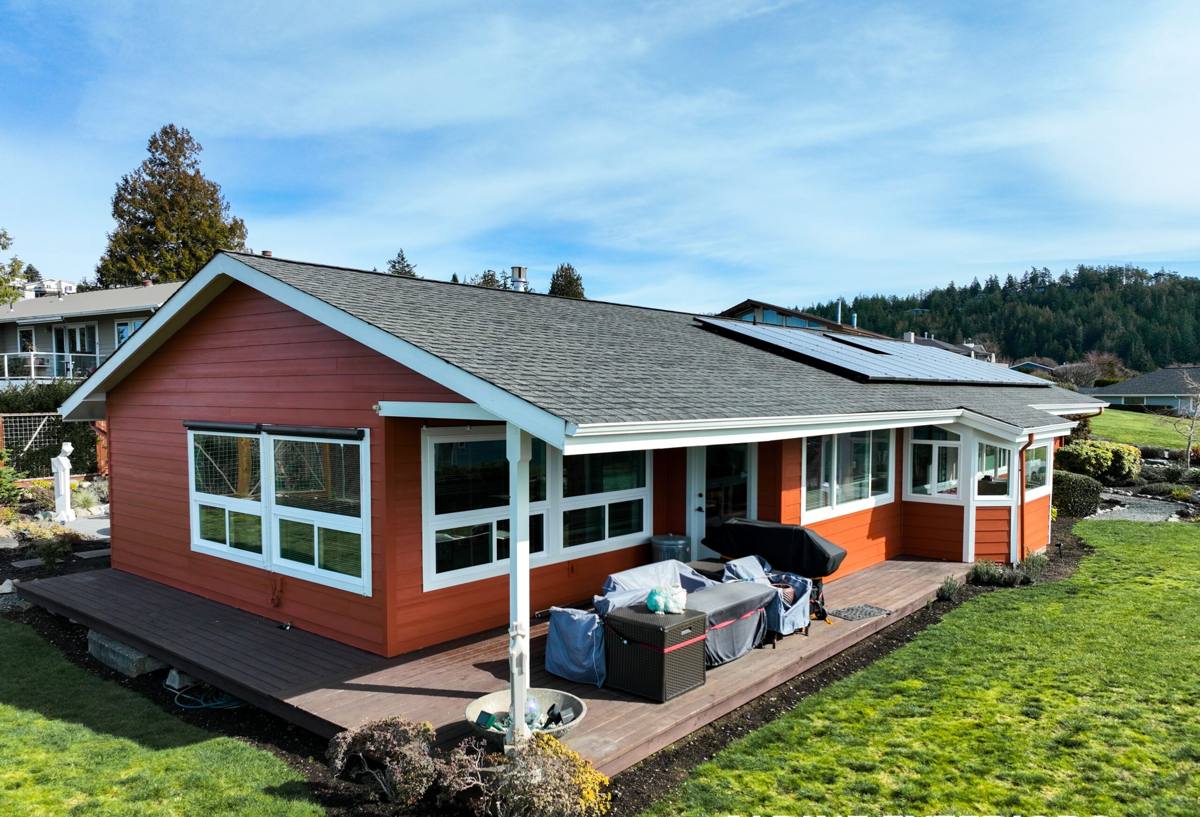
What St. Petersburg's Climate Does to Siding
Pinellas County sits on a peninsula, and Crescent Lake's proximity to Tampa Bay and the Gulf means homes here take on a specific combination of stresses that inland Florida properties don't deal with in equal measure:
- Intense, year-round UV exposure — Florida's sun angle and clear-sky days mean siding gets far more cumulative UV load per year than siding in most of the country, which is what causes cheap paint jobs and lower-grade materials to chalk, fade, and crack years ahead of schedule.
- Wind-driven rain — Afternoon thunderstorms and tropical systems don't just wet a wall, they drive water sideways and upward under laps and around penetrations if the siding isn't installed with the right clearances and flashing details.
- Hurricane-force wind loads — Even in years without a direct hit, Crescent Lake sees strong straight-line wind events. Siding has to be fastened to hold, not just to look right on install day.
- Salt air — Being close to the bay means airborne salt settles on exterior surfaces and accelerates corrosion of anything metal — fasteners, trim flashing, even cheap staples used in some installation methods.
None of these forces are unique to Crescent Lake, but the combination — older housing stock, bay proximity, and dense tree canopy that keeps some walls shaded and damp longer after a storm — is what makes siding choice and installation quality matter more here than in a lot of Florida subdivisions.
Why Fiber Cement Fits This Neighborhood
Crescent Lake's homes tend to have real architectural character — bungalow and early-to-mid-century profiles with visible lap reveals, trim details, and a scale that doesn't hide a bad siding job. Fiber cement holds a clean, straight lap line and takes paint-quality factory finishes well, which matters when a home's street presence depends on those details looking sharp rather than wavy or chalky.
It's also simply built for this kind of exposure. Fiber cement is a cement, sand, and cellulose fiber composite — it doesn't have the thermal expansion problems that cause vinyl to buckle in high heat, and it doesn't have the moisture-driven rot risk of untreated wood siding sitting under humid tree cover. It's also non-combustible, which is a real consideration for closely-spaced older lots.
Why We Only Install James Hardie
We get asked why we don't offer vinyl, LP SmartSide, Cemplank, Allura, or primed wood alongside fiber cement. The honest answer is that we standardized on one manufacturer because it lets us guarantee the whole system — the board, the trim, the factory finish, and the warranty — rather than mixing components and hoping they age together. James Hardie engineers its HZ product lines for specific climate zones, including the wind and moisture demands of the Gulf Coast, and backs the ColorPlus factory finish with a coating warranty that's meaningfully different from field-applied paint on other substrates. That's the standard we put our name behind.
What a Correct Installation Actually Involves
Fiber cement siding is only as good as its installation. A board that's correctly rated for this climate can still fail early if it's hung wrong. On every Crescent Lake project, the details we don't skip include:
Clearances and Moisture Management
Hardie's installation instructions specify minimum clearances from grade, roof lines, decks, and other horizontal surfaces — these exist specifically so wicked-up moisture from wind-driven rain has somewhere to go instead of sitting against the bottom edge of a board.
Weather-Resistive Barrier and Flashing
A correctly lapped water-resistive barrier and properly integrated flashing at every window, door, and penetration is what actually keeps wind-driven rain out of the wall assembly — the siding itself is the second line of defense, not the only one.
Fastening
Corrosion-resistant fasteners, driven at the correct spacing and depth, matter more here than in a low-salt inland climate. Overdriven or underdriven fasteners are one of the most common causes of early siding problems we find when we assess older re-sides in this area.
Joint and Seam Treatment
Butt joints, corners, and trim intersections need to be treated as intentional water-management details, not just cosmetic seams — caulked and flashed per manufacturer spec, not just butted and painted over.
Fiber Cement Compared to Other Siding Options
| Material | UV / Fade Resistance | Wind-Driven Rain Behavior | Salt Air Durability | Fire Rating |
|---|---|---|---|---|
| James Hardie Fiber Cement | Strong — factory ColorPlus finish engineered for sun exposure | Good when installed to spec, with proper clearances and flashing | Strong — cement composite resists salt-driven degradation | Non-combustible |
| Vinyl | Fades and chalks faster under intense, sustained Florida UV | Prone to gaps and moisture intrusion at seams over time | Can become brittle faster near the bay | Combustible, can deform in heat |
| Untreated / Primed Wood | Requires ongoing repainting to resist UV and moisture damage | Vulnerable to rot if water gets behind boards | Susceptible to moisture-driven decay near salt air | Combustible |
| LP SmartSide (engineered wood) | Factory finish helps, but wood-based core is moisture-sensitive | Edge and cut-end sealing is critical to avoid swelling | Moisture sensitivity is a bigger concern near the coast | Combustible |
This isn't to say every alternative fails in every situation — it's why we frame our choice as our professional standard, not a blanket condemnation of every other product. For a bay-adjacent, older neighborhood like Crescent Lake, the trade-offs tip clearly toward a cement-based composite with a factory-controlled finish.
Our Process for Crescent Lake Projects
Assessment
We start by evaluating what's actually happening behind the existing siding — moisture readings, sheathing condition, and a look at how the home has aged so far, since a lot of Crescent Lake homes have already been through at least one prior re-side.
Prep and Removal
Old siding comes off cleanly, and any compromised sheathing or framing gets addressed before anything new goes up — covering a moisture problem instead of fixing it just guarantees a repeat call in a few years.
Weather Barrier and Flashing
We install and lap the weather-resistive barrier and integrate flashing at every opening and penetration before a single piece of Hardie board goes on.
Installation
Boards, trim, and fasteners go in per James Hardie's published installation instructions for this climate zone — clearances, fastener spacing, and joint treatment are not places we improvise.
Final Walkthrough
We walk the finished job with the homeowner, checking caulking lines, paint touch-up at any field cuts, and confirming everything matches what was scoped.
What Crescent Lake Homeowners Should Watch For
- Hairline cracking or chalking on existing siding, especially on the west and south-facing walls that take the most direct sun
- Soft spots, discoloration, or bubbling paint near the base of walls or under windows — signs of trapped moisture
- Rust streaking from fasteners, which points to corrosion-prone hardware that wasn't rated for coastal exposure
- Gaps opening up at seams, corners, or trim joints after a hot summer or a storm season
- Any siding installed without visible clearance from the roofline, deck, or grade
Why Local Experience Matters Here
Crescent Lake isn't a cookie-cutter subdivision — the housing ages, lot layouts, and tree cover vary block to block, and older homes often have quirks that a crew unfamiliar with this specific pocket of St. Petersburg won't catch until it's a problem. A contractor who already works this neighborhood knows what to check on a hundred-year-old wall assembly, understands Pinellas County's wind and building code requirements, and isn't learning the area's climate demands on your home's dime.
If your Crescent Lake home's siding is showing its age, or you're planning ahead of the next storm season, we're happy to take a look and give you a straightforward, no-pressure estimate — no obligation, just an honest read on what your home actually needs.