 St. Petersburg Siding
 St. Petersburg's Climate Is Hard on Siding — Crescent Lake Is No Exception
Crescent Lake is one of St. Petersburg's established, close-in residential neighborhoods, and like every neighborhood in Pinellas County, its homes take a real beating from the weather. Whether a house was built decades ago or added on to more recently, the siding covering it faces the same conditions the whole Tampa Bay area deals with: hurricane-force wind gusts during tropical systems, near-constant intense UV for most of the year, sudden wind-driven downpours, and salt-laden air drifting in off the Gulf and the bay. None of that is unique to any one street or block — it's the baseline every exterior surface in this part of Florida has to survive, year after year.
What that means in practice is that siding choices made purely on upfront cost or curb appeal tend to show their weaknesses fast here. Products that hold up fine in a mild inland climate can crack, warp, fade, or take on moisture damage within a few Florida summers. That's the backdrop for why we only install James Hardie fiber cement siding, and why we're specific about installing it correctly rather than just "putting up boards."
Why Home Age and Style Matter Here
Crescent Lake has a mix of older, established houses alongside newer construction and additions. Older homes often carry hidden history under their existing siding — layers of old paint, patched sheathing, or repairs done at different times by different people. Newer siding jobs, on the other hand, sometimes have builder-grade materials or details that were never meant to hold up to a real hurricane season. Either way, a proper Hardie installation starts with an honest look at what's actually underneath the current siding, not just a measurement for new boards.
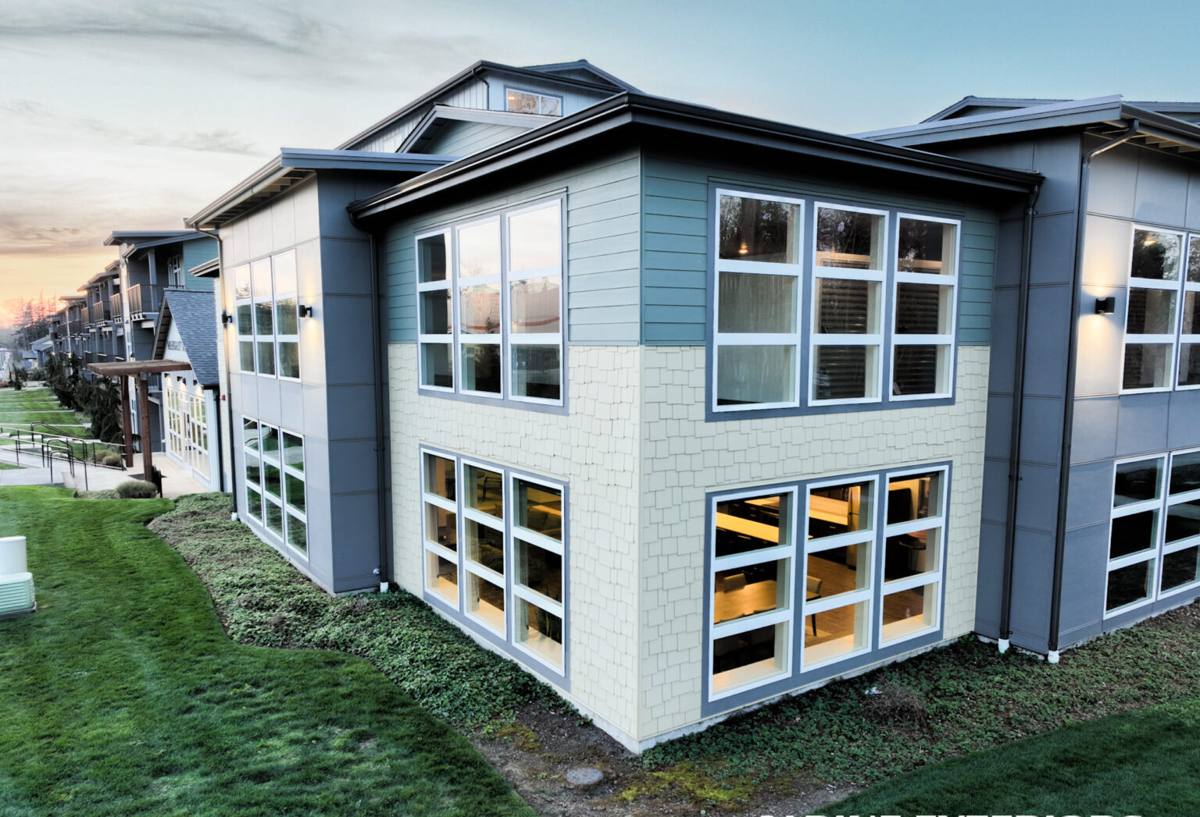
What "Correct" James Hardie Installation Actually Means
James Hardie makes a durable product, but the manufacturer's own warranty and performance depend entirely on following its published installation instructions. A lot of the siding problems we get called out to look at aren't product failures — they're installation shortcuts. In a coastal climate like St. Petersburg's, those shortcuts show up faster and worse than they would somewhere drier and calmer.
Flashing and Water Management Details
Every window, door, corner, and penetration needs flashing and sealant details that direct water away from the wall assembly, not just a bead of caulk at the trim line. Wind-driven rain during a tropical storm doesn't fall straight down — it gets pushed sideways and upward into gaps that would never see water in a calmer climate. Correct flashing at those transition points is what actually keeps a wall dry, and it's the detail that's easiest to skip if a crew is moving fast.
Fastening Patterns and Clearances Built for Wind
Hardie siding has specific fastener spacing, embedment depth, and clearance requirements from the ground, roofline, and other trim — and those specs get stricter in high-wind zones. Florida Building Code wind-resistance requirements apply to exterior cladding here, and the fastening schedule that satisfies code minimums isn't automatically the same as the one that keeps the product's warranty intact. Both matter, and a crew that treats siding as a wind-rated assembly rather than decorative cladding installs it differently from one that doesn't.
Using the Right Product for This Climate Zone
James Hardie engineers its products by climate zone, and Florida falls in the zone formulated for hot, humid, moisture-heavy conditions. That's not a marketing distinction — it affects how the board's core resists moisture intake and how it performs over years of humidity swings. Installing a version of the product engineered for a drier, colder climate on a St. Petersburg home defeats a lot of the point of choosing fiber cement in the first place.
Choosing the Right Hardie Product Line for a Crescent Lake Home
James Hardie's lineup covers a range of looks, and matching the right one to a home's existing style matters as much on an older bungalow-style house as it does on newer construction.
| Product | Best Fit | Notes for This Area |
|---|---|---|
| HardiePlank lap siding | Traditional lap-style homes, most common choice | Widest range of ColorPlus finishes and profiles; the default for most full re-sides |
| HardieShingle | Homes with a cottage, bungalow, or shake-style look | Reads like traditional shingle siding without the moisture and pest issues wood shingles bring in humid climates |
| HardiePanel | Accent walls, gables, modern facades | Often paired with battens for a board-and-batten look |
| HardieTrim | Corner boards, window and door casing, fascia | Keeps trim from being the weak point when the field siding is upgraded |
On a lot of Crescent Lake homes, the goal isn't to change the look of the house — it's to keep the character homeowners like while swapping out what's underneath for something that won't rot, delaminate, or need repainting every few years.
Matching Hardie's Engineering to What This Climate Throws at a House
The reason we standardized on James Hardie instead of vinyl, engineered wood, or other fiber cement brands comes down to how directly its features answer the specific stresses a St. Petersburg home deals with.
| Climate Stress | What It Does to Siding | How Correctly Installed Hardie Responds |
|---|---|---|
| Hurricane-force wind | Peels, cracks, or tears loose weaker materials; drives debris into walls | Rated fastening schedules and a rigid, heavier board that isn't prone to wind-lift the way lighter materials are |
| Intense year-round UV | Fades color, dries out and cracks plastics and some coatings | ColorPlus factory-baked finish is formulated to resist UV fading far longer than field-applied paint |
| Wind-driven rain | Forces water into seams, trim joints, and fastener holes | Manufacturer-specified flashing, clearances, and joint treatment keep water moving out and away, not in |
| Salt air | Corrodes metal fasteners and accelerates rot in organic materials | Non-combustible, cement-based composition doesn't rot, and correct fastener selection resists corrosion |
Our Process for a Crescent Lake Siding Job
The work looks similar on every job, but the details get adjusted for what we find on-site — not applied as a one-size-fits-all script.
- Assessment and tear-off: We remove the existing siding and inspect the sheathing underneath for rot, soft spots, or prior water damage before anything new goes up.
- Sheathing and weather barrier repair: Any compromised sheathing gets replaced, and a proper weather-resistive barrier goes on before siding — this is the layer that actually keeps bulk water out, and it's invisible once the job is done.
- Flashing installation: Windows, doors, and penetrations get flashed to manufacturer spec, not just caulked over.
- Hardie installation to spec: Fastening pattern, clearances, and joint treatment follow James Hardie's published requirements for this climate zone and Florida's wind-resistance code requirements.
- Trim and finish work: HardieTrim and any touch-up caulking or factory-finish repair get completed, and joints are sealed with products compatible with the ColorPlus finish.
- Final walk-through: We go over the finished job with the homeowner before calling it done.
Why a Crew That Already Works This Neighborhood Matters
Siding work in an established St. Petersburg neighborhood isn't identical to siding work on a new-construction subdivision house. Older homes tend to have less predictable wall assemblies underneath the existing siding, tighter lot layouts, and more established landscaping to work around carefully. A crew that's done this kind of job repeatedly in this part of Pinellas County knows what to expect before they start tearing anything off, which means fewer surprises, fewer change orders, and a faster path to a finished job.
There's also a permitting and code side to this that's easy to underestimate. Exterior cladding replacement in St. Petersburg requires pulling the correct permit and meeting the wind-resistance provisions of the Florida Building Code that apply here. A contractor who handles this routinely in the area knows the process and the inspection expectations; a crew from outside the region — or one that doesn't do this kind of work often — is more likely to miss a step that ends up costing the homeowner time later.
Warranty and Long-Term Value
James Hardie backs its fiber cement products with a long-term limited warranty that transfers to a new owner if the home is sold, which matters in a market where homes change hands. The ColorPlus factory finish carries its own separate finish warranty covering fading and peeling, which is a meaningfully different level of protection than a field-applied paint job gets. On top of the manufacturer's coverage, we stand behind our own installation work — but it's worth being direct about this: none of that warranty protection is worth much if the installation didn't follow the manufacturer's specifications in the first place. That's the whole reason correct installation gets so much emphasis on this page.
Maintenance Your Crescent Lake Home Will Actually Need
Correctly installed Hardie siding with a factory ColorPlus finish is genuinely low-maintenance compared to wood, vinyl, or field-painted alternatives, but "low-maintenance" doesn't mean "check it never." In this climate, it's worth a homeowner walking the exterior of the house periodically and watching for a few specific warning signs:
- Hairline cracking or gapping at the butt joints between boards
- Caulk that's shrunk, cracked, or pulled away around trim, windows, or penetrations
- Paint or finish that's bubbling, peeling, or chalking excessively
- Dark streaking or persistent mildew staining, especially on shaded or north-facing walls
- Visible rust staining around fastener heads
- Any soft spots or discoloration at the base of walls near grade
Catching any of these early is usually a small repair. Ignoring them in a climate that gets this much sun, rain, and salt air tends to turn a small repair into a bigger one.
Get a Straight Answer for Your Home
Every Crescent Lake home is a little different — different age, different exposure, different condition underneath the current siding. If you'd like a clear, no-pressure look at what your home actually needs and what a correctly installed James Hardie system would cost, request a free estimate using the form below.