 St. Petersburg Siding
 Why Snell Isle Decks Wear Out Faster Than Inland Decks
Snell Isle sits right up against Tampa Bay, and that waterfront position is exactly why decks here take more abuse than decks a few miles inland. Salt-laden air corrodes fasteners and hardware faster than dry inland air ever will. Wind off the water drives rain sideways into board seams and under railings. Direct, nearly year-round Florida UV bakes the top surface of any decking material, and hurricane-force gusts put real uplift and racking stress on a structure that, on paper, just holds up a barbecue and a few patio chairs. Any one of those factors alone is manageable. All four together, on the same deck, is what actually separates a deck that looks good in year twelve from one that's cupping, graying, or coming loose at the fasteners by year four.
We install composite decking across Pinellas County, but Snell Isle jobs get a different mental checklist from us before we ever cut a board, because the environment is different from a shaded inland yard in, say, unincorporated Pinellas or a subdivision further from the water.
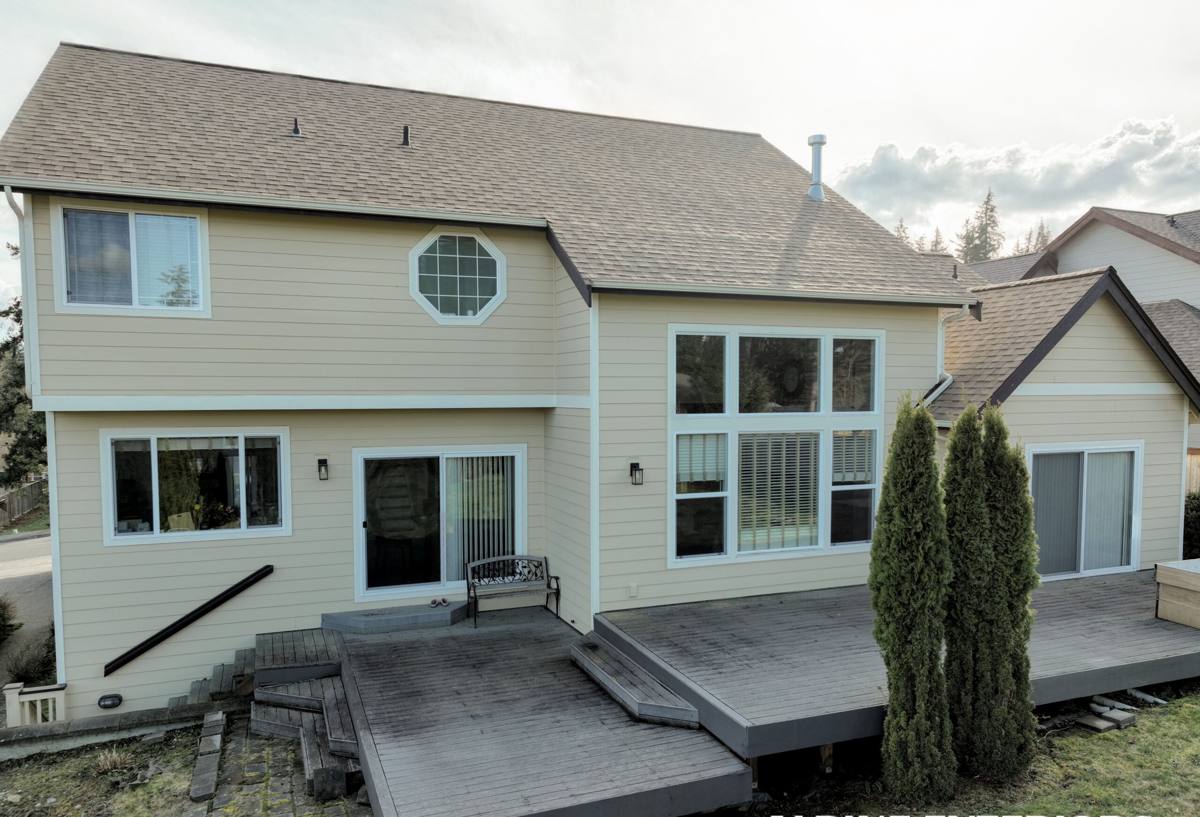
What a Correct Composite Deck Actually Needs Here
Substructure first, decking second
Composite boards are only as good as what's underneath them. On a waterfront property, we pay close attention to ledger board flashing where the deck ties into the house — that's the single most common point of hidden rot on any coastal deck, composite or wood, because wind-driven rain gets pushed into that joint repeatedly. We flash it properly with self-adhering membrane and metal flashing, not just caulk, and we check joist spacing against the manufacturer's span tables for the specific board profile going down, since composite deflects differently than lumber and under-spanning is a common shortcut that shows up as bounce and premature sagging.
Fasteners and hardware matter more near salt water
Standard galvanized hardware corrodes noticeably faster within a mile or two of the bay compared to inland Pinellas installs. We use stainless steel or coated fasteners rated for coastal/marine exposure on structural connections, and hidden fastener clip systems rated for the same. Cutting corners here doesn't show up on day one — it shows up as rust streaks and loosening boards two or three summers in.
Ventilation and drainage underneath
Composite decking sheds water off the top, but moisture still gets underneath from rain, sprinklers, and humidity. A deck built low to the ground or over a slab needs real airflow underneath and a slight grade so water doesn't pool. Standing moisture under a deck is what leads to mildew, odor, and — over time — problems with the substructure itself, even though the boards on top are moisture-resistant.
Composite vs. Other Decking Materials for a Waterfront Yard
Homeowners considering a new or replacement deck usually land on one of three options. Here's how they actually compare under Snell Isle's specific conditions:
| Material | UV/Fade Resistance | Moisture Behavior | Maintenance | Typical Lifespan Here |
|---|---|---|---|---|
| Capped composite | Strong — cap layer resists fading and staining | Doesn't absorb water or rot; core still needs a sealed substructure | Occasional wash; no sanding, staining, or sealing | 25-30+ years with correct install |
| Uncapped/older composite | Moderate — fades and can mildew without a protective cap | More prone to moisture uptake at cut edges | Periodic cleaning; more prone to surface mildew near the water | 15-20 years, more upkeep |
| Pressure-treated wood | Weak — grays and checks quickly in intense sun | Absorbs and releases moisture, prone to warping and splintering | Annual sanding/staining/sealing to keep up appearances | 10-15 years before major repair |
We install capped composite as our standard recommendation for Snell Isle projects, not because other products are bad in every setting, but because the combination of salt air, humidity, and sun exposure here rewards a low-maintenance, moisture-stable material. Wood can still be the right call for a homeowner who wants that specific look and is willing to keep up a yearly maintenance routine — that's an honest trade-off, not a defect in the material.
A note on warranty structure
Composite manufacturers typically split their warranty into a structural/performance warranty (against rot, insect damage, structural failure) and a separate fade/stain warranty for the cap layer. Coastal installs are exactly the conditions those fade warranties get tested against, so we make sure homeowners understand what's covered, what voids coverage, and what documentation we hand over at the end of the job so a future warranty claim isn't a scramble.
Our Installation Process
- On-site assessment: We look at the existing structure (if any), ledger connection, drainage path, joist condition, and how exposed the deck is to prevailing wind and rain direction off the water.
- Removal of old decking, if applicable: Old wood or aging composite comes up, and we inspect the framing underneath before deciding what's reusable and what needs to be rebuilt.
- Framing and flashing: Ledger flashing, joist repair or replacement, and hardware upgrades to coastal-rated fasteners happen before a single deck board goes down.
- Board layout and installation: We plan board direction and seams to shed water efficiently and minimize visible fastener patterns, using hidden clip systems on the composite lines that support them.
- Railing, stairs, and trim: Matched composite or compatible railing systems get installed to code, including proper baluster spacing and stair rise/run.
- Final walkthrough: We check for level, fastening, and any gaps that could catch water, and go over manufacturer care instructions and warranty paperwork with the homeowner.
Wind and Code Considerations for Waterfront Pinellas Properties
Decks in this part of Pinellas County need to be built to withstand real hurricane-season wind loads, not just typical Florida building code minimums applied without thought. That means ledger attachment strength, joist hanger selection, and railing post anchoring all get sized for uplift and lateral load, not just vertical weight. It also means permitting and inspection matter — a deck built without a permit in a wind-exposed waterfront neighborhood is a liability during the next storm, not just a paperwork issue. We pull permits and build to the load requirements that apply to the job, and we don't shortcut that step to save time.
Maintenance: What Snell Isle Homeowners Actually Need to Do
One of the appeals of composite decking is how little upkeep it needs compared to wood, but "low maintenance" isn't "no maintenance," especially near the bay:
- Rinse the deck periodically to clear salt residue, pollen, and organic debris before it builds up.
- Clean up leaf litter and organic staining promptly — mildew shows up faster in humid, salt-air conditions than it would inland.
- Check railing post connections and any visible hardware once or twice a year for corrosion or loosening.
- Keep gutters and downspouts near the deck clear so runoff doesn't dump extra water onto or under the deck surface.
- Trim back vegetation that shades the deck constantly, since permanent shade plus humidity is what invites mildew growth even on composite caps.
Cost Factors to Expect
Every waterfront deck project is different, but the same handful of factors drive the price up or down on most jobs:
| Factor | Why It Matters |
|---|---|
| Deck size and shape | More square footage and more complex angles or multiple levels mean more material and labor |
| Substructure condition | Rebuilding rotted or undersized framing costs more than decking over sound structure |
| Board tier | Entry-level capped composite vs. premium composite/PVC lines carry a real price spread |
| Railing and stair complexity | Custom railing systems, multiple stair sets, and elevation changes add labor |
| Permitting and engineering | Wind-load engineering for waterfront exposure can add to design costs but protects the investment |
We don't quote a price without seeing the property, but we're always upfront about which of these factors is driving the number on any given estimate.
A Homeowner's Checklist Before Hiring a Deck Contractor
- Ask whether they pull permits and handle wind-load requirements for waterfront properties, not just standard code minimums.
- Ask what fastener and hardware grade they use — coastal-rated stainless or coated hardware should be standard this close to the bay, not an upcharge.
- Ask how they handle ledger board flashing, since that's the single most common failure point on decks tied to a house.
- Ask for the manufacturer's actual warranty documents, and get clear on what's structural coverage versus fade/stain coverage.
- Ask whether they've worked in this specific neighborhood or similarly exposed waterfront settings, and what they'd do differently here versus an inland yard.
Why Local Experience on Snell Isle Specifically Matters
A contractor who mostly builds decks in shaded, inland subdivisions isn't wrong about decking in general — they're just solving a different problem than the one Snell Isle presents. A crew that regularly works this stretch of St. Petersburg's waterfront already has opinions, backed by repeat experience, about which fastener grades hold up, how much ventilation a low deck needs given the humidity here, and where wind-driven rain actually finds its way into a structure during a storm. That's the difference between a deck that's technically built to code and one that's built for the specific conditions it will sit in for the next two or three decades.
If you're planning a new composite deck or replacing an aging one on Snell Isle, we're happy to come take a look, walk the site with you, and put together a straightforward, no-pressure estimate — no hard sell, just a clear picture of what your property needs and what it will cost to do it right. Use the form below to get started.