 St. Petersburg Siding
 Board & Batten on a Barrier Island: Different Rules Apply
St. Pete Beach sits out on the Gulf side of Pinellas County, and homes here take a beating that inland Pinellas neighborhoods simply don't. Board and batten siding — vertical panels with narrow strips covering the seams — is one of the most popular looks on the island, and for good reason: it reads as classic Florida coastal cottage, it shows well on gables and dormers, and it can carry an entire elevation without looking flat. But "popular look" and "correct installation for this exposure" are two different things. A board and batten wall that would be fine forty miles inland can fail years early a few blocks from the Gulf if it isn't detailed for salt, UV, and wind-driven rain from the start.
This page is about that one job, in this one location: what St. Pete Beach's climate actually does to vertical siding, what a correct installation has to account for, and why we only do this work with James Hardie fiber cement rather than the wood, vinyl, or engineered wood alternatives you'll see offered around town.
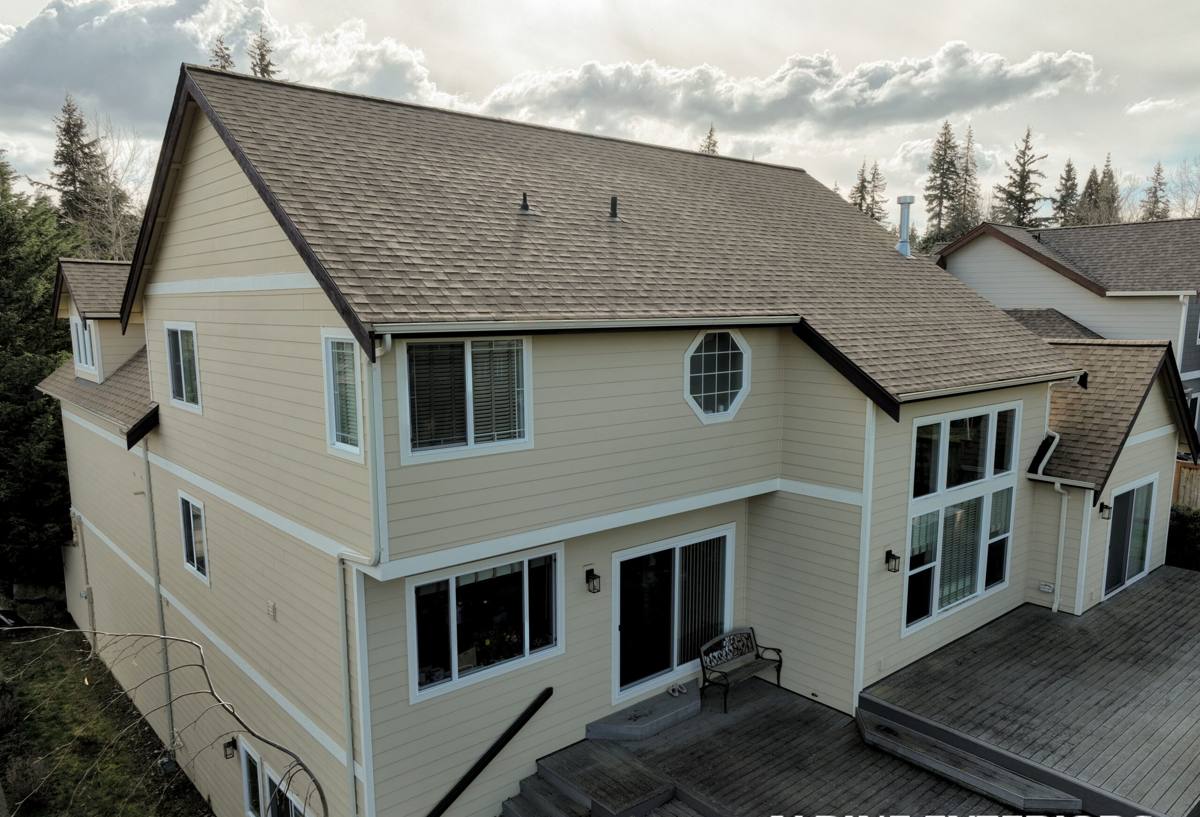
What the Gulf Coast Climate Does to Vertical Siding
Salt Air
Homes within a mile or two of the Gulf are exposed to airborne salt almost constantly. Salt is hygroscopic — it pulls moisture out of the air and holds it against whatever surface it lands on. On wood-based sidings that means slower drying and faster rot at the very seams that board and batten relies on. On metal fasteners it means accelerated corrosion, which shows up as rust streaking bleeding down the face of the siding long before the siding itself fails.
Intense, Year-Round UV
Florida sun doesn't take a season off. Painted wood and vinyl both chalk, fade, and lose adhesion faster under this UV load than they would in a milder climate, and a vertical board and batten wall has more total seam and edge area exposed to that sun than a lap-sided wall of the same square footage — more edges means more places for a factory or field finish to start letting go first.
Wind-Driven Rain
Rain in a Gulf storm rarely falls straight down — it comes in sideways, and board and batten's vertical seams are its most vulnerable point for wind-driven water intrusion if the battens, panel joints, and flashing details underneath aren't built correctly. A batten that just covers a gap cosmetically, without the right drainage plane behind it, will eventually pass water into the wall assembly.
Hurricane-Force Wind
St. Pete Beach isn't in the state's highest wind-velocity zone, but it's still rated for serious sustained and gust loads under the Florida Building Code, and siding here has to be fastened, spaced, and detailed to that load — not to a generic national spec. Undersized fasteners or the wrong nailing pattern is the kind of shortcut that looks fine on install day and shows up as blown-off panels the first time a tropical system pushes through.
What a Correct Board & Batten Job Actually Involves
None of the failure modes above come from board and batten being a bad choice — they come from board and batten being installed like it's a cosmetic panel job instead of a weather-resistant wall system. A correct installation includes:
- A continuous weather-resistant barrier (WRB) behind the panels, lapped correctly at every seam and penetration — this, not the batten itself, is the primary defense against wind-driven rain.
- Proper flashing at every horizontal joint, window, door, and roof-to-wall intersection, installed in the correct shingle-lap order so water is always directed out and down.
- Fastener type, length, and spacing matched to the local wind load and to the substrate — this is a code calculation, not a guess.
- Corrosion-resistant fasteners appropriate for a coastal exposure zone, to avoid the rust-streaking and early fastener failure that plain fasteners suffer here.
- Correct gapping and sealant at panel and batten joints per the manufacturer's published details — not just "caulk it and move on."
- Ground clearance and proper drainage at the base of the wall, since board and batten run vertically to grade is a common spot for moisture to collect if it's installed tight to the ground.
Skip any one of these and the wall can look correct for a year or two before the real problem shows up — usually as a soft spot, a stain, or a batten that's started to bow.
The James Hardie System We Install
We install James Hardie fiber cement exclusively, and board and batten is one of the styles it does particularly well. Depending on the look you want, that's typically HardiePanel vertical siding (a single fiber cement sheet product) with HardieTrim battens fastened over the joints, or individual vertical planks detailed the same way. A few reasons this system holds up specifically to St. Pete Beach's conditions:
- Fiber cement doesn't rot. It's cement, sand, and cellulose fiber — there's no organic wood fiber for moisture to break down over time the way there is in real wood or engineered wood board and batten.
- It's non-combustible, which matters on tightly spaced barrier-island lots where homes sit close together.
- ColorPlus factory finish is baked on and warranted against fading and peeling well beyond what field-applied paint typically holds up to under this UV load, which matters a lot on a style with this much seam and trim surface exposed to the sun.
- HZ5 product lines are engineered specifically for higher-moisture, higher-humidity climates like ours, rather than a one-size-fits-all formulation.
- A strong, transferable warranty backs the material itself — worth something on a coastal home where you want documentation of what's on the house if you ever sell.
We won't install board and batten in vinyl, real wood, primed spruce, or engineered wood siding on this coastline. Each of those has a legitimate use case somewhere, but none of them hold up to salt air, UV, and wind-driven rain the way fiber cement does, and we'd rather turn down a job than install something we don't expect to still look right in ten years.
Board & Batten Material Comparison for a Gulf-Front Exposure
| Material | Salt Air / Corrosion | UV / Color Retention | Wind-Driven Rain Behavior | Hurricane Wind Performance |
|---|---|---|---|---|
| James Hardie fiber cement | Does not corrode or rot; factory finish resists salt staining | ColorPlus finish warranted against fading | Non-organic material tolerates incidental moisture without breaking down | Engineered and rated for high wind zones when installed to spec |
| Vinyl board & batten | Fasteners and trim pieces can corrode; panel itself is inert but brittle | Fades and chalks faster under intense sun; color is not repaintable easily | Can allow water behind panels through expansion gaps | Lower wind resistance; prone to cracking and blow-off in high gusts |
| Real wood board & batten | Highly susceptible to rot and moisture damage from salt-laden air | Requires frequent repainting/staining to hold color and protection | Seams are a direct path for water intrusion if maintenance lapses | Performance depends entirely on fastening; wood can split at fasteners |
| Engineered wood board & batten | Better than solid wood but still moisture-sensitive at cut edges and seams | Factory finishes vary; edge swelling can show through paint | Edge swelling at seams is a known risk if water reaches raw cores | Generally rated well, but long-term integrity tied to moisture exposure |
Our Process, Start to Finish
- On-site inspection. We look at your current siding, wall assembly, and any specific trouble spots — Gulf-facing walls, low ground clearance, existing moisture damage — before we talk product.
- Material and profile selection. We help you choose panel width, batten spacing, and ColorPlus color, and explain how each choice performs under this specific exposure.
- Removal and substrate check. Old siding comes off and we inspect the sheathing underneath for any hidden rot or damage before anything new goes on — this is where problems from a previous poor installation usually surface.
- Weather barrier and flashing installation. This is the step that actually keeps water out; we don't shortcut it to save a day of labor.
- Panel and batten installation to the fastening schedule required for our local wind load, with corrosion-resistant fasteners throughout.
- Trim, caulking, and final detailing at every window, door, corner, and penetration.
- Final walkthrough so you understand what was installed and how to maintain it.
What We Ask You to Watch For Afterward
- Any caulking that separates at trim or window edges after the first big storm season
- Salt film buildup on Gulf-facing walls — a simple rinse keeps it from staining over time
- Any staining at the base of the wall near grade or landscaping beds that hold moisture against the siding
Signs Existing Board & Batten Siding Needs a Closer Look
If your home already has board and batten siding, whether we installed it or not, these are the signs worth having someone look at before they turn into bigger repairs:
- Battens that have started to bow, cup, or pull away from the wall
- Paint or finish that's peeling faster on Gulf-facing or west-facing walls than the rest of the house
- Rust streaks running down from fastener heads
- Soft or spongy spots near the base of the wall or below windows
- Visible gaps opening up at panel seams or batten edges
- Discoloration or dark staining that doesn't wash off, which can indicate moisture trapped behind the panel
Why a Crew That Already Works St. Pete Beach Matters
Board and batten siding done right on this island isn't just a product decision — it's a set of local realities a crew needs to already know going in. That includes the wind-load fastening requirements Pinellas County inspectors expect to see, the architectural review or HOA approval process common on barrier-island streets, tight lot lines and setbacks that affect staging and access, and the older housing stock where you're often tying new siding into original framing that hasn't been touched in decades. A crew that's done this work up and down St. Pete Beach already knows what an inspector here is going to check, what tends to be hiding behind older siding on this side of the county, and how to sequence a job around barrier-island weather without leaving a wall exposed longer than it needs to be.
If you're weighing board and batten for a home in St. Pete Beach, we're glad to walk the property with you, look at what's there now, and give you a straight answer on what it would take to do it right — no pressure, no obligation. Reach out for a free estimate using the form below.