 St. Petersburg Siding
 Why Board & Batten Fits Historic Kenwood's Architecture
Historic Kenwood is known for its collection of early 20th-century bungalow, Craftsman, and frame vernacular homes — the kind of houses where simple, honest lines matter more than ornamentation. Board and batten siding grew up alongside that style. Its strong vertical lines and deep shadow reveals were common on porches, gables, dormers, and additions of exactly this era, and they still read as authentic on these homes in a way that flatter, more modern siding profiles don't.
That's the appeal for homeowners in this neighborhood: board and batten isn't a trend applied to an old house, it's a period-appropriate detail that happens to also be a serious siding system when it's built correctly. The trick is that "built correctly" matters more with board and batten than with standard lap siding, because the design has more seams and more places for water to find its way in if the underlying work is sloppy.
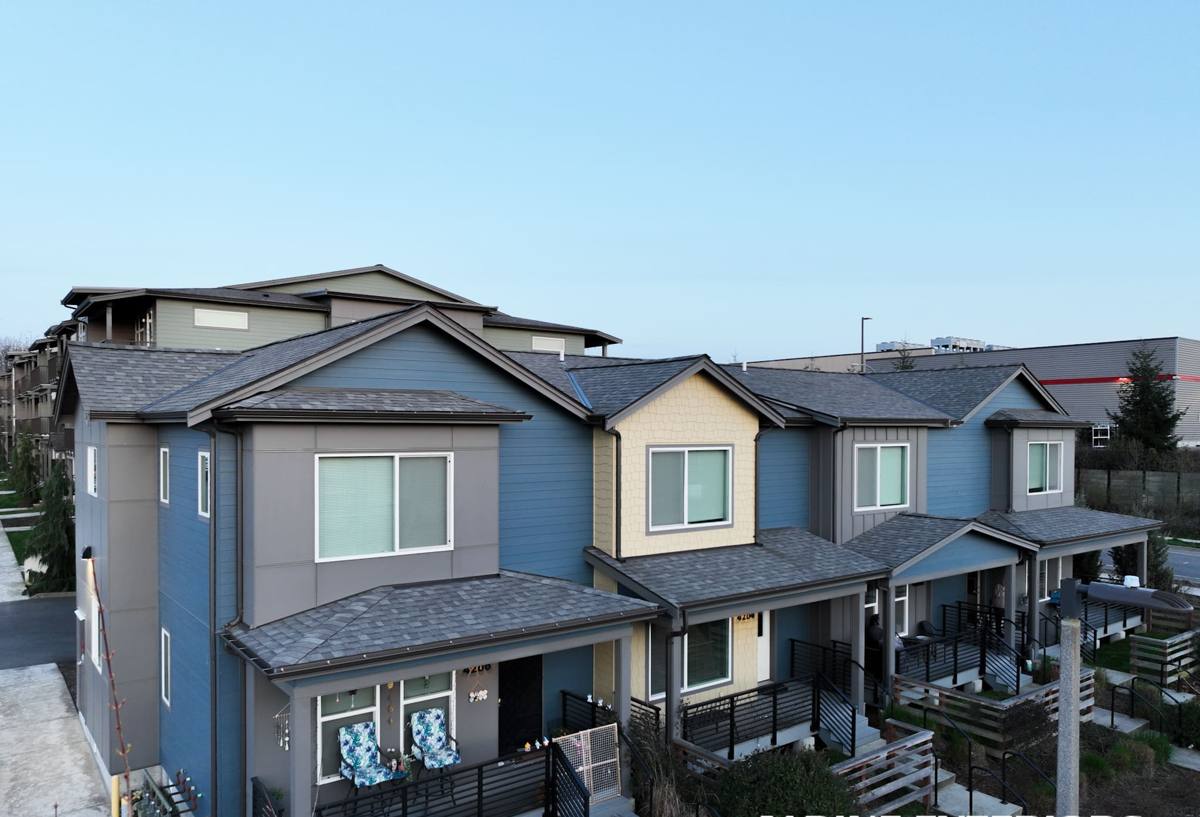
What St. Petersburg's Climate Demands From Board & Batten Siding
Pinellas County sits on a peninsula between the Gulf and Tampa Bay, and that location shapes what siding has to survive here year after year:
- Hurricane-force wind puts direct pressure on every seam and fastener, and board and batten has more vertical joints than a lap profile — each one needs to be fastened and sealed to hold under real wind loads, not just look finished.
- Intense, year-round UV breaks down pigment and surface coatings faster here than in most of the country. Paint and factory finishes both fade, but not at the same rate.
- Wind-driven rain doesn't fall straight down — it gets pushed sideways into vertical seams and batten joints under storm conditions, which is exactly where board and batten is most vulnerable if there's no drainage plane behind it.
- Salt air off the Gulf and the Bay accelerates corrosion on fasteners and metal flashing and speeds up rot in any wood-based product that isn't fully sealed on every cut edge.
None of that means board and batten is a bad choice for a Kenwood home. It means the material and the installation both have to be matched to this climate, not to a mild-climate spec sheet.
Board & Batten Done Right: What Correct Installation Involves
A real drainage plane behind the boards
Board and batten should never go directly against the sheathing. Correct installation includes a weather-resistant barrier and, ideally, a furring or rainscreen gap that lets any moisture that does get past the battens drain and dry out instead of sitting against the wall assembly. Skipping this step is the single most common reason board and batten fails early in humid coastal climates.
Fastening and hardware built for salt air
Every fastener holding boards and battens to the wall should be corrosion-resistant — stainless steel or hot-dip galvanized, not standard coated fasteners that will bleed rust streaks and lose grip within a few years this close to the water. The fastening pattern also has to account for wind uplift, not just gravity.
Spacing, sealant, and factory-finished edges
Boards need room to expand and contract without buckling, battens need to be set and sealed with the right joint detail, and any cut edge that isn't factory-sealed needs to be treated before it's closed up. On a historic home with more corners, gables, and trim transitions than a typical modern build, this detail work is where a rushed installer cuts corners you won't see until the finish starts failing.
Material Choices for Board & Batten: A Comparison
The look of board and batten can be achieved in several materials, but they don't perform the same way once they're exposed to a Gulf Coast summer and hurricane season after hurricane season.
| Material | Moisture & Rot Behavior | UV & Color Retention | Salt Air Durability | Typical Maintenance |
|---|---|---|---|---|
| Natural wood | Absorbs moisture, prone to rot and swelling at joints without diligent sealing | Paint fades and chalks; repainting on a regular cycle is expected | Vulnerable — needs consistent upkeep to avoid deterioration | High — regular repainting and caulking |
| Engineered wood | Better than raw wood but still wood-based; edges and cuts are moisture-sensitive if not fully sealed | Factory finish fades over time; touch-up matching gets harder as the finish ages | Moderate — depends heavily on installation quality | Moderate — panel and seam monitoring |
| Vinyl | Doesn't rot, but can warp or bow in intense heat and doesn't hold up structurally to major wind events | Fades and can become brittle under sustained UV | Doesn't corrode, but seams and fasteners still need attention | Low, but limited lifespan in this climate |
| James Hardie fiber cement (HZ5) | Fiber cement doesn't rot and is engineered for high-moisture climates | ColorPlus factory finish is baked on and warranted against fading and peeling | Non-combustible, dimensionally stable, built for hurricane-zone exposure | Low — periodic cleaning and caulk checks |
This is why our company installs James Hardie fiber cement exclusively. We're not against wood or engineered wood on principle — we've just seen what this specific climate does to them over time, and we'd rather stand behind one product system we know performs here than install several and hope.
Cost Factors for a Kenwood Board & Batten Project
There's no honest flat price for board and batten without seeing the house, but the factors that move the number are consistent from job to job:
| Cost Factor | Why It Matters on a Kenwood Home |
|---|---|
| Square footage and wall complexity | Gables, dormers, and porch details common on bungalow-era homes add cutting and trim time beyond a flat wall |
| Tear-off vs. new construction | Removing old siding, checking the sheathing underneath, and repairing any rot found adds labor a fresh build doesn't need |
| Drainage plane and furring | Doing the moisture management step right adds material and labor but is what keeps the siding performing in coastal humidity |
| Trim and corner detail | Historic bungalow trim profiles are often more detailed than a modern build, which adds finish work |
| Finish choice | Factory-applied ColorPlus finish costs more upfront than field-painting but removes a recurring maintenance cost |
Historic Character and Neighborhood Review Considerations
Many historic districts, including designated ones within St. Petersburg, have design guidelines that apply to exterior changes on homes within their boundaries. If your property falls inside one of these designations, exterior siding work may need to go through a review process before permits are pulled. Requirements vary by district and by home, so we'd rather confirm your specific situation with you and, if needed, the city than assume — but it's worth checking before you fall in love with a finish that won't clear review.
A contractor who's done this kind of review before can usually tell you early whether a plan is likely to sail through or run into questions, which saves real time compared to finding out after the paperwork is already submitted.
Our Process for a Historic Kenwood Home
- On-site inspection. We look at your current siding, check for moisture and rot at trim and corners, and talk through what board and batten detailing will look right on your specific home.
- Tear-off and substrate check. Once old siding is off, we inspect the sheathing underneath — this is often the first real look anyone's had at that wall assembly in decades.
- Moisture barrier and furring installation. This is the step that determines how the siding performs in a storm, not just how it looks on install day.
- Board and batten installation. Boards and battens go up with corrosion-resistant fasteners and correct spacing, following the wind-fastening schedule for the product and this exposure category.
- Trim, caulking, and finish detail. Corners, transitions, and joints get sealed and finished to match the rest of the home's character.
- Final walkthrough. We go over the finished work with you before calling the job done.
Why Hiring a Crew That Already Works in Kenwood Matters
Homes in this neighborhood share a lot of the same age-related quirks — older sheathing, decades of prior repairs, trim profiles that don't match anything at the hardware store. A crew that's already worked on homes like these knows what to expect when the old siding comes off, instead of discovering it mid-project. That familiarity also extends to the practical side: knowing what a local historic review process typically asks for, knowing which detailing choices keep a home's character intact while updating its performance, and being close enough to come back quickly if a warranty question ever comes up.
Signs Your Current Siding Needs Attention
- Visible cracking, warping, or separation at board and batten seams
- Paint that's peeling or failing well before you'd expect it to
- Soft or spongy spots when you press on the siding, especially near the bottom edges
- Gaps at battens or trim where you can see daylight or feel air movement
- Rot or insect damage concentrated near ground level or under windows
- Rust streaking below fasteners or metal trim
- Rising cooling costs that track with visible gaps or damage in the siding
If any of that sounds familiar, it's worth having someone look before the next storm season rather than after.
If you're weighing board and batten for a home in Historic Kenwood, we're happy to take a look and walk you through what it would actually involve for your specific house — no pressure, no obligation. Use the form below to request a free estimate.